



Airports are defined as any area of land or water used or intended for landing or takeoff of aircraft. This includes an area used or intended for airport buildings and facilities, as well as rights of way together with the buildings and facilities. The primary legal framework defining airports in the U.S. is found in Title 49 of the United States Code (49 USC 47102), categorizing airports by type of activity, including commercial service, primary, reliever, cargo service, and general aviation airports.
In defining these five categories, the FAA classifies Commercial Service Airports as publicly owned airports with at least 2,500 passenger boardings per year and receiving scheduled passenger service. Non-primary Commercial Service Airports have the minimum 2,500 and no more than 10,000 passenger boardings each year. Primary Airports are commercial service airports that have more than 10,000 boardings each year.
Reliever Airports are those designated by the FAA to relieve congestion at commercial service airports and to provide improved general aviation access to the overall community. They may be publicly or privately owned. General Aviation Airports are public-use airports that do not have scheduled service or that have less than 2,500 passenger boardings per year. According to the FAA, about 88% of airports in the National Plan of Integrated Airport Systems (NPIAS) are general aviation. Cargo Service Airports are airports that, in addition to any other air transportation services that may be available, are served by aircraft providing air transport of only cargo with a total annual “landed” weight of more than 100 million lbs. Landed weight means the weight of aircraft transporting only cargo in intra-state, inter-state, and foreign air transportation. An airport may be both a commercial service and a cargo service airport.
While the three major airports that serve the New York Metropolitan Region are John F. Kennedy International (JFK), LaGuardia (LGA), and Newark Liberty International (EWR), there are many lesser-known airports that play a significant function in providing essential services and supporting air transportation both in and out of airspace that is among the busiest and most complex in the world. Additionally, these airports connect communities in ways that larger airports cannot through regional airline operations, local traffic, general aviation, emergency services, flight training, private and business travel, and more.
Regional airports are generally located in metropolitan areas and serve relatively large populations. They have high levels of activity with both jets and multiengine propeller aircraft. Regional airports in the metro area that offer alternative options for travel in and out of the region include Long Island MacArthur Airport, New York Stewart International Airport, and Westchester County Airport.
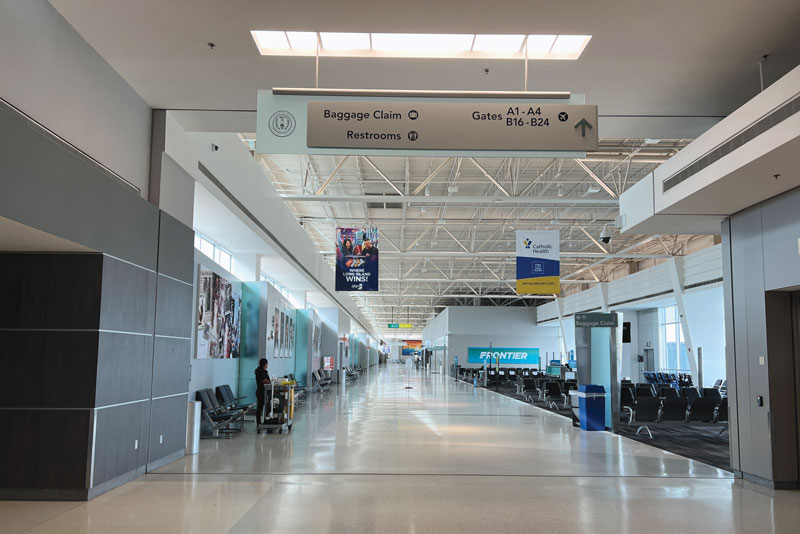
Located 50 miles outside of Manhattan, Long Island MacArthur Airport (ISP) is a public airport in Suffolk County owned and operated by the Town of Islip. Long Island MacArthur Airport covers an area of just over 1,300 acres and contains three runways and two helipads that serve approximately 1.6 million commercial passengers a year, as well as a thriving corporate, business, and general aviation sector. This regional airport has a significant economic impact on the region, generating an estimated $600 million annually and employing over 6,000 people directly and indirectly.
With more than 5,000 people who fly to this airport daily, Long Island MacArthur Airport is one of the top 110 airports in the United States. In addition to the 3 million residents of Nassau and Suffolk counties that MacArthur Airport primarily serves, it also serves travelers from the Greater New York Metropolitan area and around the nation who want a convenient alternative to the congestion at its major commercial airports located in Queens County. Approximately one mile south of the Ronkonkoma Branch of the Long Island Railroad, there is a dedicated shuttle to connect the airport to the rail line.
In 2011, the FAA designated Islip MacArthur Airport an Official Metro Airport, therefore it is grouped with JFK, LaGuardia, and Newark airports in travel and informational searches for New York airports. Commercial airlines currently serving MacArthur ISP Airport are Avelo Airlines, Breeze Airways, Frontier, JetBlue, and Southwest, with over 10 non-stop destinations and connections across the U.S., Mexico, and the Caribbean.
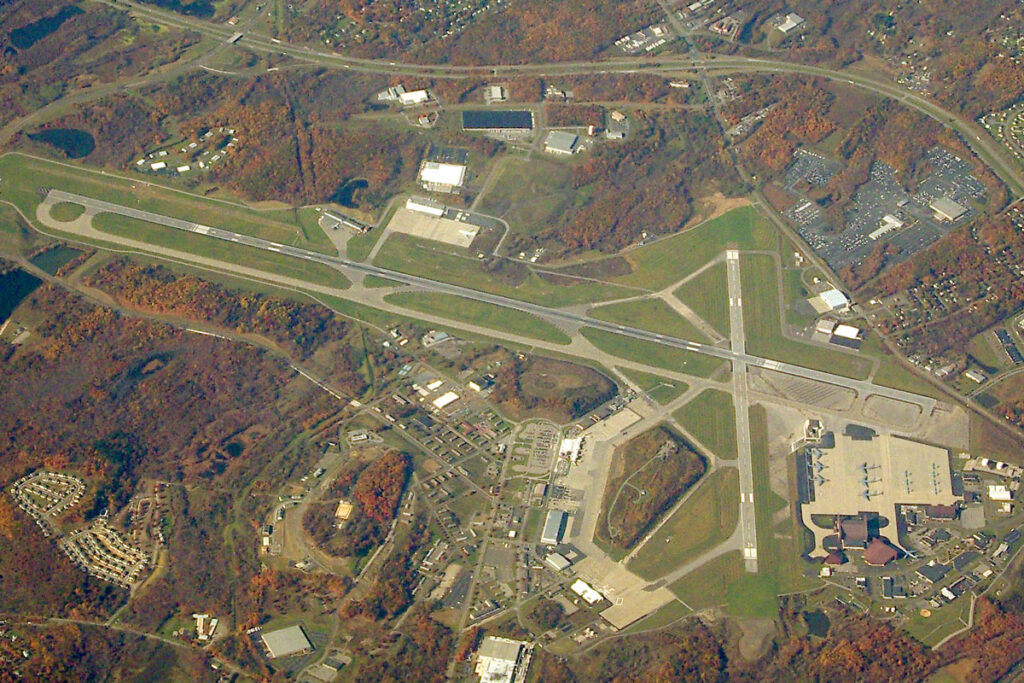
New York Stewart International Airport (SWF) was acquired by the Port Authority NY & NJ in November 2007. It is located less than 60 miles north of New York City in Newburgh, NY. Stewart International covers 2,400 acres and is an economical, convenient, uncongested alternative to airports within the NY metro region. It has two runways that are both 150 feet wide and were completely repaved in 2014. Additionally, a state-of-the-art control tower was commissioned by the FAA in 2006.
This airport is primarily served by Allegiant Air, Breeze Airways, and PLAY, which offer direct access to destinations in the U.S. and Europe. In 2024, Stewart International served nearly 277,000 passengers and handled approximately 26,000 tons of cargo from its 54,000 sq. feet of air cargo facilities, including express packages and belly cargo. Stewart is also home to the NY Animal Import Center, and FedEx and UPS operate regularly scheduled flights there. Additionally, a USDA inspection facility is located on-site. About 1,000 people are employed at Stewart, contributing about $643 million in economic activity to its region, supporting over 2,500 jobs and $272 million in annual wages.
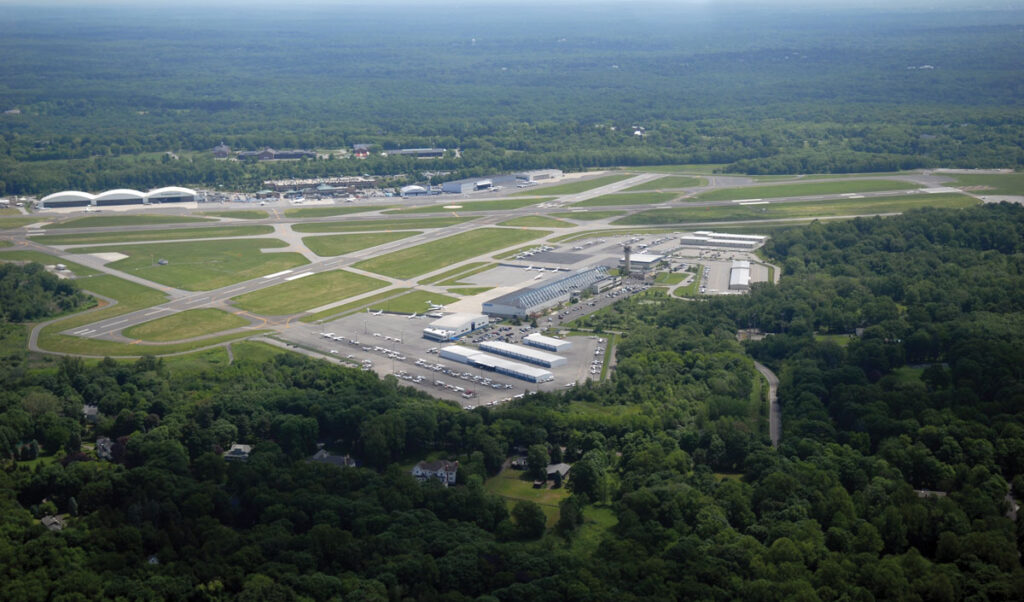
Westchester County Airport (HPN) is a county-owned, medium-sized, multi-use airport located about three miles northeast of White Plains, NY, and approximately 30 miles north of Manhattan. Its location makes it an alternative to the heavily congested and more restrictive airspace surrounding the NY metro area.
The NPIAS for 2011-2015 categorized Westchester County Airport (HPN) as a primary commercial service. HPN is presently served by five scheduled passenger airlines: American Airlines, Breeze Airways, BermudAir, Delta Air Lines, and JetBlue. HPN now has non-stop service to many destinations and convenient connections to cities worldwide.
Operating as a public-use airport since 1945, the airport offers a diverse mixture of commercial air carriers, business jets, private and general aviation services that include FBOs, aircraft charter, flight training, private charter flights, as well as a medivac operation that utilizes the airport.
As an economic engine for the Lower Hudson Valley, Westchester County Airport significantly contributes to the local economy through business activities and employment. FAA records show that the airport had 872,023 passenger enplanements in 2019.
Three of the busiest general aviation airports in the New York and New Jersey metropolitan regions are Teterboro Airport in Teterboro, NJ, Morristown Municipal Airport in Morristown, NJ, and Republic Airport in Farmingdale, Long Island, NY.
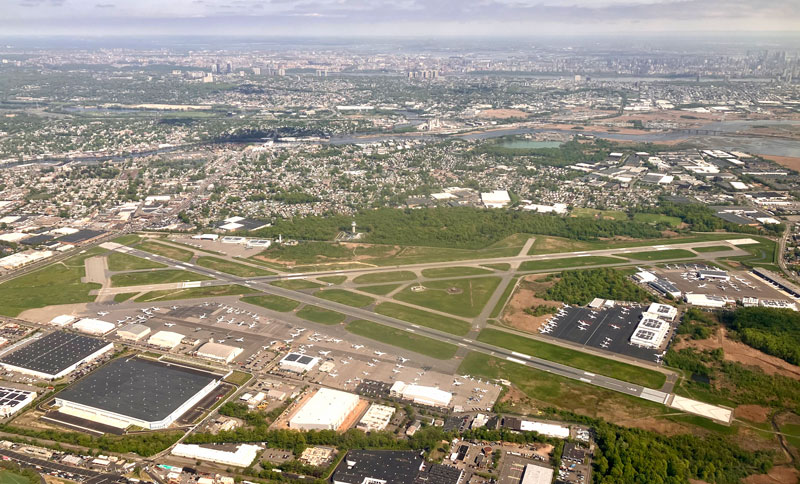
Teterboro Airport (TEB) is the oldest operating airport in the New York and New Jersey metropolitan area. Walter C. Teter acquired the property in 1917, and its operations began in 1919. The Port Authority purchased the airport in 1949 and leased it to Pan American World Airways in 1970 and then to its successor, Johnson Controls, for a term of 30 years, whereupon the Port Authority resumed its full responsibility for the operations of the airport in 1970.
Just 12 miles from midtown Manhattan, Teterboro Airport is located in Bergen County, NJ, and is designated as a reliever airport for general aviation in the NY metro region. This 24-hour public-use facility offers visual, non-precision, and all-weather precision landing capabilities. Scheduled commercial operations are not permitted, and aircraft operating with weights in excess of 100,000 pounds are prohibited. As a reliever airport, its focus is on removing non-scheduled, general aviation aircraft from the regional air traffic, which would cause major congestion at the Port Authority’s commercial airports.
Teterboro covers 827 acres with 23 hangars having a total area of about 572,000 square feet. Additionally, a large office building includes the airport management office, and there is additional office and shop space, an operations building, a maintenance facility, and three fuel farms. Aircraft Rescue and Firefighting (ARFF) is located at the airport. As a public service, Teterboro Airport also serves as a receiving point for human organs used for life-saving transplant operations performed at regional medical centers. Additionally, with the Garden State’s distinguished aviation heritage, the Aviation Hall of Fame & Museum of New Jersey, founded in 1972, is located at Teterboro Airport.
According to the Port Authority NY & NJ 2023 Airport Traffic Report, Teterboro Airport is served by three Fixed Base Operators that operate five passenger terminals and provide a range of services for private, corporate, and general aviation aircraft, as well as charter/aircraft leasing and couriers and small package cargo shipper operators. The report also shows that in 2023, 171,458 airport movements took place at Teterboro Airport.
In its decades of operation, the Port Authority has invested more than $450 million to upgrade the airport’s facilities and open new areas of service to the aviation community. As an economic engine, Teterboro Airport supports more than 5,000 jobs, pays $362 million in annual wages, and generates nearly $1.2 billion in annual sales activity.
Just 27 miles west of Manhattan, Morristown Municipal Airport (MMU) is a publicly owned, privately operated general aviation based in Morristown, NJ, classified as a National Reliever Airport in the FAA’s NPIAS. As an FAA towered general aviation airport covering 625 acres, MMU primarily caters to private jets, corporate and recreational flights. Other services at MMU include Fixed Base Operators, aircraft rescue and firefighting, aircraft charter, air taxi, helicopter services, aircraft rental, fueling, aircraft and avionics repair, hangar and tie-down rental, and aerial photography. Tenants include U.S. Customs, a Civil Air Patrol, and several large private aircraft operators.
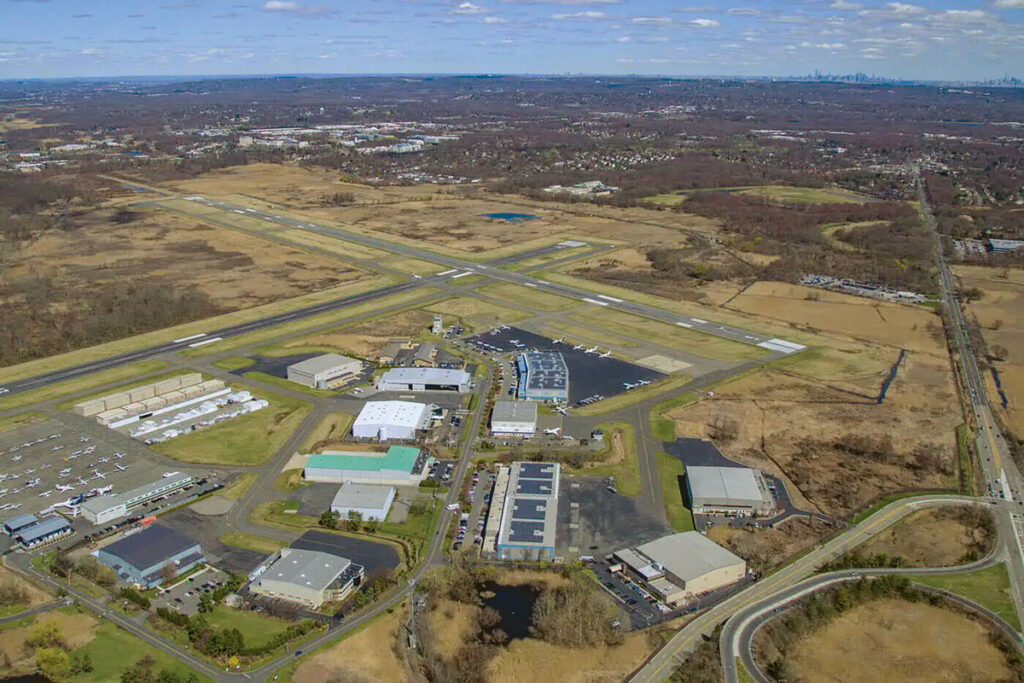
Morristown Municipal Airport also offers educational airport tours and has a scholarship program for local high schools. In service to the medical community, MMU transports patients, medical supplies, and additional vital resources to various locations around the country, and as a significant asset in its community, the airport has many large corporations based on its property, with the airport contributing over $13 million in tax benefits to the area.
Republic Airport (FRG) is a medium-sized, FAA towered general and corporate aviation airport located in East Farmingdale on Long Island. Located approximately 19 miles east of JFK International Airport and an hour’s drive from Manhattan, the airport covers 526 acres and has two intersecting runways. Republic Airport is owned by the State of New York and managed under contract by an airport management company under the supervision of the NYS Department of Transportation (NYSDOT).
Republic Airport was originally developed by Sherman Fairchild and began operation in 1928. In its early and later years, this flying field was used to test and manufacture aircraft made by Fairchild, American, Seversky, Grumman, and the Republic Aviation Corp. In 1965, Fairchild Hiller Corp. acquired Republic Airport, and in late 1966, the airport became a general aviation airport. By March 1967, the Metropolitan Commuter Transportation Authority saw Republic as a means of meeting the demands of aviation on Long Island, and two years later, the MTA acquired the airport. Thereafter, ownership of the airport was transferred to the NYSDOT.

As an NPIAS categorized general aviation reliever airport, Republic Airport (FRG) has a significant corporate aviation fleet and is considered the busiest general aviation airport in New York State. The airport has a large terminal and administrative building, multiple ramp areas, conventional and T-hangars, and tie-down spaces.
In addition to serving as a significant corporate aviation facility, Republic has multiple Fixed Base Operators that provide fueling services, ground handling, and aircraft maintenance. FRG also has flight training at several flight schools, charter services, aerial advertising and filming, aerial medical evacuation, and helicopter charter operations. As an airfield steeped in aviation history, Republic Airport is home to the American Airpower Museum, which is housed in one of the few remaining Republic Aviation Corp. hangars built in the 1940s.
As a major engine of economic growth on Long Island, in the 2024 New York State Study on the Economic Impacts of Republic Airport, the report found that Republic Airport supports 1,694 total jobs, $155.8 million in income, and $355.9 million in total economic impact, whereas Republic Airport is credited with the highest employment and economic impact of any general aviation airport in New York State.