



Employment at airports offers a wide range of occupational opportunities. Jobs and careers at airports are as diverse as the multitude of operations that are performed at these complex epicenters for air travel, 365 days a year.
Applicants with the skills needed for an entry-level position at an airport can lead them to a well-paying job, a management or senior position, or a specialized role that requires specific training and licenses. From terminal and ground operations to customer service and all support service roles, airports function as self-contained urban complexes, or, using a more colorful term, an aerotropolis.
Airports are active, fast-paced, and ever-changing dynamic environments. In acquiring the general skills needed to work in a busy and frequently demanding airport atmosphere, or while gaining the experience or relevant training required for a particular position, it can be most beneficial to develop the skills that will maximize an applicant’s qualifications as a strong candidate for the job.
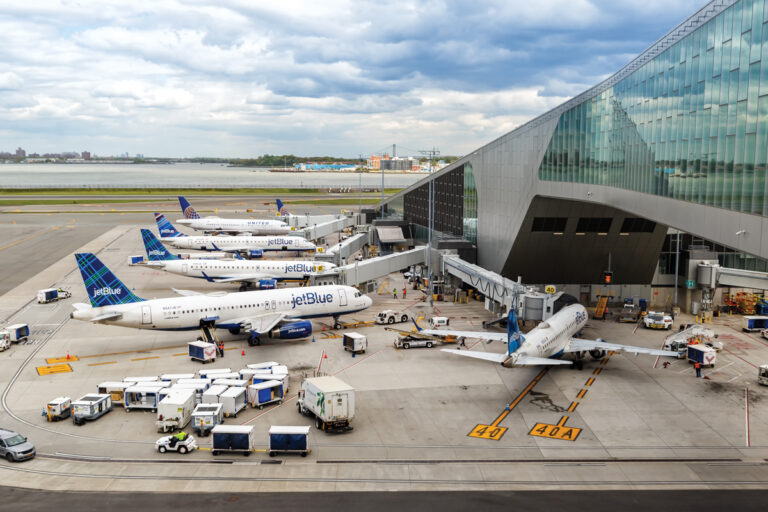
In terms of employment, work at an airport falls into four areas of the airport environment: the landside, the airside, the terminal, and off-airport.
The terms ‘landside’ and ‘airside’ refer to distinct areas defined by security checkpoints at the airport.
Landside is the public area accessible to everyone, including areas for check-in, baggage claim, security, and ground transportation. It encompasses passenger terminals, access roads, parking garages, and public transport facilities.
Airside is the secure area beyond security checkpoints, where passengers (with boarding passes) and staff have access to gates, aircraft, and other restricted areas.
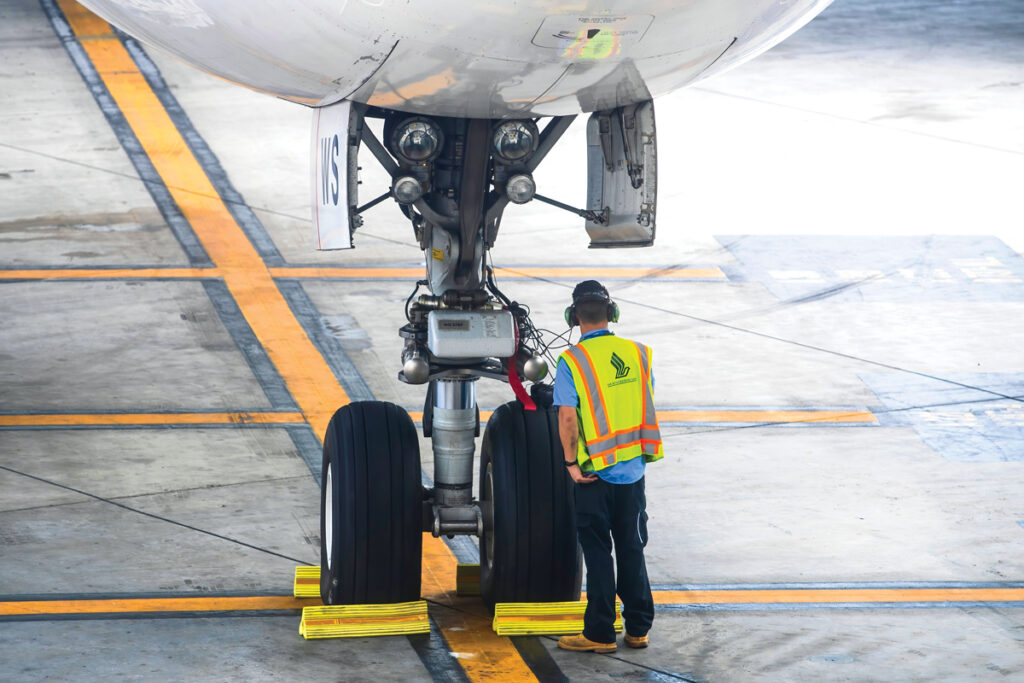
Whether working airside or landside, in a terminal, or off-airport, there are different security levels that impact security clearance requirements for many jobs at the airport, and ones that require higher levels of clearance requirements due to differing levels of access and the integral security risks involved.
Regardless of whether working behind the scenes or in the forefront, cultivating specific skills can bolster a candidate’s potential and the outcome of success in the field of their choice. These include customer service skills, communication and interpersonal skills, an ability to work well under pressure, flexibility and adaptability, problem solving and practical decision-making skills, physical strength and stamina for some roles that require lifting, moving, and standing for extended periods of time, and, depending on the role, specific technical skills.
Job and career opportunities at airports include:
- Aircraft Maintenance – Inspect, service, and repair aircraft, components and related equipment. Positions in this area may require specific certifications or licenses, such as an A&P (Airframe and Powerplant) license for maintenance technicians.
- Airlines and Airport Concessions – Airports host many assorted retail shops, restaurants, food and lifestyle concessions. Airlines lease space within the terminal for ticket counters, baggage handling, and other passenger services.
- Airport & Terminal Operations – Airside operations are a key component of airport management, monitoring the most active areas of aircraft movement and ground handling services. This includes the airfield, ramps, and zones around runways where airport staff work attentively to ensure safe and efficient operations. Landside operations involve a broad spectrum of activities that focus on passenger experience and the management of publicly accessible airport assets. This encompasses everything from the terminals to the concourses, as well as parking operations, ground transportation and shuttles, roadways, and properties surrounding the airport.
- Cargo Handling Ops – Involves the preparation of cargo shipments, the loading and unloading of the aircraft, and the transfer of cargo between storage facilities and land transport.
- Construction – Job opportunities in construction include aviation contractors and electrical engineers, airport ground operations, and ground handling.
- Education and Training – Programs and airport training courses provide comprehensive training solutions to empower airport staff
- Finance and Accounting – jobs in this area involve managing an airport’s financial operations, budgeting, cost management, revenue collection from airline fees, concessions, parking, and ensuring compliance with regulations like the FAA Financial Reporting Program. It also includes financial planning for development, debt management, and organizing financial reports for airlines, governmental entities, and the public
- Flight Ops – involves the coordination of airside activities, such as aircraft movement, fueling, ground handling and passenger services such as boarding and baggage management. Key roles include Air Traffic Control, which manages aircraft movement in the airspace and on the ground; airline flight operations, which handles flight planning, crew scheduling, and in-flight dispatch; and airport operations agents who coordinate ground-based activities, passenger flow, and services for departing flights.
- Food Service & Hospitality – Responsibilities include cashiers, servers, baristas for QSRs (Quick Service Restaurant), line and prep cooks, dishwashers. Food service directors, managers and general managers oversee staff and an establishment’s operations. Other roles may include staff for airport lounges or attendants for local airport hotels. Storeroom and utility jobs support food and beverage operations.
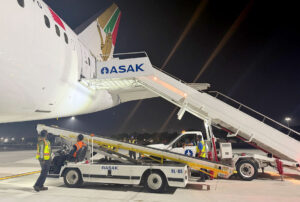
- Ground Support & Handling – Jobs in this role include the use of specialized Ground Support Equipment (GSE) and staff that service aircraft between flights, baggage handling and cargo loading, aircraft towing, refueling, passenger boarding, and providing temperature control and power to the aircraft. Line service technicians handle aircraft ground operations like directing planes and managing fuel.
- Ground Transportation & Guest/Customer Services – Involves roles for drivers of passenger and cargo shuttles, baggage handlers, ramp agents, and security patrol drivers. Guest/customer Services involve transporting passengers, luggage, and cargo on the airport grounds or to/from hotels via taxis, buses, and livery services. Common requirements for these positions include passing a background check, drug test, and having a valid driver’s license. Some roles require a CDL for bus operation. IT & Tech Services – Most airports have dedicated information technology departments that are responsible for maintaining communication systems, security infrastructure, and operational software. Roles include network administrators, cybersecurity specialists, system analysts, and support technicians. Key skills include strong problem-solving, communication, and the ability to work under pressure to ensure operational efficiency and safety. Qualifications generally include a relevant degree and experience with airport-specific software.
- Janitorial & Facility Services – Janitorial staff play an essential role in maintaining public health and preventing the spread of microbes in a high-traffic area. Tasks involve keeping airport environments clean, sanitary, and safe by performing tasks such as sweeping, mopping, trash removal, and restroom cleaning. These roles also extend to general maintenance, such as spot cleaning carpets, cleaning glass, and maintaining common areas like terminals and lounges. Key requirements include attention to detail and the ability to work varied shifts.
- Maintenance – Airport facility maintenance requires staff with a strong understanding of specialized equipment and safety protocols. Key requirements include proficiency in maintaining various systems such as electrical, plumbing, pavement, and lighting, along with the ability to use hand and heavy machinery for tasks ranging from minor repairs to emergency response, all while ensuring continuous, safe airport operations.
Integrated Airport Facility Support Services are single-source contractors who offer a wide range of services to manage and maintain an airport’s operations, from specialized cleaning, to HVAC, technical maintenance, staffing, and passenger services. - Manufacturing – Whether on-site or near an airport, manufacturing jobs involve the production and assembly of aircraft, aircraft components, and avionic electronics and equipment that require machinists, technicians, and efficiency specialists.
- Non-CDL Drivers – This position does not require a CDL (Commercial Driver’s License), as the vehicles used in this role are under the weight limit that mandates a CDL. Non-CDL drivers operate smaller vehicles for jobs that entail the transport of galley equipment to and from the aircraft, the delivery of materials or goods, or that may provide shuttle services to personnel.
- Office & Administrative Support – This role involves a wide range of responsibilities, such as managing schedules, handling correspondence, processing paperwork, providing customer service, maintaining records, and supporting airport operations and leadership teams. Computer proficiency and strong communication skills are essential.
- Passenger Services – Passenger service at airports is paramount in assuring a pleasant, practical, and positive travel experience and offers a wide scope of assistance to travelers, including check-in, baggage handling, providing information, boarding, and security procedures, wheelchair or other special curb-to-gate assistance for those with disabilities or other needs.
- Real Estate – Airports lease space to airlines, cargo companies, and other businesses. Real estate opportunities involve management and development of airport properties, including the role of a property manager or a leasing representative who focuses on retail, office and airline spaces.
- Sales, Retail, & Customer Support – Airports offer a broad variety of retail and customer support roles that extend to airline personnel to staff for duty-free shops, restaurants, lounges, and other in-terminal services.
- Security – Airport security personnel ensure the safety and security of passengers, staff, and airport facilities. Employment includes positions with the Transportation Security Administration (TSA) as a Transportation Security Officer, performing screening duties, or with Customs and Border Protection agencies. Other roles include airport security guards hired by private companies to patrol and monitor the airport, and specialized roles such as K9 handlers.
- Shipping & Freight – Cargo Handlers and Warehouse Agents involve the physical handling of cargo. Ramp Agents work on the ramp handling baggage, guiding aircraft, and ensuring fluid operations during takeoffs and landings. Service technicians manage automated cargo systems, and Airline Ramp Turnaround Coordinators direct ground crews, coordinate baggage handling and fueling services, communicate with pilots and air traffic control, and manage the entire process to meet departure schedules.
- Trucking & Intermodal – The job responsibilities of an intermodal truck driver include overseeing the process of loading and unloading shipping containers, operating heavy trucks, and following safety regulations. Jobs in this role are available with various companies, including cargo carriers, freight forwarders, and logistics services. Drivers need a CDL (Commercial Driver’s License) and the road skills to operate heavy vehicles safely.
- Waste Removal – The work of waste removal is critical for maintaining airport sanitation, hygiene, safety, and sustainability. Work involves collecting, sorting, and transporting waste generated by passengers, airport operations, and airlines, using specialized systems such as pneumatic tubes, standard practices, and recycling programs.
Helpful & Practical Assets to Keep In Mind When Exploring Potential Airport Employment
- High School Diploma/GED: This is a common minimum requirement for many entry-level positions.
- Language Proficiency: Fluency in English is often crucial, and knowledge of additional languages can be highly beneficial.
- Security Clearance: Most airport positions require passing background checks and obtaining security clearances like the Security Identification Display Area (SIDA) Card.
- Specialized Training and Certifications: Depending on the role, you might need specific aviation-related degrees, certificates, or licenses
- Standard non-commercial licenses (Class D) for everyday vehicles, Commercial Driver’s Licenses (CDLs) for operating large or heavy vehicles, and specialized licenses for livery services
- Technical Knowledge: Familiarity with computer systems, airport technology, and relevant software can be an asset.
Airport Employment Resources:
- Airport Worker – www.airportworker.com
- Council for Airport Opportunity (CAO) – www.caonynj.com
- Workforce1 Career Centers – www.nyc.gov
- Port Authority of New York and New Jersey – www.jointheportauthority.com
- Long Island MacArthur Airport – www.flymacarthur.com/careers
- Republic Airport – www.republicairport.net






2 Comments
My name is khuram i am from kashmir i wanna do the jon on airport
Hello Khuram, At the bottom of the article there are several Airport Employment Resources listed with their links. For more information on employment opportunities click on any one of the links.