



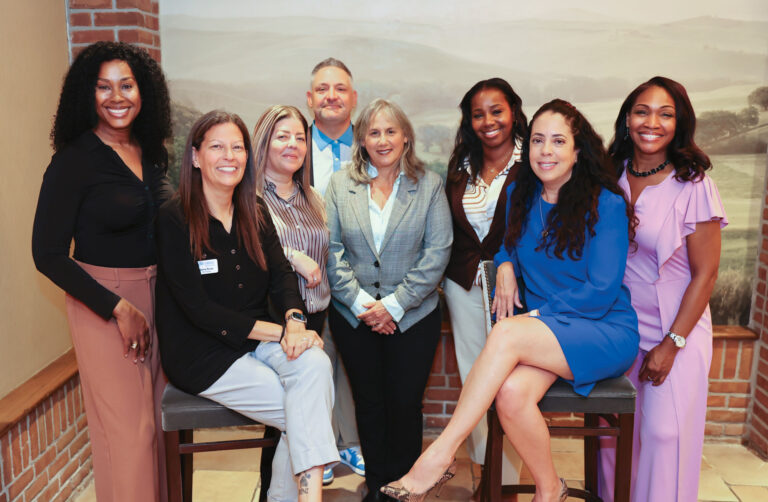
The JFK Air Cargo Association recently hosted a panel discussion titled ‘Women in Logistics, Leadership, Mentorship & Friendship’ at Vetro Restaurant and Lounge, which featured a panel of women who are changing the cargo industry and helping to shape the future of logistics by driving innovation, building partnerships, resilience, and solving the complex challenges that keep cargo moving on a daily basis.
The event highlighted the prodigious career journeys of six women who have built successful careers in logistics and shared their insights into their work in the industry.
Carl Shipsky, President of the JFK Air Cargo Association introduced each panel guest, which included the moderator, Dayna Harap, past President of the JFK Air Cargo Association with nearly 30 years in air transport logistics; Keysha Dampeer, Director of Airline Relations for Airspace; Lisley Davenport, Executive Vice President, Quality Assurance and Domestic Carrier Network at Aeronet Worldwide; Bridget Lavely, Cargo Customer Service Manager at Southwest Airlines; Lisa Perez, V.P. Western Region Operations at Avalon Risk Management, and Rosa Rivera, Operations Station Manager for Rock-it Cargo.
In his introduction, Carl Shipsky said of the panelists, “Their voices represent depth of knowledge and fresh ways of thinking. These leaders are trailblazers who have built teams, cultures, and communities. Their journeys remind us that leadership is as much about empathy and collaboration as it is about strategy and execution.”
The format of the discussion was intimate and casual, almost as though all present were sitting together in a living room listening to each woman share their stories, experiences, and challenges as women in what has been primarily a male-dominated industry.
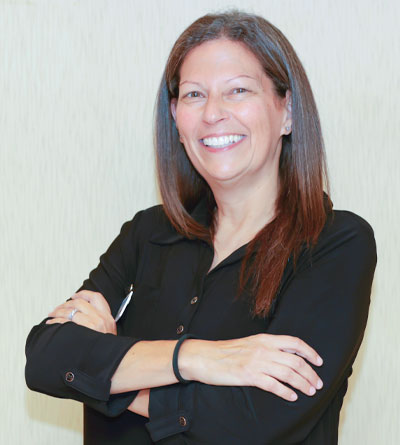
Dayna Harap, VP Sales, SAA Logistics, Inc., began the discussion by noting that the common denominator among her and the five women was a start in logistics, regardless of the specific facet, whether it was insurance, freight forwarding, airline air cargo, or air freight forwarding. Reflecting on her long-time career in the industry, she said, “I feel blessed that I am a woman with a 30-year career in trucking at JFK.
I had great mentors — people who believed in me and saw in me things I didn’t see in myself — and because of this, I want other women to have the same recognition. As a woman, I don’t want a separate seat at the table; I want the same space as everybody else. As a panel, we have all come together in the past to build each other’s confidence and learn to be comfortable with one another.
We are in a safe place with no judgment. We are simply women who are in the same industry and who love what we do. That is what this panel is all about.”

Keysha Dampeer began her career at Southwest Airlines, later transitioning to her role as Director of Airline Relations at Airspace. With over 24 years of experience at Southwest and coming from the ground up, she knows everything about the turn of the plane. Through her unique understanding of the humanistic intelligence of organizations, she knows how to best position and leverage team members’ strengths. Her insight into the movement of goods is that cargo is not just about the transit of packages; its contents are often lifelines that impact people’s daily lives.
What helps Keysha with her advocacy is what she refers to as My Why. “My Why is the main difference in everyone’s lives. If I create a report for the day, and there are five [donor] organs that made it successfully, with their names and ages … then I’m able to sleep at night. As I tell my children, ‘Your Why has to be bigger than yourself.’”

Lisa Perez spoke next, representing Avalon Risk Management, West Coast. She started her career as a data entry clerk before being asked to be an account manager, and then to lead a team working in the trucking insurance industry. Once she understood that trucking is how we get our goods to wherever they need to go, she was hooked, and she has been in insurance ever since. “It’s been a wonderful journey, and I love seeing, now, that people look to me for mentorship, leadership, and guidance. It’s been an amazing journey to help and guide others to journey the same path that I have,” Lisa said.
Lisley Davenport, Aeronet Worldwide, Inc., prefaced her remarks with the news that, on that very day, she had arrived in the United States 22 years earlier from Cuba. For Lisley, freight forwarding has given her a chance for a better life. She brought her work ethic with her to the States and began her career climb from the bottom, earning $5.25 an hour working part-time.
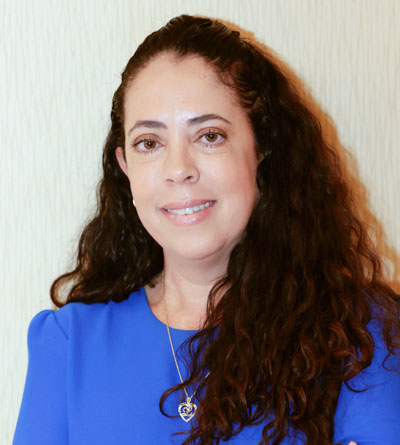
She was introduced to freight forwarding by a friend and has worked in the industry for the last 21 years, starting with data entry, then customer service, dispatching pickups, special accounts, and executive assistant, where she learned everything there was to know about freight forwarding and sales. For the last eight years, Lisley has worked for Aeronet, and said, “I’ve been blessed to have people in leadership roles that have trust in me.
I pay it back by being loyal to the company and just growing, doing everything I can to support the company. And now over the last two years I’ve been trying to take everything I’ve learned to help other women, and men that may need a hand to get to the next step.”
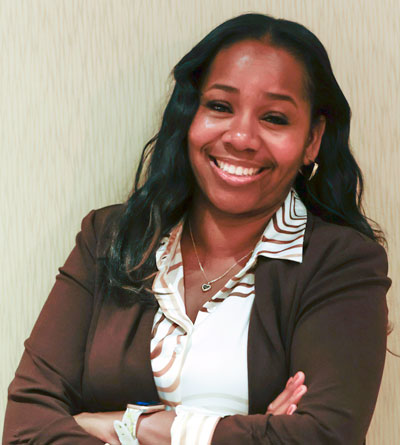
Bridget Lavely began her nearly 30-year career at Southwest, “Each of these ladies, including myself, has a passion for this industry of logistics,” emphasized Bridget, “I, just like probably everyone here, started from the bottom. Passion is what I have for cargo. I started with Southwest in 1996 and moved over to cargo, starting as a cargo agent and advanced to management… But, I have a connection here and I just wanted you to see a theme that’s gone on here, and that is networking, which has brought us all together, and that’s the power in what we’re doing here.”
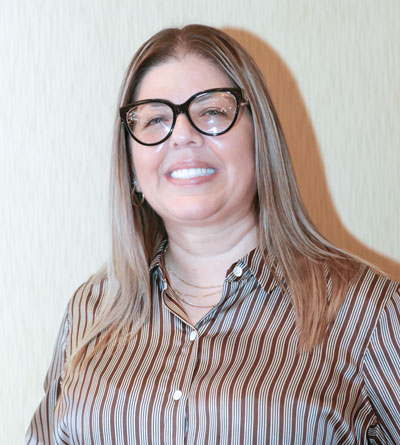
Rosa Rivera started in the logistics industry 20 years ago, coming from a banking background in which she found no excitement in reconciling bank statements. She browsed the newspaper employment ads and found a job as a bookkeeper’s assistant in freight forwarding. She applied, got the job, and her career in logistics was launched. Everything about it seemed so exciting to her, and she wanted to do more than just file and answer the phone, so she asked management, “Can I do more? I want to move freight; I want to be the person making bookings.” And from there, Rosa found her place at Rock-It Cargo, starting at the bottom as an operations agent. “They helped me grow,” said Rosa. But as a woman, initially, a lot of men in the industry would comment to her that they didn’t want her to do the heavy lifting; they didn’t want her to break her nails. “I’m not afraid to break my nails,” she’d reply, “ I want to get my hands dirty. I’m going to get in here, and I want to build this freight. And now, I am very resilient. I will do everything and anything to make the freight fit, if it’s supposed to fit.”
As Rosa grew in Rock-It to be an operations agent, she continued her drive. No matter how hard it was, being a woman in the industry, she made sure that she fought for what she wanted. “Now I sit as station manager at EWR and I’m going to continue to strive because I have a team of people who are amazing and I’m helping them grow – they’re young people of all ages and I want to be able to mentor them and lead them to the next step and hand the baton to them and say ‘You’re the right person for the job.’ And I love it, to be honest!”
As the ‘Women in Logistics, Leadership, Mentorship, & Friendship’ panel discussion drew to a close, the essence of leadership, mentorship, and friendship rang true in the character and spirit that each one of the women possessed and expressed through their individual and joint experiences.
Editor’s Note: During an online Google Meet in the week to follow the ‘Women in Logistics, Leadership, Mentorship & Friendship’ discussion at Vetro, all six of the women on the panel signed in from both the West Coast and the East Coast to discuss their passion for the logistics industry and to share what they feel are the unique qualities that women bring to the table. It was a lively discussion (and one in which I learned more about as something of a logistics novice) about the many layers of the logistics industry, which go far beyond the movement of goods between Point A and Point B. I look forward to exploring that in a future article.