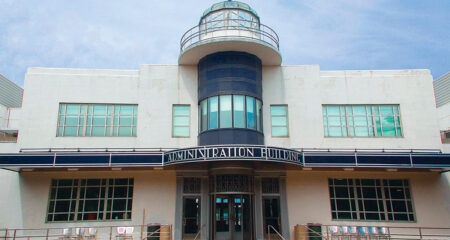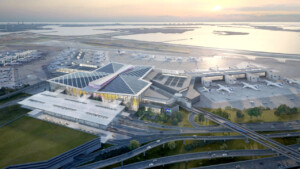




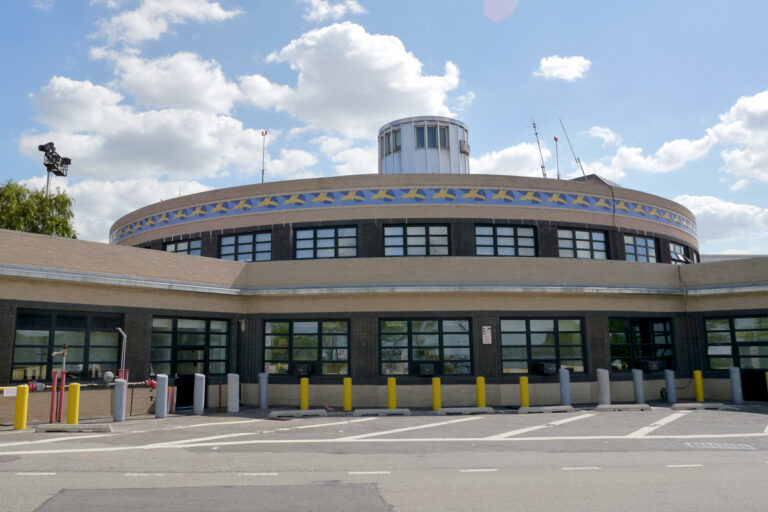
The Port Authority’s Press Release, Nov.13, 2025 (PORT AUTHORITY PROPOSES RECORD $45 BILLION CAPITAL PLAN FOR 2026-2035 TO ADVANCE UNPRECEDENTED INFRASTRUCTURE RENEWALS ACROSS REGION….) states: ‘The proposed 2026-2035 Capital Plan would drive: Finishing the job to make a vastly improved experience at LaGuardia even better. The plan calls for replacing the 85-year-old Terminal A to meet demand and continued passenger growth while respecting the building’s rotunda’s landmark status.
The press release also stated the Port Authority’s commitment to thoroughly solicit public input as it considers the capital plan. Members of the public were encouraged to attend any of the several hearings scheduled in early December, either in person or virtually, or to submit comments through the Port Authority website.
Having attended one of the hearings virtually on December 2 in order to learn more about the plan calling for the replacement of the 85-year old Terminal A, also known as the Marine Air Terminal (MAT), a short video was shown about the Capital Plan for 2026-2035, which barely touched on the plans for the MAT by simply displaying a worded caption of a proposal to replace it.
Given the vagueness of the Port Authority’s statements on both the November 13 press release and that of a Port Authority spokesperson in a subsequent New York Times article that a reference in the release to “85 year old Terminal A “was ‘’inaccurate’’: Barron, J. (2025, December 5) “A LaGuardia Terminal that recalls the Glory Days of Air Travel”, therein lies the concern and need for clarity regarding this part of the $45 billion Capital Plan as it moves forward.
In this op/ed, Tom Betti, Historian & Board Member, Pan Am Museum Foundation, explains the Marine Air Terminal’s historical and cultural significance and why its preservation and protection are of paramount importance. – Julia Lauria-Blum, Editor-in-Chief
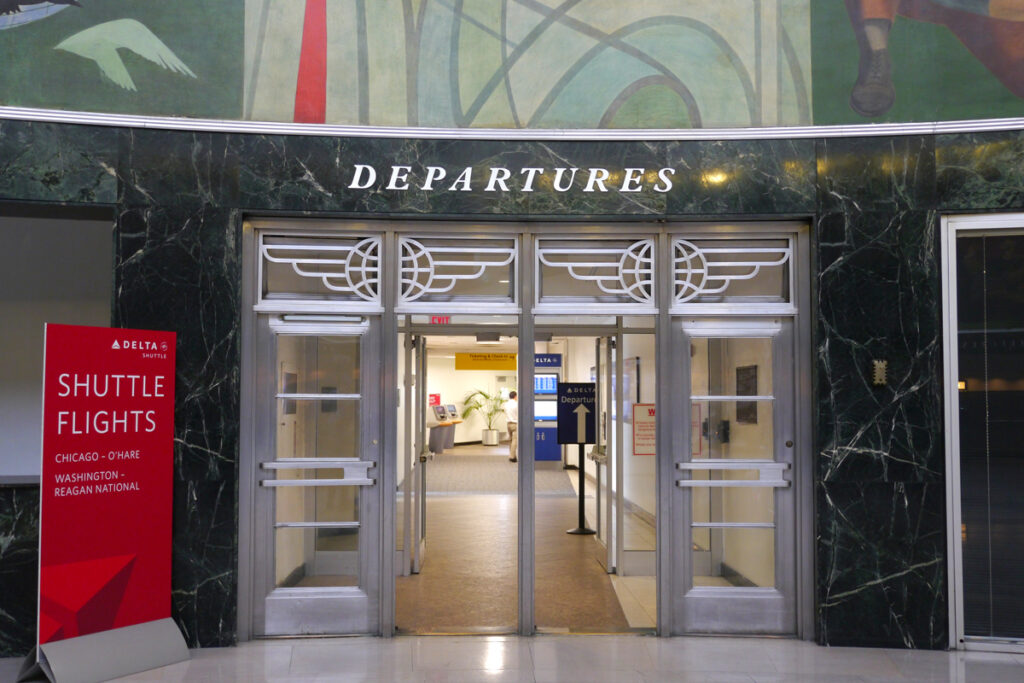
The Marine Air Terminal at LaGuardia Airport, opened in 1940, is one of the most culturally and historically important aviation buildings in the United States. As the last surviving terminal built specifically for flying boats, it stands as a rare and tangible link to the moment when Pan American World Airways connected America to the world. From the Art Deco architecture to the soaring rotunda and the iconic WPA mural Flight byJames Brooks, the building embodies a chapter of aviation history that cannot be replicated. The New York City Landmarks Preservation Commission has given it landmark status, and it is also recognized nationally on the U.S. Department of the Interior’s National Register of Historic Places.
For those reasons, a single line in a recent Port Authority press release caused immediate concern and worry. It appeared to imply that the terminal could be severely altered or even demolished as part of a modernization plan.
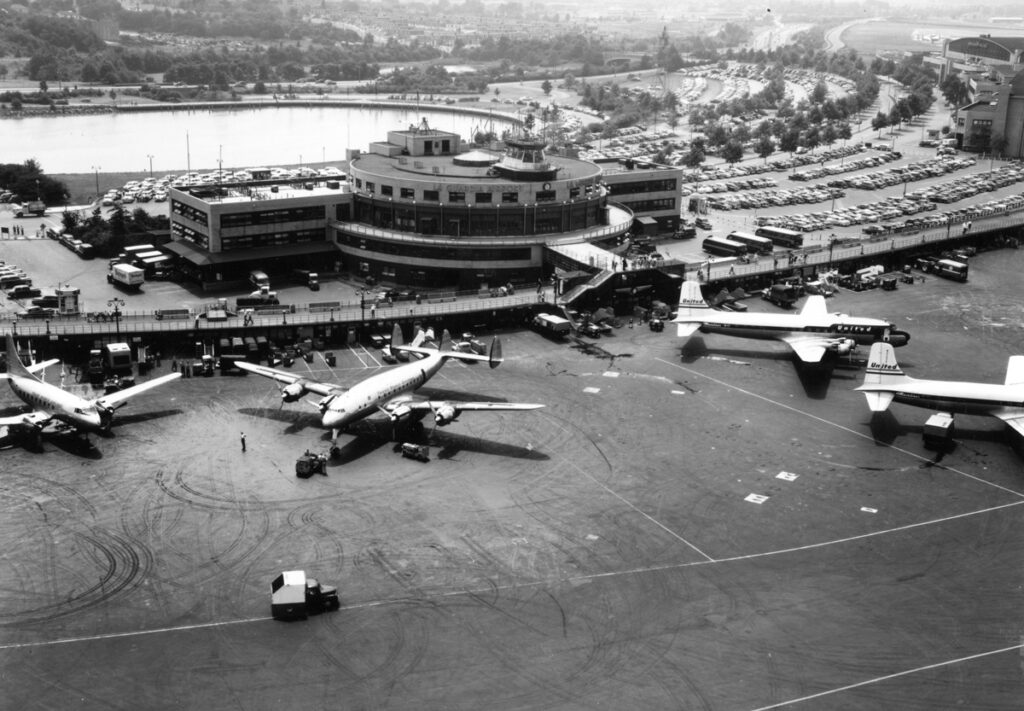
The reaction was not alarmist; it was informed by experience. For many in the aviation, historic preservation, and Pan Am communities, the demolition of Pan Am’s Worldport in 2013 remains a painful reminder of what can happen when clarity is lacking and when historic value is not fully appreciated. Once an architectural icon celebrated for its futuristic design, the Worldport is now a memory, a loss that still stings for those who understood its importance to our shared history.
So, when ambiguity surfaced about the future of the Marine Air Terminal (MAT), people paid attention.
To their credit, the Port Authority moved quickly to clarify the situation. In a statement to The New York Times, the agency assured the public that the 1940 building’s exterior and interior are “not going anywhere and will remain fully intact.”
We appreciate that clarification and take it as a positive sign of the Port’s recognition of the MAT’s significance. New York City also has some of the strongest historic preservation laws in the country, and the building’s landmark designation provides an essential layer of protection that the Port Authority recognized in its statement.
Still, the episode underscores a basic truth: the public is paying attention and still values history. The Port Authority must know that New Yorkers, along with aviation historians, historic preservationists, and Pan Amers worldwide, expect the MAT’s landmark status to be respected fully and without ambiguity. Clear communication is essential, especially when it’s regarding an irreplaceable piece of American history.

It is also important to remember that alterations to historic structures at active, federally funded airports follow a unique process. Because LaGuardia Airport receives federal funding, the appropriate mechanism for evaluating any proposed changes to historic structures is through a Section 106 review, initiated by the Federal Aviation Administration (FAA). In this process, the FAA acts as the lead agency, and qualified preservation organizations serve as consulting parties.
Both the Pan Am Museum Foundation and the Pan Am Historical Foundation would qualify under federal rules and be involved in any such review. Section 106 of the National Historic Preservation Act of 1966 is not a formality; it is a rigorous process designed to ensure that historic resources are protected and that any proposed impacts are carefully scrutinized. Coupled with existing NYC laws, MAT has many protections that we have confidence in.
The Marine Air Terminal is not simply an attractive building; it is a living artifact of American innovation that exemplifies an era of early aviation and pre-war Americana. It is one of the last places where people can experience the architectural grandeur of the flying boat era, exactly where it happened. For those who cherish aviation history and beyond, it is a national treasure and should remain so.
This moment has reinforced for us the importance of advocacy. The Pan Am Museum is rededicating our efforts to building strong relationships with local and national preservation partners. We will continue to collaborate, to communicate clearly, and, when necessary, hold institutions accountable through established processes and engagement of the public. But our goal is not conflict; it is stewardship. We would much rather work alongside the Port Authority than across the table from them.
And we believe that is possible. The Port Authority’s statement suggests that the agency understands the Marine Air Terminal’s significance and intends to preserve it. When future architectural plans are released, we hope and expect that commitment to be reflected in clear, confident designs that honor the building’s historic importance and celebrated architecture.
The Marine Air Terminal has endured for more than eight decades. With transparency, dedication, clear communication, and collaboration, it will continue to stand as a symbol of American aviation’s golden age and as a reminder of the era when Pan Am’s flying boats opened the world to travelers, imagination, and possibilities.
The Port Authority has said the MAT is “not going anywhere.”
We intend to make sure that promise is kept.