


In January 2024, an International Air Transport Association (IATA) press release, ‘Global Air Cargo Demand Achieves Record Growth in 2024’ reported that global air cargo demand saw significant growth, increasing 11.3% in 2024, surpassing previous record volumes set in 2021.
The four principal forms of cargo transportation are air freight, ocean shipping, rail transport, and trucking; each serves a specific purpose throughout the supply chain. Air freight refers to cargo that is shipped either by cargo plane or in the cargo hold of a commercial airliner. The transport of cargo originates from an exporter to an origin airport, which is then flown to a destination airport, whereupon the cargo is generally trucked to its end point.
In recent years, the shipping and logistics industry has seen an elevated focus on specialized and high-value, high-security cargo that requires distinct attention. Specialized cargo refers to freight that requires specified handling and packaging, certain equipment, enhanced security measures, or particular transport conditions or procedures due to its unique characteristics. Examples of specialized cargo include:
- Oversized/Overweight Cargo – items that exceed the standard capacity of containers or transport vehicles, needing specialized equipment and planning.
- Temperature-Controlled Cargo – Perishable goods like fresh produce, seafood, bio-medical, and pharmaceuticals that require precise and consistent temperature control during transport.
- Live Animals – Zoo animals, horses, pets, and livestock requiring special ventilation, temperature control, and humane handling.
- High-Value Cargo – Artworks and collectibles, historical artifacts, luxury items and automobiles, precious metals, fragile or sensitive technological equipment that requires specific packaging and labeling, documentation, enhanced security, and careful handling to prevent damage or loss, and to ensure safe delivery.
According to IATA, any cargo with a value of $1,000 or higher (or its equivalent in any other currency) per gross kilogram is considered valuable cargo. Traditionally, cargo valued at $100,000 or more was considered ‘high-value’, but as the industry evolves, this definition is variable, with high-value thresholds varying by carrier and destination.

John F. Kennedy International Airport (JFK) serves as the premier U.S. gateway for international passengers and cargo, making it a critical entry point for high-value goods. It has seen an increased focus on specialized shipments.
Commenting on the elevated focus of high-value cargo through New York metropolitan airports, Muhammad Zulkarnain, Chairman of World Cargo Solutions (WCS) and ABDA group based between New York and Dubai, said, “The New York metropolitan airports are experiencing a measurable uptick in high-value and specialized cargo, and it’s no accident.
This region has the right mix of global trade flows and expanding e-commerce demand. High-value shipments—pharmaceuticals, electronics, critical spares, and perishables—depend on speed, security, and predictable handling. At WCS and ABDA Group, we see the economic impact most clearly when these airports function as multimodal hubs, linking reliable belly capacity with dedicated freighter uplift and integrated trucking. Every incremental ton of specialized cargo flowing through New York generates a higher yield for airlines within an already ultra-competitive environment and creates ripple effects across local warehousing, trucking, and value-added logistics services.
The challenge, and the opportunity, is to keep investing in infrastructure and technology that ensures the tri-state airports remain competitive as the gateway of choice for premium cargo in the Western Hemisphere.”
Handling Specialized and High-Value Cargo at Airports
Logistics and freight forwarding involve a clear set of actions dedicated to the transport and distribution of goods and specialized cargo. An air freight logistics company arranges, implements, and manages the movement and storage of goods from origin to destination, including transport, warehousing, and distribution, to maximize routes, reduce costs, and ensure timely delivery within the supply chain.
High-value cargo is often given priority access to loading capacity and aircraft preference to ensure it arrives at its destination safely and on time. To properly prepare this specialized cargo, a logistics company must take the necessary steps. The company must understand the nature of each item to plan for specific shipment requirements, which may differ from one piece to another. Ultimately, providing visibility and security is essential for all shipments, regardless of their value.
Key elements in the preparation and application of specialized cargo transport involve highly trained, dedicated personnel who follow specific processes, guided by industry regulations and airline-specific checklists. With discretion, they ensure the safe and secure handling and transport of valuable goods. Using technology and investing in personnel is vital to delivering premium service and meeting market demands.
Stringent security measures include high-security storage, tamper-evident packaging, specialized containers such as steel-doored Unit Load Devices (ULDs), and strongboxes with lockable lids. Security checks ensure containers are adequately sealed before placement in high-security storage to prevent unauthorized access during transit or waiting periods. Integrated systems connect with security operations centers, allowing for immediate response and management of any security breaches or incidents.
Dual-supervision or the ‘four-eyes principle’ is a widely used internal safety and security control mechanism often applied throughout the cargo supply chain at multiple stages of the logistics process. It requires two authorized individuals to review and approve critical actions, decisions, or transactions before they are finalized. In the logistics industry, the ‘four-eyes’ principle prevents errors, fraud, and security breaches by ensuring that no one person has unchecked control over the process and handling of cargo, particularly specialized, sensitive, or high-value cargo.
Advanced digital technology plays an important role in the safe and timely transport of specialized cargo. The use of blockchain technology across a network of computers to manage and track cargo throughout the supply chain creates a secure, transparent, and fixed digital record of every transaction along a cargo’s journey from origin to destination. A blockchain is a decentralized, distributed digital ledger that records transactions in encrypted ‘blocks’, making the ledger secure, transparent, and difficult, if not impossible, to tamper with. Blockchain technology eliminates intercessors, enabling a network of participants to verify and add new data to the chain in accord with one another, guaranteeing a shared, efficient, and reliable ledger of information.
Real-time tracking is the constant ‘live’ monitoring of an object or asset’s location and status during its transport. It relies on technologies such as the Global Positioning System (GPS) and network connectivity to transmit data from a device to a user platform. Sophisticated GPS tracking and monitoring systems offer real-time visibility of shipments, triggering alerts if they deviate from planned routes. Immediate data and updates enable informed decisions and enhanced management of cargo shipments.
American Airlines Cargo provides more than 100 million pounds of weekly cargo lift to major cities in the U.S., Europe, Canada, Mexico, the Caribbean, Latin America, and Asia. In a recent discussion with Metropolitan Airport News about the airlines’ specialized cargo, Brian L. Cooley, American Airlines, General Manager, Cargo at JFK and PHL, said, “At JFK, handling high-value cargo requires precision, security, and coordination across our specialized teams. American Airlines Cargo follows strict protocols, including secure storage, limited-access handling areas, and real-time tracking, to ensure every shipment is protected from origin to destination. For example, when transporting museum pieces, we work closely with curators and logistics partners to accommodate custom packaging and temperature requirements, ensuring the integrity of each item throughout its journey. JFK recently supported the transport of NFL equipment to São Paulo (GRU) for the Kansas City Chiefs vs LA Chargers game. This high-profile shipment involved specialized handling and international logistics coordination. We are also proud to operate a CEIV-certified (Center of Excellence for Independent Validators) facility at JFK that ensures the highest standards in the handling of pharmaceutical products.”
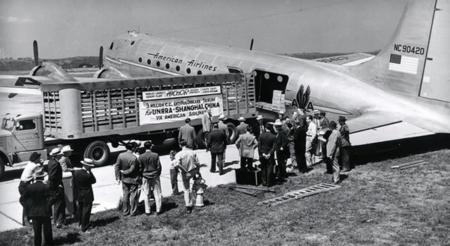
The ARK at JFK is a comprehensive, multi-purpose animal airport handling, cargo facility, and quarantine center at JFK International Airport. Located off the runway at JFK in Cargo Area D, The ARK provides 24/7 access to and from a state-of-the-art, climate-controlled facility, enabling the safe handling and efficient delivery of horses, pets, birds, and other animals by air. The ARK is committed to the humane treatment of all animals traveling by air, ensuring an efficient, safe, secure, and low-stress environment for both human and animal clients.
As the primary facility that handles the import and export of horses at JFK, The ARK provides a broad range of services, including import/export, quarantine, boarding, and specialized equine care and transportation. Equine and livestock-related documentation is handled by a handful of outside brokers who specialize in that area.
In an April 2024 discussion with Kiera Mejia, Director of Sales and Marketing at The ARK Import/Export Center, she explained equine export operations. “The horses exit our facility directly on the airport ramp side, and we put the jet stalls right up to the ramp so that the horses walk directly onto them.” ASAK Solutions, a separate team and company used for ground operations, transports the horses directly to the plane.
The ARK has an on-site quarantine facility for equine imports, where horses can complete a minimum three-day quarantine (or more, depending on their origin and physical condition, and their vaccination records). Direct walk-off loading from jet stalls into quarantine is performed by specially designed ARK vehicles, and their care begins immediately upon arrival with 24/7 observation by highly trained, experienced, and caring staff before their onward transportation.

Alliance Cargo Express, Inc. (ACE) is based at JFK International Airport, where its staff each day face the challenge not simply of moving boxes from Point A to Point B, but of executing projects involving specialized cargo that require out-of-the-box thinking and, often, a bit more creativity.
Roman Mizerota, Director of Logistics at ACE, shared insights into the specialized cargo market and the services ACE offers. “As business people, we have two goals; we do not want to put all our business into a single basket. We want our day-to-day life to be fun and bring in some challenging projects, which requires us to challenge our skills, our knowledge, and to go and educate ourselves to be better…to learn to do something that we are not truly familiar with and as a result, slowly but steadily, we realize that the base of the freight forwarding business is the same – the base is booking cargo with the airline, you request a space, you negotiate the price and the deal is done. The devil then lies in the details…you could be moving boxes or general cargo, but at the same time, you could be moving AOG with little tweaks here and there.”
AOG refers to the urgent transport of parts and equipment needed to repair an ‘Aircraft on Ground’, an aircraft that cannot fly due to mechanical issues. “Procedures differ a lot from cargo to cargo,” explained Mizerota, “there is one procedure for handling general cargo, and there’s pretty much the same procedure for handling AOG cargo, but you have to make sure that you do everything five times faster! Suppose there is an airplane that cannot depart because it’s missing a part that’s needed for departure. In that case, we have to make sure that we can deliver this part as soon as possible…and it can vary, whereas one small 2-pound box has to be delivered to, let’s say, Johannesburg in 48 hours max, or an aircraft engine which can weigh five tons and can cost up to $30 to $40 million. The transit deadline is pretty much the same, though, 48-72 hours.”
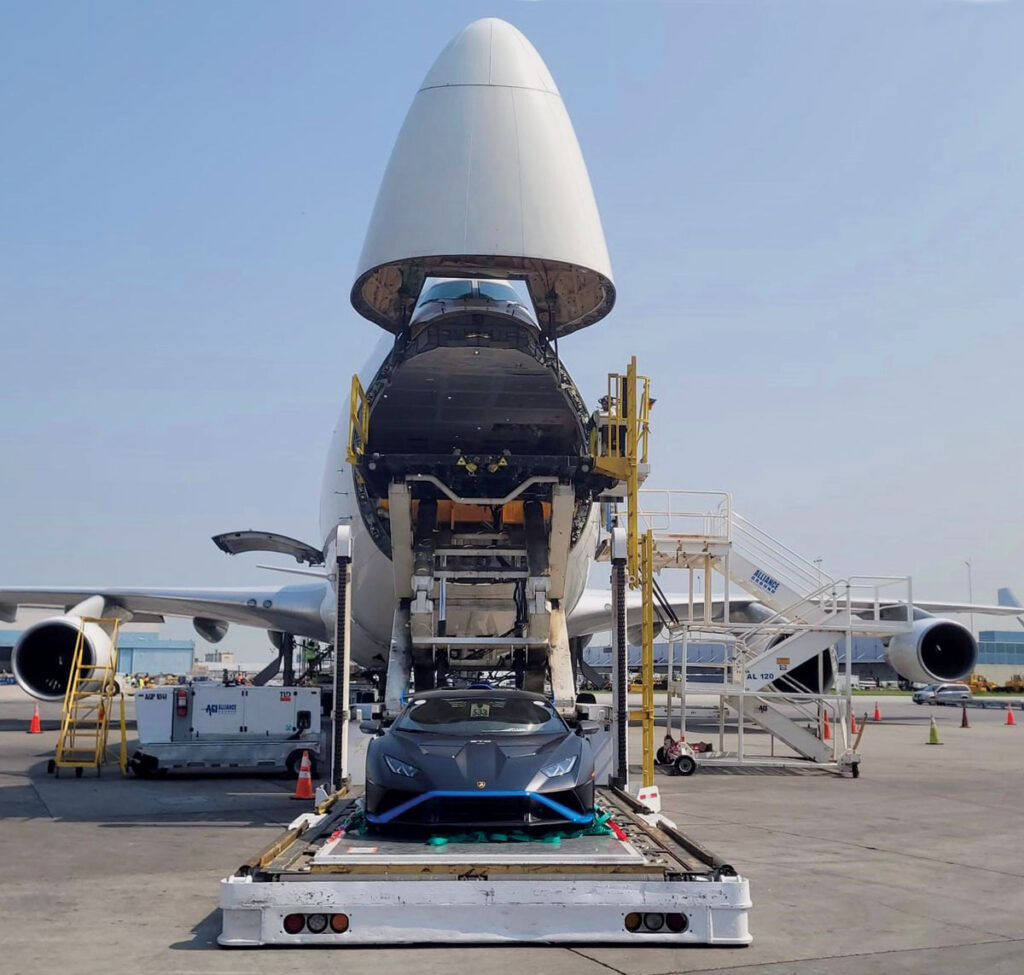
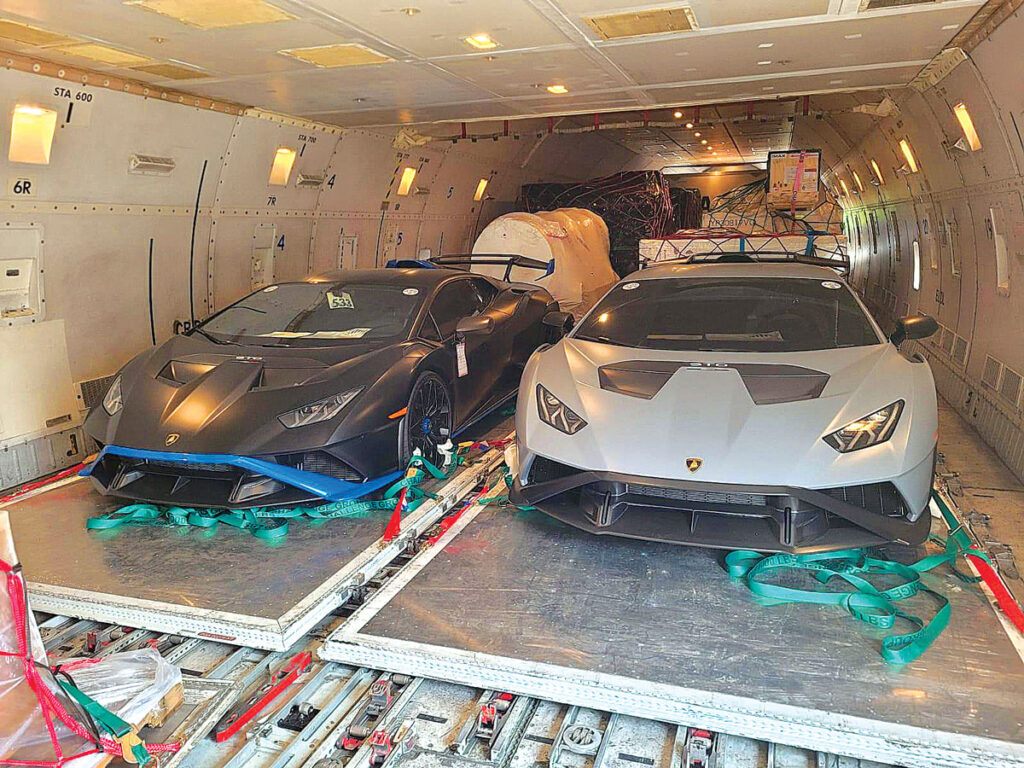
ACE approaches the transportation of large or luxury vehicles differently. While the underlying process for moving luxury vehicles remains consistent, the cost of air freight is considerably higher than that of ocean freight. As a result, ACE’s procedures and customer-facing approach are distinct for these clients.
“The procedure, I would say, is most important, but at the same time, the vehicles we deal with are of much greater value since we deal with collector’s cars. And when we deal with collectors and collectible cars, very often the customer has personal feelings and an emotional attachment to the car.” With that in mind, the company’s approach goes far beyond paperwork and pallets. Every shipment is crafted into an experience, with professional media production, exclusive photos, videos, and behind-the-scenes material designed to become part of the customer’s personal collection.
The transport of perishable cargo introduces another variable in terms of temperature control and a product’s shelf life. For example, if a shipment needs to be transported at -25° Celsius, the cargo can only be on the loading dock for a few minutes. This is to allow for inspection, screening, and placement into special containers that can maintain the required temperature for 24 to 72 hours from the time it leaves the exporter in the United States until it is delivered to its final destination.
The aspect of fine art as cargo is also a challenge due to its high value and high risk. There are many layers to protecting fine art and art objects as cargo. “The structure of the crates are made of a shock-absorbent material. Additionally, there are many levels of support inside the crate, including flooring that is not completely stiff but is very stable. Its flexibility allows it a certain degree of necessary movement,” explained Mizerota.
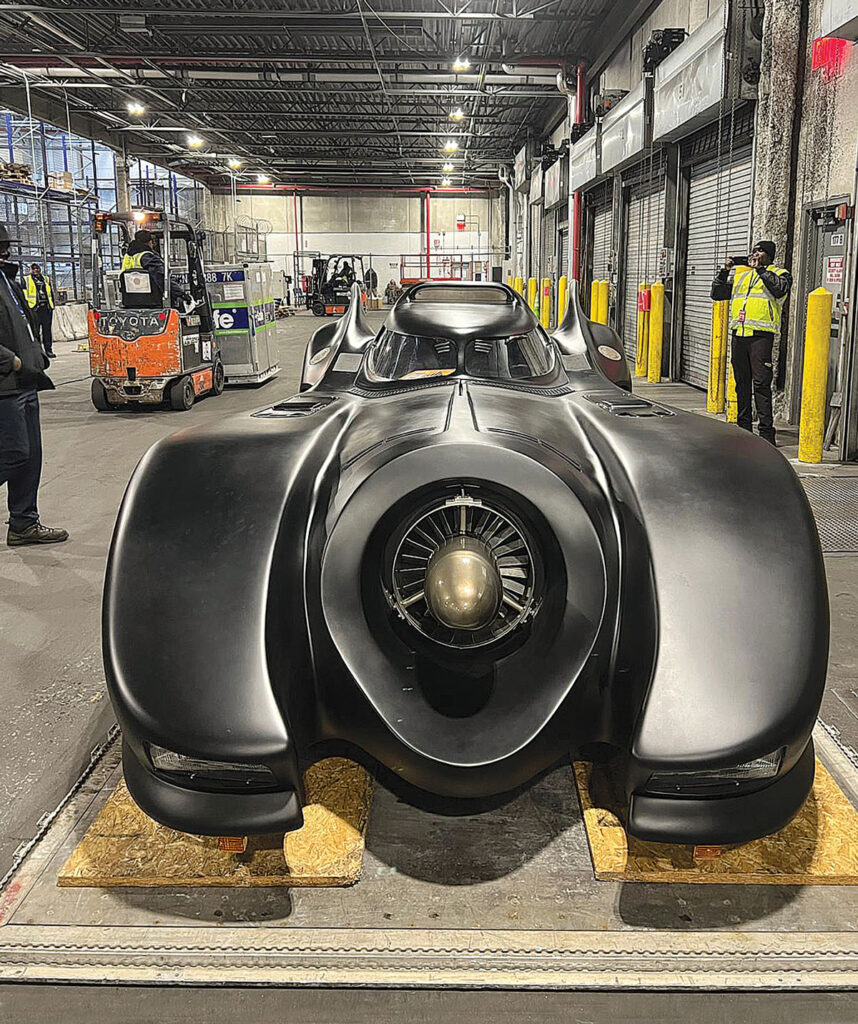

Today, several specialized cargo shipments stand out in Mizerota’s mind: including an original Val Kilmer ‘Batmobile’; 150 UN electric motorcycles shipped from Los Angeles; and one of the biggest shipments handled by ACE, a Chinook Helicopter specifically shipped from Montana to a fire department in Indonesia. “The only aircraft able to accept something of this dimension was an Antonov 124, which is the biggest cargo aircraft in the world. This was not a commercial flight, so we had to arrange a charter with the Ukrainian company, Antonov, to land in the United States and load the helicopter for shipment to Indonesia. Another Antonov charter we had shipped was a commercial motor for Coca-Cola out of Houston.”
“Historically, JFK is the place for us and the best place for air freight logistics in the U.S., but while we are physically located in New York, we fly anywhere in the country and anytime something specialized is being shipped we have a dedicated team to be present at loading, to escort cargo shipments, and to ensure that all cargo is handled properly, in compliance, and in line with the standards we set internally.
It’s very important to us to make our day-to-day life and work interesting. Anytime we deal with a shipment that requires special attention, that’s what really rouses us. Everyone on the team is a great expert in their own trade, knowing what to do in this or that scenario and how to handle the cargo properly and in a humanitarian way,” emphasized Mizerota.
The general and specialized goods that arrive at our doorsteps are often taken for granted. However, the journey of these goods teaches us an important lesson: with the right mindset, expertise, preparation, equipment, and ‘human element,’ no job is too large or insurmountable when completed one secure, detailed step at a time.
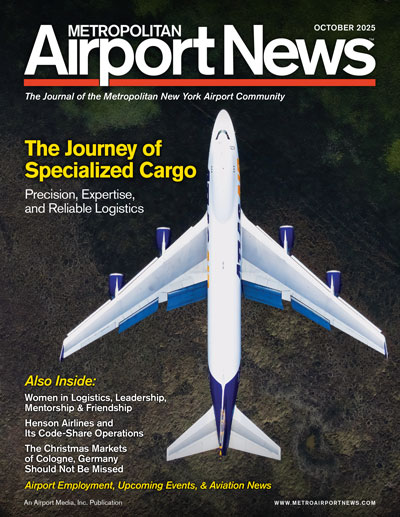
On the Cover: The aerial photograph on the cover was taken by aviation photographer Vincenzo Pace from a helicopter during a photo shoot over Anchorage International Airport. The helicopter maintained a safe distance throughout the operation, which was carefully planned and coordinated with Anchorage Air Traffic Control, ensuring full compliance with safety protocols and no interference with regular aircraft movements. www.aerovincenzo.com