

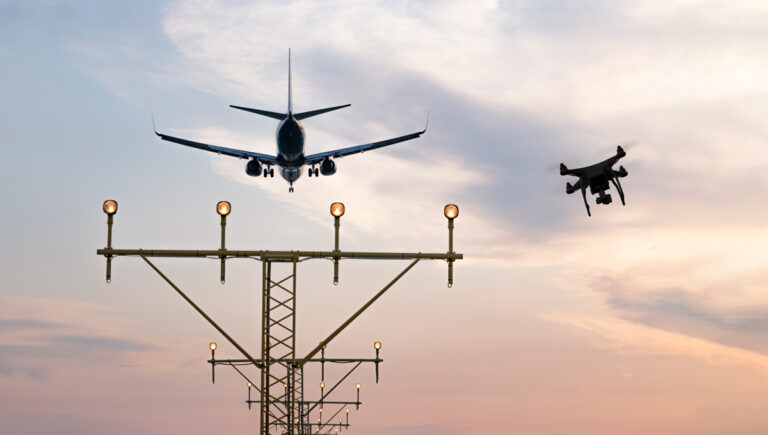
The deadly LaGuardia accident has renewed attention on airport safety and raised a larger question for regulators: how can drones be safely integrated into the National Airspace System? FAA spokesman Rick Breitenfeldt said that safely integrating drones into the NAS is a top priority for the FAA, and that the agency’s role is to ensure drones can operate safely alongside other aircraft.1
Breitenfeldt said that as of May 2026, more than 865,000 drones were registered in the United States, including about 373,000 recreational drones and more than 491,000 commercial drones. He said the number of registered unmanned aircraft is growing quickly, forcing the FAA and airport operators to balance safety concerns with possible uses for drones in inspections, surveillance, emergency response, and other airport tasks.1
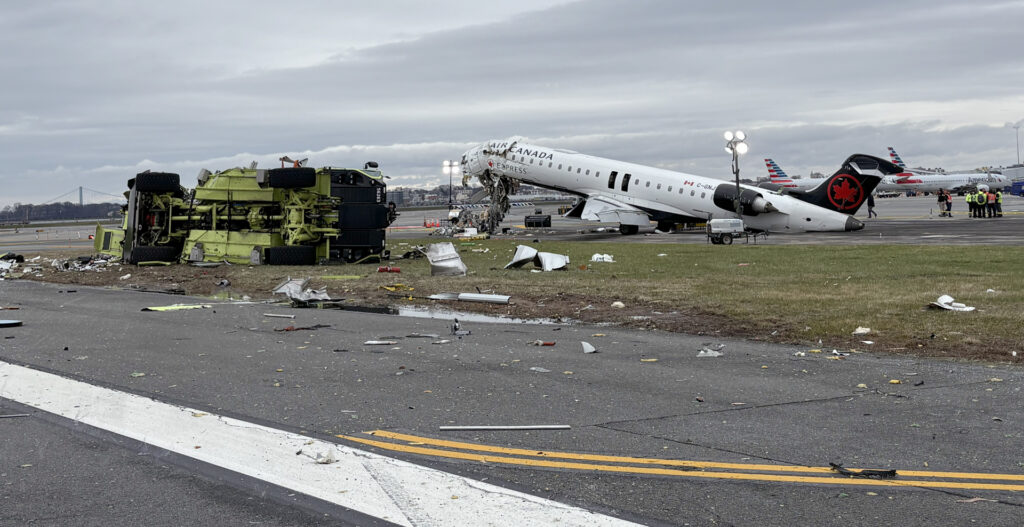
The issue took on new urgency after the March 22, 2026, collision at LaGuardia Airport, when Jazz Aviation Flight 646, operating as Air Canada Express Flight 8646, struck an aircraft rescue and firefighting vehicle while landing on Runway 4. The Mitsubishi Heavy Industries RJ Aviation CL-600-2D24, better known as a CRJ-900, was substantially damaged in the collision. The captain and first officer were killed, and 39 people were taken to hospitals, with six serious injuries reported, according to the National Transportation Safety Board.2
“The NTSB evaluates airport surface-safety issues through a comprehensive examination of the airport environment, air traffic control operations, flight crew actions, and available safety technologies,” said Peter C. Knudson, an NTSB spokesman.3
The Port Authority of New York and New Jersey said the accident underscores how complex airfield safety can be. “The report reflects that the ARFF (Aircraft Rescue and Fire Fighting) vehicle was dispatched as part of an emergency response and was operating in direct communication with, and under the direction of, air traffic control,” Port Authority Chief Communications Officer James Allen said. He added that the airport is equipped with Airport Surface Detection Equipment, Model X, or ASDE-X, which is used by air traffic control to track the surface movement of aircraft and ground vehicles, but that the FAA reported it did not alert the tower in this case.4
The NTSB’s work is ongoing, and the agency cautions that preliminary reports contain factual information only, not analysis or probable cause.2 But after the LaGuardia collision, one safety question has new urgency: what else can help airports see danger on the airfield before it is too late?
Drones may be part of that conversation, but FAA research suggests they would play a limited and carefully managed role, not serve as a cure-all for runway safety. In an era of AI cameras, surface radar, vehicle tracking, and real-time airport command centers, the broader question is what additional eyes could help prevent runway collisions or improve emergency response.9
It is a complicated question because drones occupy an unusual place in aviation safety. Around airports, unauthorized drones are usually treated as part of the problem, not part of the solution. The FAA says reports of unmanned aircraft sightings from pilots, citizens, and law enforcement remain high and that it receives more than 100 reports near airports each month. The agency also warns that operating drones around airplanes, helicopters, and airports is dangerous and illegal when unauthorized.7
Yet under controlled circumstances, drones may also become useful airport safety tools. The distinction is critical: a rogue drone near an approach path is a hazard, while an authorized drone used during a runway closure, perimeter inspection, or post-incident survey can be a managed aircraft operation. The future of airport safety may not be drones replacing tower controllers or aircraft rescue crews, but drones, cameras, and sensor networks augmenting the safety picture when tightly integrated into airport procedures.9
LaGuardia, like other major airports, already operates within a layered safety environment. One key system is Airport Surface Detection Equipment, Model X, or ASDE-X, which uses radar, multilateration, satellite technology, ADS-B, and flight-plan data to allow air traffic controllers to track aircraft and vehicles on the airport movement area. The system presents controllers with a map of aircraft and vehicle positions overlaid on airport runways, taxiways, and approach corridors, and can provide visual and aural alerts of possible incursions or incidents.5
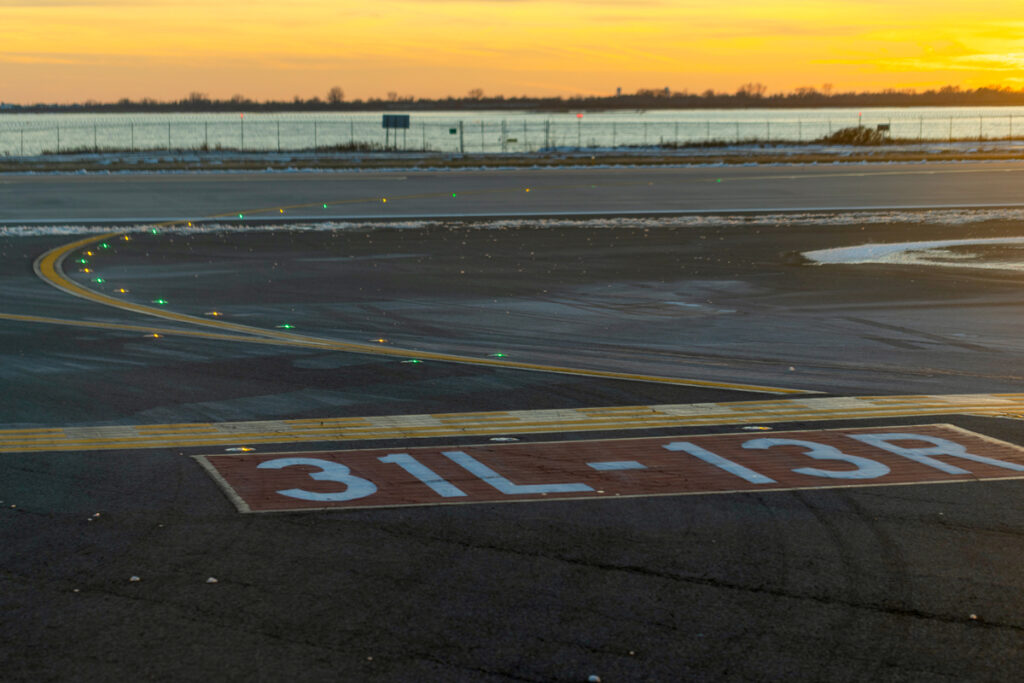
Another layer is Runway Status Lights, a system of automated red in-pavement lights designed to warn pilots and vehicle operators when it is unsafe to enter, cross, or take off from a runway. The system is advisory and does not replace an air traffic control clearance, but it gives pilots and vehicle operators a direct warning independent of controller voice instructions. The FAA says Runway Status Lights are commissioned at 20 U.S. airports, including LaGuardia, JFK, and Newark Liberty airports.6
Those systems point to a broader principle: runway safety depends on redundancy. Controllers need a clear picture of what is moving. Pilots need clearances and visual cues. Vehicle operators need training, radios, lighting, and reliable identification. Airport operations teams need procedures that work under stress, at night, and during simultaneous emergencies.
That is where the idea of “eyes in the sky” needs careful handling. A drone hovering over an active runway during arrivals and departures would almost certainly create a new risk. Even a small unmanned aircraft can be difficult for a pilot to see, and the FAA says drone operators must avoid manned aircraft, yield right of way, and not interfere with airport operations. In controlled airspace or on airport property, an authorized drone operation would require coordination, approval, and a safety case showing it will not conflict with crewed aircraft.7
But there are airport use cases where drones may add value because they can move quickly, capture high-resolution images, and reduce the need to place personnel in hazardous areas. FAA airport technology researchers have studied small unmanned aircraft systems for airport pavement inspections, including tests at multiple airports between 2020 and 2022. Such work points to drones as inspection supplements, not replacements for established safety programs.9
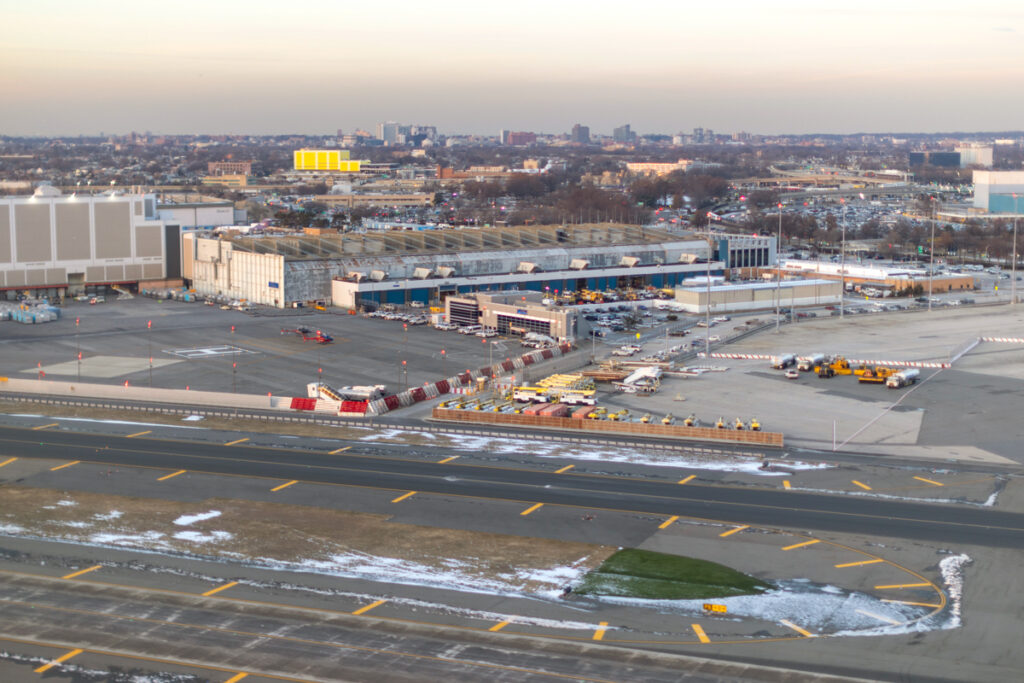
Drones have also been evaluated for airport perimeter inspections. FAA research found that drones equipped with thermal and visual cameras could help inspect hard-to-reach areas and detect unauthorized persons or vehicles, while recommending that they supplement rather than replace current visual inspections. That “supplement, not replace” conclusion may be the right frame for drones in airport safety overall.9
Wildlife management is another potential safety role, but one that shows how heavily regulated airport drone operations can be. The FAA has issued guidance to airport sponsors about using unmanned aircraft systems to disperse wildlife, stating that operators should coordinate with the airport sponsor, have approved airspace authorization, and obtain other necessary approvals, including wildlife-related permits. That guidance underscores that airport drones are not casual tools to be launched on demand.8
In the context of runway collisions, computer vision and machine learning engineers, as well as commercial drone technology developers, are actively researching the use of AI-powered drones to autonomously scan tarmac pavement. They can detect debris or surface cracks that may threaten aircraft during takeoff or landing. Other plausible uses once a runway is closed and aircraft movement has stopped include helping incident commanders map debris, document vehicle and aircraft positions, assess pavement damage, or support recovery planning.9
The prevention side may belong more to fixed sensors than flying ones. Cameras mounted on towers, terminals, or lighting structures can provide persistent views without introducing another aircraft into the airspace. Thermal cameras may help in low-light conditions. Vehicle tracking, multilateration, and airport surface displays can help controllers see exactly which vehicle is where. These tools are not as eye-catching as drones, but they may be better suited to the split-second geometry of an active runway.9
At airports around the country, the FAA has already been studying controlled drone use for tasks such as aircraft rescue and firefighting situational awareness, accident-scene documentation, perimeter surveillance, and pavement inspections. The research has involved Atlantic City International Airport, Cape May County Airport, Dallas/Fort Worth International Airport’s Fire Training Research Center, Savannah/Hilton Head International Airport, McGhee Tyson Airport, and Cincinnati/Northern Kentucky International Airport, while FAA pavement-inspection testing also has included five airports between 2020 and 2022. The agency’s broader message is cautionary: drones can supplement airport safety systems, but they are not replacements for required inspections or other core airport functions.9
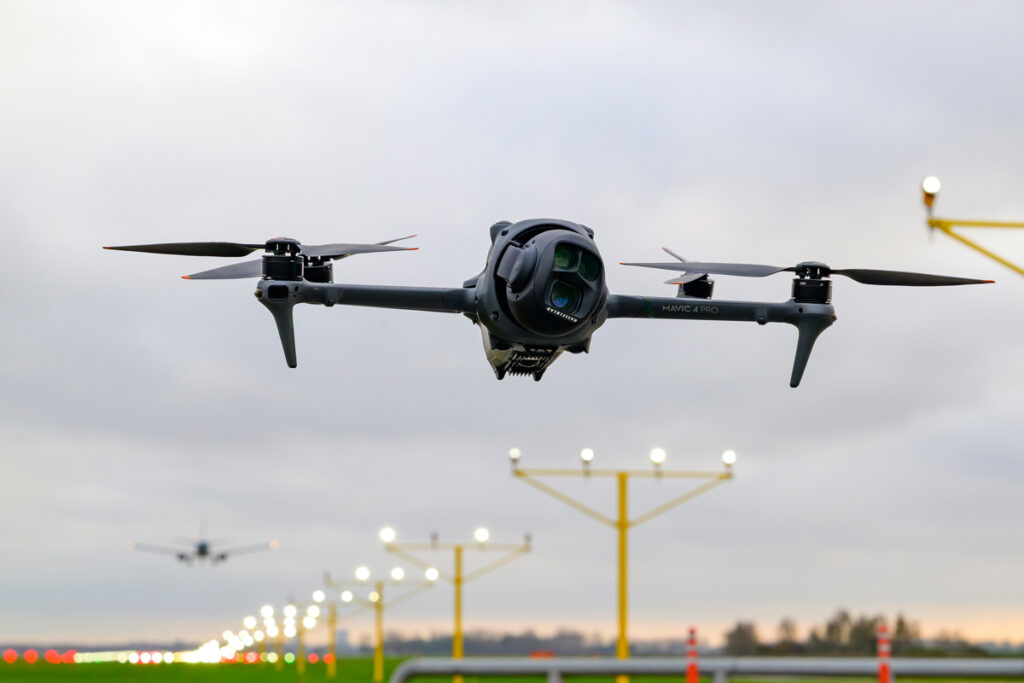
That does not mean drones are irrelevant. Instead, it suggests that airports may need two different drone strategies.
- The first is defensive: detect, identify, and respond to unauthorized drones that could endanger aircraft or disrupt operations. FAA guidance to airports on UAS detection and response says detection systems can use radar, radio frequency, electro-optical, and acoustic sensors, but it cautions that detection systems do not necessarily determine intent or threat level. The same guidance says the FAA does not currently support counter-UAS mitigation systems by entities other than federal departments with explicit statutory authority.7
- The second strategy is operational: decide whether, when, and how authorized drones can support airport safety missions. That could include routine pavement imagery during planned closures, perimeter checks in hard-to-reach areas, wildlife observation with qualified biologists, storm-damage assessment, construction monitoring, or post-accident documentation when the airspace has been secured. In each case, the drone is not a substitute for air traffic control, airport operations, or ARFF crews. It is a sensor platform.9
For airport leaders, the question becomes less “Should we use drones?” and more “What safety problem are we trying to solve?” A drone may be useful for seeing over a fence line. It may be poor at helping a vehicle driver make a runway crossing decision in the final seconds before a landing aircraft arrives. The value comes from matching the tool to the safety gap.
The likely lesson is not that airports need drones overhead during every operation. It is that airports need better awareness at every layer: the tower, the cockpit, the vehicle cab, the airport operations center, and the emergency command post. Drones may belong in that system, but only in defined roles and under strict control. Around airports, the same technology can be a threat or a tool depending on who is operating it, where it is flying, and how well it is integrated into the safety system.
As the NTSB continues its investigation, the aviation community will wait for the final findings. In the meantime, LaGuardia’s collision is a reminder that the airport surface is one of aviation’s most demanding environments. The next safety advance may not come from a single aircraft, camera, or warning light. It may come from connecting all of them, so that when seconds matter, everyone who needs to see the danger can see it in time.2
Endnotes:
- Rick Breitenfeldt, FAA spokesman, statement to author, May 2026; Federal Aviation Administration, “FAA Aerospace Forecast Fiscal Years 2026–2046: Emerging Aviation Entrants, Unmanned Aircraft Systems, and Advanced Air Mobility,” accessed May 27, 2026,
- National Transportation Safety Board, “DCA26MA161,” preliminary investigation page for the March 22, 2026, LaGuardia Airport collision, accessed May 27, 2026,
- Peter C. Knudson, NTSB spokesman, statement to author on the NTSB’s approach to airport surface-safety investigations, May 2026.
- James Allen, chief communications officer, Port Authority of New York and New Jersey, statement to author on the LaGuardia accident and airport surface safety, May 2026.
- Federal Aviation Administration, “Airport Surface Detection Equipment, Model X (ASDE-X),” last modified September 7, 2023, accessed May 27, 2026,
- Federal Aviation Administration, “Runway Status Lights,” last modified April 3, 2025, accessed May 27, 2026.
- Federal Aviation Administration, “UAS Detection, Mitigation, and Response on Airports,” last modified October 13, 2023, accessed May 27, 2026,; Federal Aviation Administration, “FAA Drone Detection Testing,” June 13, 2025, accessed May 27, 2026.
- Federal Aviation Administration, “UAS Detection, Mitigation, and Response on Airports,” guidance and policy section, including “Letter to Airport Sponsors about Using UAS to Disperse Wildlife,” last modified October 13, 2023, accessed May 27, 2026.
- Federal Aviation Administration Airport Technology Research and Development Branch, “Evaluation of Unmanned Aircraft Systems for Airport Perimeter Inspections and Surveillance,” September 27, 2023, accessed May 27, 2026, https://www.airporttech.tc.faa.gov/Products/Airport-Pavement-Papers-Publications/Airport-Pavement-Detail/evaluation-of-unmanned-aircraft-systems-for-airport-perimeter-inspections-and-surveillance; Federal Aviation Administration, “On Airport Unmanned Aircraft System Operations,” accessed May 27, 2026,