

From predictive tarmac choreography to AI-driven maintenance, smart technologies are quietly transforming chaotic terminals into seamless, data-driven hubs.
Modern airport terminals are highly complex transitional spaces. While travelers only see a sequence of check-in halls, security checkpoints, and departure gates, the infrastructure behind the scenes supports one of the most demanding logistics operations in the world. Historically, airport operators relied on static schedules, past averages, and reactive decision-making to manage daily flows. Now, the industry is shifting. By integrating predictive software, airports are transforming how they manage daily operations, maintain critical assets, and design future infrastructure.
The air travel industry and governmental authorities are increasingly deploying artificial intelligence (AI) to keep pace with 21st-century passenger volumes. By investing in this technology, airports aim to optimize operations, ease staffing shortages, and enhance the passenger experience while simultaneously managing ATC impacts and emergency responses.
The definition of ‘artificial intelligence’ is codified in 15 U.S.C. § 9401(3) as part of the National Artificial Intelligence Initiative Act of 2020, enacted by Congress, as a machine-based system that can, for a given set of human-defined objectives, make predictions, recommendations, or decisions influencing real or virtual environments. In plain terms, AI equips machines to mirror human thinking, learning, and problem-solving. Rather than executing rigid, pre-programmed commands, AI software independently evaluates data, uncovers hidden trends or patterns, and generates its own decisions or forecasts.
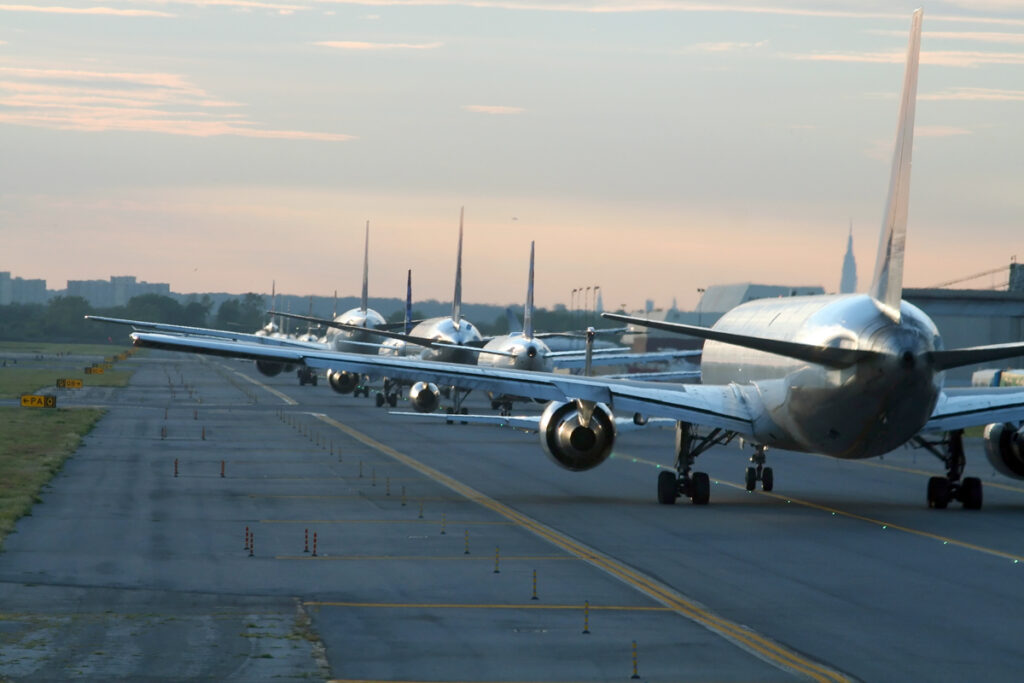
The Predictive Apron: Real-Time Operational Choreography
The tarmac is an airport’s most unpredictable zone. A single delayed catering truck or a slow fuel hookup triggers a costly cascade of late departures. Traditionally, control towers lacked visibility into these micro-events until the delay had already occurred.
AI-driven computer vision is changing this dynamic. By utilizing existing terminal cameras, machine learning models track every moving asset on the ramp. The system instantly recognizes fuel trucks, baggage tugs, and catering carts. If the AI detects that a fueling bridge has not connected to an aircraft ten minutes after arrival, it flags the anomaly to ground controllers. This allows teams to intervene before the delay impacts the scheduled pushback time.
Higher in the operational stack, machine learning models handle stand and gate allocation. Instead of relying on rigid, pre-set gate schedules, AI constantly recalculates flight trajectories, taxi speeds, and baggage unloading times. If an incoming flight faces a headwind, the system dynamically swaps its assigned gate with an on-time aircraft. This optimization maximizes gate utilization, reduces taxi-in fuel burn, and eliminates the frustrating spectacle of planes waiting on the tarmac for a gate to open.
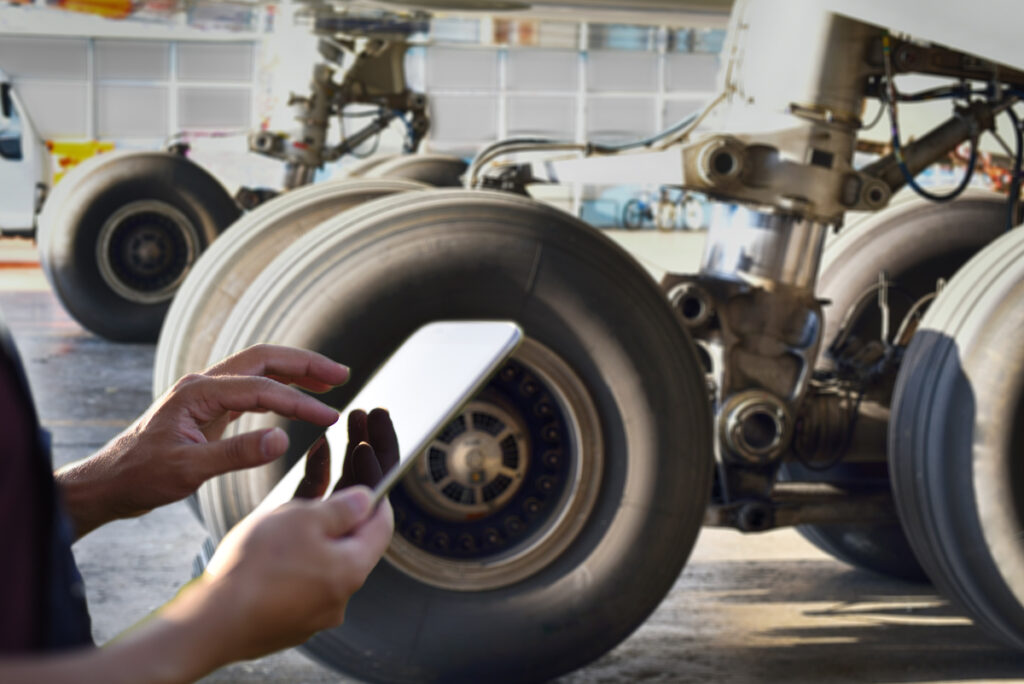
Structural Telemetry: The Era of Pre-Emptive Maintenance
For a long time, airport maintenance followed a simple rule: fix things on a set schedule, or wait until they broke. Both ways waste a lot of time and money. If a baggage belt snaps during the morning rush, it can paralyze a terminal for hours. Now, airports are fixing this by using AI and continuous monitoring. Deep inside the baggage maze under the floors, thousands of vibration and heat sensors keep an eye on the conveyor gearboxes. AI learns what the machinery sounds like when it is running smoothly. When a part starts to wear out—making a tiny hum that no human could ever hear—the AI flags it. Crews can then swap the part out at midnight when the airport is quiet, avoiding a major headache.
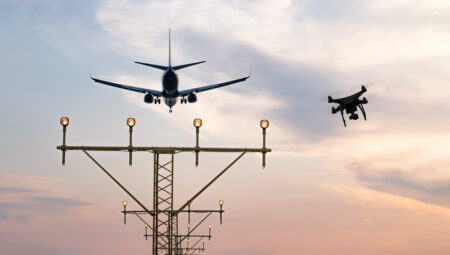
This smart approach works outside on the airfield, too. Runways take a beating from heavy planes every day. Instead of sending workers out to manually inspect for cracks, airports now use automated drones with advanced cameras to map the pavement down to the millimeter. Smart software scans these images to catch microscopic cracks and ruts long before they become dangerous. Because airports know exactly when and where a runway needs love, they can schedule quick, targeted patches. This saves them the massive hassle and expense of shutting down an entire runway for emergency paving.
Generative Layouts and Digital Twins: Evolving the Infrastructure
The impact of AI is not confined to existing operations; it is fundamentally altering how airport infrastructure is designed and expanded. Architects and engineers are leveraging generative AI to design terminals. By inputting decades of passenger movement data, security processing speeds, and retail revenue metrics, designers allow AI to simulate millions of structural variations.
The software optimizes layouts to achieve two conflicting goals: minimizing passenger walking distances to gates while maximizing foot traffic past retail storefronts and dining areas. Once constructed, these advanced facilities are managed via “Digital Twins”—highly accurate, real-time 3D virtual models of the physical airport.
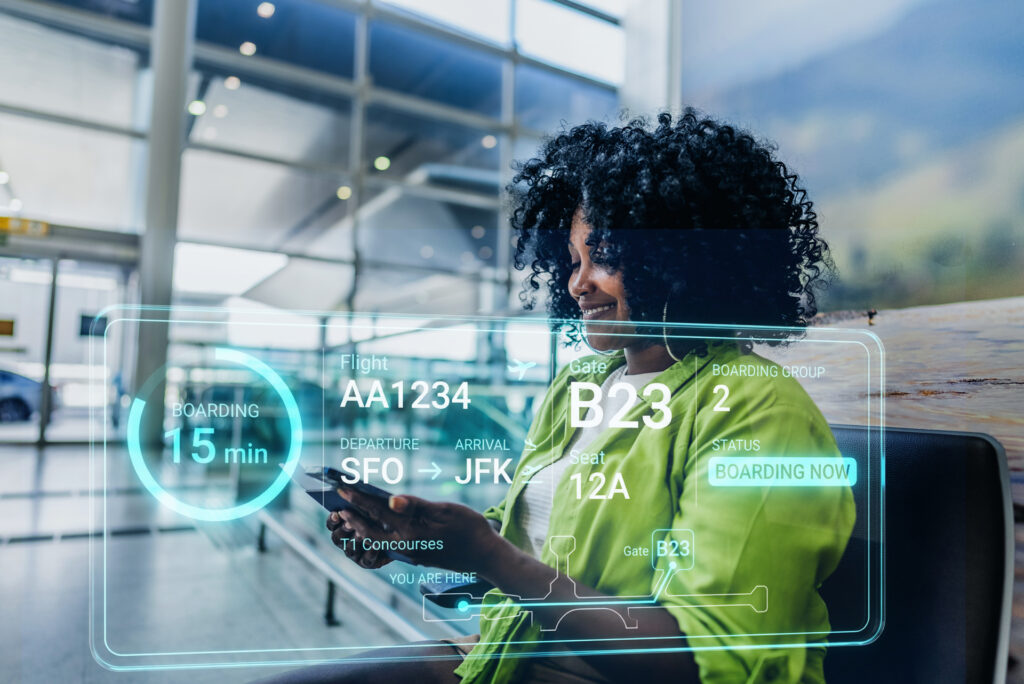
Every HVAC unit, escalator, automated people mover, and electrical substation streams data directly into this digital replica. If a heatwave is forecast, the digital twin runs predictive simulations to determine how the terminal’s glass facade will affect internal temperatures. It automatically adjusts cooling zones hours in advance, balancing passenger comfort with energy efficiency. Furthermore, by orchestrating solar arrays, battery storage, and electric ground fleet charging docks, the AI draws power from the regional grid only during low-tariff, off-peak hours. This optimization simultaneously slashes airport carbon footprints and utility costs.
The Invisible Framework
The true metric of success for artificial intelligence in airport environments is invisibility. When operating at peak efficiency, these systems ensure that flights depart on time, runways remain flawless, and terminal environments stay perfectly tempered. By transforming raw operational data into predictive foresight, AI is converting airports from passive, rigid transit hubs into intelligent, adaptive ecosystems capable of engineering their own efficiency.
The Kubrick Group helps organizations build and scale data & AI solutions that deliver measurable business impact. Founded in 2016, the 800-strong consultancy combines deep technical expertise with a distinctive model for building clients’ workforces. Kubrick has particular strength in complex, operational industries, including deep aviation experience.
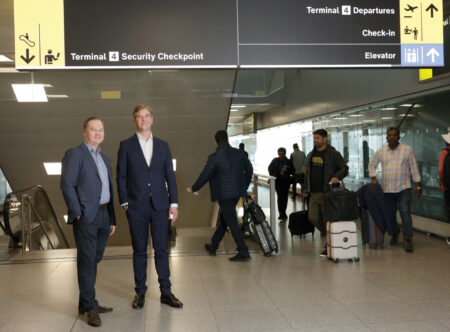
During a recent call with Kubrick Group’s Senior Account Manager Steve Diaz and Senior Director Lewis Allsop, we discussed five vital areas where AI can benefit our airports:
Airport Operations – Operations today are still largely reactive: small disruptions cascade into terminal‑wide chaos because each stakeholder only sees their own point of view.
AI can act as a quiet “ops brain,” scanning weather, schedules, crew, and aircraft connections to flag bad hours in advance so you can pre‑plan gates, stands, and de‑icing instead of firefighting.
Integrated AI‑driven ops views let ramp, tower, and terminal teams share one live picture, making gate swaps, tows, and turn priorities a coordinated decision rather than a series of urgent phone calls.
Computer vision and event tracking on the ramp can spot slipping turn milestones early, so someone intervenes before it becomes a delay passengers feel.
Workforce Allocation – Many airports are technically “fully staffed,” yet terminals feel understaffed because people are in the wrong place at the wrong time.
AI can forecast demand by checkpoint and hour, turning static rosters into dynamic staffing plans that align security, check‑in, and boarding with real passenger flow.
Decision tools can recommend live redeployments—who to move, from where, and for how long—so the response is structured rather than a last‑minute scramble.
When combined with cross‑training, AI‑guided scheduling lets you flex teams toward pressure points without relying on overtime as the only shock absorber.
ATC Impacts – The system remains safe but fragile: staffing constraints and fragmented tools leave controllers juggling multiple roles with little margin when something unusual happens.
The recent incident at LaGuardia exposed how thin that margin can be, with overworked tower staff, a vehicle lacking full visibility, and surface alerts that did not prevent a deadly runway conflict.
AI‑enhanced surface‑movement systems can fuse aircraft and ground‑vehicle data, highlighting emerging risks on the runway and taxiways as an extra set of eyes for ATC and airport ops.
Longer term, tighter data sharing between tower, ramp, and airport operations can create a single, live view of the airfield that makes accident chains much harder to occur.
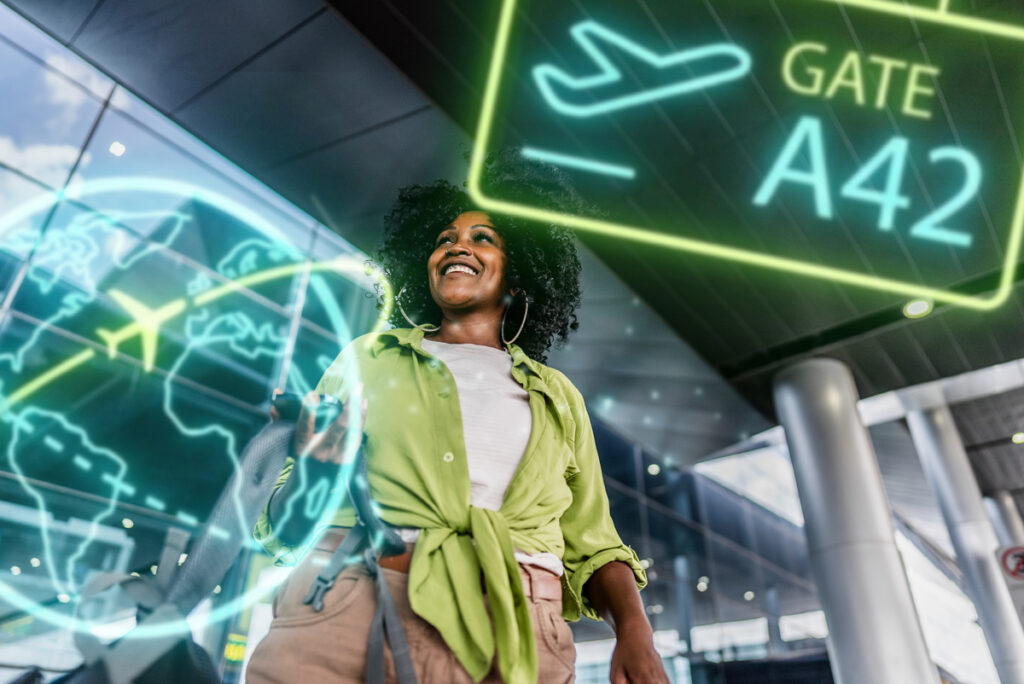
Passenger Experience – Passengers don’t see “operational constraints”; they see long lines, sudden gate changes, and a lack of clear information, which often reflects how late ops detects problems.
AI can read live cues from sensors and cameras to predict queue buildup at security, immigration, and boarding, triggering playbooks before the terminal feels overwhelmed.
When AI‑driven operational forecasts feed into apps, signage, and notifications, passengers experience the same disruption as something managed and explained, rather than random chaos.
Insights from movement patterns and dwell time let you redesign flows and staffing so the building works the way passengers actually move, not just how it was originally drawn.
Emergency Response – In real incidents, the challenge is rarely a lack of procedures; it’s that information arrives fragmented across radios, screens, and agencies while the clock is ticking.
AI can leverage live CCTV, sensor, and ops data to detect anomalies—stopped vehicles, crowd surges, smoke, conflicting asset use—and push prioritized alerts into the command center.
Decision‑support models can estimate the operational impact of closing a runway, evacuating a zone, or rerouting arrivals, giving leaders clearer options in the moment.
After an event, AI can mine logs and communications to identify recurring weak spots in staffing, process, or
infrastructure, turning each incident into concrete systemic hardening rather than just another after‑action report.
Artificial intelligence is already transforming airports and reshaping commercial aviation. In the coming years, airlines will expand AI across operations, enhancing operational efficiency, the passenger experience, and security measures. While high infrastructure costs and data privacy concerns present challenges, the proactive adoption of AI is essential for the future of aviation.