

Close Menu

    Subscribe for Updates

    Get the latest local airport and aviation news delivered right into your inbox each week!

    News Updates
    NY Knicks 2026

    Knicks Fever Takes Flight

    June 5, 2026
    American Airlines takes the FIFA World Cup 26 beyond the pitch — and 100 stories high at Edge NYC

    American Airlines Launches FIFA World Cup 26 Experience 100 Stories Up

    June 4, 2026
    Building 1 at Newark Liberty International Airport.

    Landmark Status and Preservation 

    June 4, 2026
    Facebook X (Twitter) Instagram YouTube Flickr
    Metropolitan Airport News
    • Airport & Aviation Events
    • Latest Airport News
      • Publisher’s Message
      • Editor’s Notebook
      • Leadership Insights
      • New York Aviation History
      • Fast Five
      • Non-Rev Traveler
      • On Duty
      • Company Spotlight
      • Air Cargo
      • Airline News
      • Airport Community
      • Airport Employment News
      • Airport News
      • Airport Safety & Security
      • Aviation News
      • Ground Services
      • Intermodal
    • Airport Employment
    • Back Issue Archive
    Metropolitan Airport News
    Home»Featured»Air Travel and the Air Carrier Access Act
    Featured

    Air Travel and the Air Carrier Access Act

    Accessibility for Air Travelers with Disabilities
    Julia Lauria-BlumBy Julia Lauria-BlumNovember 14, 202214 Mins Read
    Facebook Twitter LinkedIn Email
    Accessible Services at New York Airports

    This October, the Air Carrier Access Act of 1986 (ACAA) celebrated its 36th anniversary. The ACAA (Public Law 99–435) prohibits discrimination against persons with disabilities in commercial air transportation. Airlines are required to provide passengers with disabilities with many types of assistance, including wheelchair or other guided assistance to board, deplane, or connect to another flight, and seating accommodation assistance that meets passenger’s disability-related needs, as well as assistance with the loading and stowing of assistive devices. After a lengthy rulemaking process that included regulatory negotiations involving representatives of the disability community and the airline industry, the U.S. Department of Transportation (USDOT) issued a final ACAA rule in March 1990, which has been amended 15 times by the USDOT to further improve access to transportation facilities and services.

    The Centers for Disease Control estimates that 61 million adults in the U.S. live with a disability, which includes impairment in mobility, cognition, hearing, vision, independent living, and self-care. 

    Air travel for people with disabilities can be exceptionally challenging if airport facilities are not accessible and reasonable accommodations are not made, as in the most recent amendment to the Air Carrier Access Amendments Act (ACAA) of 2021. This bill expands provisions prohibiting discrimination against disabled individuals by an air carrier. Specifically, it lists certain actions that an air carrier must take or may not take concerning a disabled individual. Despite these amendments, people with disabilities, including veterans, continue to experience significant barriers with traveling in air transportation, such as damaged assistive devices; inaccessible aircraft, lavatories, communication media, delayed assistance; the treatment of service animals, inadequate disability cultural competency, and a lack of suitable seating accommodations.

    TSA PSS assists disabled passenger Photo WheelChairTravel.org Metropolitan Airport News

    The ACAA requires air carriers to designate at least one Complaint Resolution Official (CRO) at every airport they serve. Under the U.S. Department of Transportation’s Aviation Consumer Protection section, it is stated: If you encounter a disability-related issue related to an airline accommodation or service, you can request to speak with the Complaint Resolution Official (CRO) or a supervisor. A CRO is the airline’s expert on disability-related issues in air travel and has the authority to resolve complaints on behalf of the airline.’ Every airline must have a CRO available by telephone or in-person during operating hours. The CRO must be accessible via a TTY for passengers who are deaf or hard of hearing. 

    Making air travel more accessible to people with disabilities is about being inclusive and enabling everyone to appreciate the freedom of movement that air travel offers. Safe, accessible travel for all air passengers, including those with disabilities, is a commitment to be made by all air carriers. An Open Doors Organization 2020 Market Study on Adult Travelers with Disabilities, found that between 2018-2019, passengers with disabilities are a growing segment of the air travel industry, and nearly 15 million people with disabilities took 29.6 million trips by air, generating $11 billion in spending.

    While the industry has had standards for persons traveling with disabilities for quite some time, there are still disparities. A key area of concern from the disability community is the damage to mobility aids, particularly to wheelchairs, or their loss, during air transportation. When a traveler is confronted with the loss, damage or destruction of their mobility aid their safety and well-being are put at risk. Replacements are not always provided; if they are, they are often unsuitable for the person’s needs. Other key issues of concern include toileting at airports and onboard the aircraft; transferring on and off the aircraft; seating in the cabin, boarding and disembarking processes, and the transport of medical equipment.

    In July 2022 U.S. Transportation Secretary Pete Buttigieg announced actions taken by the USDOT to help further protect airline passengers and published the Airline Passengers with Disabilities Bill of Rights. The Airline Passengers with Disabilities Bill of Rights summarizes the fundamental rights of air travelers with disabilities under the ACAA designed to empower them to understand and assert their rights and help ensure that U.S. and foreign air carriers and their contractors uphold those rights. It was developed using feedback for the ACAA Advisory Committee, which includes passengers with disabilities, national disability organizations, air carriers, airport operators, contractor service providers, aircraft manufacturers, wheelchair manufacturers, and a national veterans organization representing disabled veterans. 

    Accessible Services at New York Airports

    The New York metropolitan region is served by John F. Kennedy International Airport (JFK), LaGuardia Airport (LGA), and Newark Liberty International (EWR). Each airport is wheelchair accessible, and assistance services are provided free to disabled passengers, per the Air Carrier Access Act. If you need assistance, Customer Care Representatives (in red jackets) are available throughout terminals to assist passengers with check-in, ground transportation, locating wheelchair providers, and other travel needs. In addition, the Port Authority of New York and New Jersey (PANYNJ) has prepared information to inform passengers with disabilities about vital services and programs available at all three metropolitan New York airports. 

    TSA Cares is a dedicated helpline that provides information on the screening procedures that specifically pertain to those with disabilities, medical conditions, and other circumstances. TSA Passenger Support Specialists (PSS) are Transportation Security Officers (TSO) who have received advanced training in assisting passengers with disabilities to guide them through the airport security checkpoint. 

    John Morris boarding in an aisle chair.
    John Morris boarding in an aisle chair.

    John Morris, the Founder of WheelChairTravel.org, said in a recent interview with Metropolitan Airport News that the training of every TSO to be a PSS is very exciting, “The idea is that everyone will be equipped with the knowledge to provide that degree of service to disabled passengers, and that’s great.”

    Passengers can request assistance by calling the TSA CARES helpline at (855) 787-2227 at least 72 hours before departure with their travel dates, flight information, and the assistance needed, or via e-mail at [email protected]. 

    For in-flight or wheelchair assistance from the curb to the flight, or if not accompanied by, or met at the airport by someone, contact your airline in advance about specific needs. 

    The Sunflower Lanyard for Hidden Disabilities program was first developed at Gatwick International Airport in London in 2016. Terminal 4 at JFK airport was the first airport terminal in the Northeast to offer these lanyards for people with hidden disabilities (those who do not have any physical signs of a disability), such as autism, dementia, hearing loss, brain injury, speech difficulties, visual limitations, aging-related decline, COPD, PTSD, ADHD, and more. The lanyard, a simple sunflower image on a green background, is intended to discreetly communicate to staff that passengers wearing the lanyard have a hidden disability and, as a result, may need extra help or time, or assistance. The sunflower lanyard does not offer fast track or queue jump during your terminal journey, but staff members are trained to spot the lanyards and to be mindful of supporting passengers who wear them. Passengers may request a sunflower lanyard at :

    • JFK International Airport  – the Welcome Center in the Arrivals Hall and the Traveler’s Aid desk in Departures. 
    • LaGuardia Airport – pre-security Welcome Center locations Marine Air Terminal A Welcome Center in arrivals; Terminal B Welcome Center HOV Level 1 and Level 1; Terminal C Welcome Center Arrivals Level
    • Newark Liberty International Airport – pre-security Welcome Center locations at Terminal A, Welcome Center at Level 2; Terminal B Welcome Center at Level 1; Terminal C Welcome Center at Level 1.
    Hidden Disabilities Sunflower
    The Hidden Disabilities Sunflower Lanyard, created to discreetly let others know they have a hidden, or invisible disability that may require additional assistance in public places.

    For people with hidden disabilities, entering an airport can often raise stress levels, as they are inherently unfamiliar, noisy environments with long lines and crowds. While accommodations for disabilities that are visible can be made for people impacted by mobility, hearing loss, and vision impairment, those with hidden disabilities may struggle with anxiety, change, transitional situations, social skills, and communication. Portable sensory kits with plush play equipment, texture, and color can help to alleviate these challenges, creating a sense of calm for passengers who are overstimulated. It is typical that someone with a disability travels with at least one adult or family member, meaning that at least one other person is affected by the stress of traveling with a disability. 

    Passengers with hidden disabilities who are traveling through the JFK International Arrivals Terminal 4, and those who are traveling with them, who need more information about sensory kits and lanyards, or who are unsure about amenities for the disabled are advised to e-mail: [email protected] for further assistance, and somebody will respond to assist them to the best of their capabilities.

    Guide Dog Training at JFKIAT4
    Guide Dog Foundation volunteer puppy raisers attend a puppy class at JFK, hosted by JFKIAT, operator of Terminal 4.

    “At JFKIAT, fostering a safe, accessible, and welcoming environment for all travelers within Terminal 4 is of the highest priority,” said Roel Huinink, CEO of JFKIAT, the operator of Terminal 4 at John F. Kennedy International Airport. “From leveraging artificial intelligence to assist individuals who are blind or visually impaired, to holding training classes for guide dogs, and bridging the gap for those with hidden disabilities who may need additional space or time, and more, our initiatives are working to provide essential resources, care, and assistance that help to ensure all individuals feel supported throughout their entire journey, from curb to gate.” 

    JFKIAT Terminal 4 maintains a fleet of equipment to assist in the boarding and deplaning all passengers whose flight departs/arrives at a remote parking area instead of a Gate at the terminal. All buses utilized for remote parking operations are equipped with wheelchair ramps to allow for quick and seamless bus boarding for disabled passengers requiring wheelchairs. Regarding transit from the bus to the aircraft (or vice versa), T4 utilized its Mobile Jetbridge Units or Ambulift units to assist. The Mobile Jetbridge is a product designed by ‘Aviramp’ that allows all passengers (disabled or not) to ascend/descend a ramp from the main aircraft door. The Ambulift is a vehicle that has the ability to raise the passenger compartment from ground level to meet the door of an aircraft which would allow for a passenger to be safely lowered down to ground level.

    JFKIAT Ambulift by Aviramp
    JFKIAT Aviramp, ground support equipment ‘The gateway to step-free boarding’.

    Guided Vision Assistance via AIRA Access; Artificial Intelligence Remote Assistance (AIRA) is a mobile app designed for blind or low vision customers to navigate independently with the assistance of a Live Remote ‘Agent’. This complimentary service is available at all access points, terminals, and AirTrain stations; however, it is not available at TSA/CBP checkpoint screening areas. All you need to do is download the complementary app on a smartphone. The ‘agent’ on the phone will assist you and know what is in front or near you with the use of the camera, GPS, and other web data on your phone to provide visual descriptions on demand. To download the AIRA app, go to www.aira.io

    Artificial Intelligence Remote Assistance (AIRA)
    A passenger using AIRA technology, an app for persons with vision impairment or low vision

    Travelers Aid is an internationally recognized non-profit organization contracted by the Port Authority of NY & NJ to provide various services to passengers at JFK International and Newark Liberty International Airports. Travelers Aid assists passengers who experience problems such as missed airline connections, flight delays, and lost luggage. Their information desks are staffed by a group of dedicated volunteers (in blue vests/blazers) who can guide travelers with answers to questions about the airport or the New York metro area. In addition, the Travelers Aid professional staff manages the volunteer program and offers social service support to passengers encountering challenges at the airport. Services include customer service and airport information; guidance for travelers with unexpected challenges; meet and assist; social service and referrals.

    Jane Mrosko, the program manager at Travelers Aid, JFK International Airport, said, “The Port Authority really values these types of programs, and they show their care for passenger’s well-being and safety.”

    John Morris – Founder, WheelchairTravel.org

    John Morris Founder Wheelchair Travel Metropolitan Airport News

    John Morris is the Founder of WheelchairTravel.org, the world’s largest accessible travel resource that covers a vast amount of information that involves every aspect of inclusive travel for disabled people.

    In 2012 a car accident laid claim to three of Morris’ limbs. Before his disability, Morris was a world traveler, and travel was his first true love. More than a year after his accident, he took his first trip to Los Angeles to see his alma mater, Florida State University, win the college football national championship. But planning the trip was difficult, and Morris found that the internet was filled with unreliable information about traveling with a disability, and nothing that he read prepared him for what traveling with a wheelchair is like. After traveling for more than a year, he launched WheelchairTravel.org.

    Morris only writes about the places he has visited and the experiences he has had from the seat of his wheelchair. He is committed to providing his readers with the tools to access the world independently or with family, friends, or caregivers. He is also deeply interested in disability advocacy, diversity, inclusion, and visibility. He works each day to engage with business and government leaders to create a world that is more accessible to everyone, as well as to educate readers about what to expect when traveling with a mobility impairment. 

    In a recent interview with Metropolitan Airport News, John Morris shared his personal experiences of his travels through New York metropolitan airports and the mobility challenges faced by disabled passengers.

    “One of the foremost challenges,” said Morris, “is that each carrier is responsible for delivering the accessibility services, particularly services that mobility impaired travelers rely on…wheelchairs, boarding assistance, handling of personal mobility equipment. All of this is the responsibility of the airline, particularly in airport assistance and getting to the gate, which is handled by contractors. There isn’t a consistency of experience. But there are things that travelers can do to head off the challenges, and chief among them is to inform the airline in advance of your travels and specific needs.”  While Morris said this doesn’t always work, it helps the airlines better plan for the customers they are going to be servicing on a particular day. 

    With close to 1,000 flights to his credit, Morris believes each airport brings about different challenges and benefits for travelers with disabilities.  “The biggest challenge in the entire travel industry is the lack of information,” said Morris, “if this information was provided, my website would no longer exist.”  He added that there needs to be a balance between the challenges and the benefits that are now becoming more accessible. “I respect the challenges that air carriers face, as there is great variability in the number of passengers that need assistance daily, and that is hard to plan for and staff. It’s a hard problem to solve. But there’s a lot more data now on usage that can be utilized to plan better with.” 

    Airport Resources  

    Each PANYNJ airport has its own webpage of accessibility services that include information on wheelchairs, oxygen requirements; drinking fountains; restroom accommodations; pet relief areas; hearing impaired accommodations; Planemates, or ‘mobile lounges’ used to transport passengers between arriving/departing aircraft and the gate area; Autolink Service (for connections to other flights); transportation to and from the airport, and car rental options.

    Travelers Aid - JFK Airport
    Travelers Aid - JFK Airport
    JFK International Airport
    Terminal 4
    Jamaica, New York 11430
    Tel: (718) 656-4870
    Travelers Aid - Newark Airport
    Travelers Aid - Newark Airport
    Newark Liberty International Airport
    Terminal B, Box #33
    Newark, New Jersey 07114
    Tel: (973) 623-5052
    • Accessibility Services at John F. Kennedy International Airport (JFK)
    • Accessibility Services at Newark Liberty International Airport (EWR)
    • Accessibility Services at LaGuardia (LGA)
    • Mobility-Friendly Travel Guide
      Proper planning is the cornerstone of any successful trip, and it’s even more crucial when you’re traveling with mobility aids. About 30% of Americans over the age of 65 living outside of institutions use assistive devices for mobility purposes, both inside and outside the home. Many use a wheelchair or scooter, while the greatest number use canes, crutches, and walkers.
    Share. Facebook Twitter LinkedIn Email
    Julia Lauria-Blum
    • Website
    • LinkedIn

    Julia Lauria-Blum earned a degree in the Visual Arts at SUNY New Paltz. An early interest in women aviation pioneers led her to research the Women Airforce Service Pilots (WASP) of WW II. In 2001 she curated the permanent WASP exhibit at the American Airpower Museum (AAM) in Farmingdale, NY, and later curated 'Women Who Brought the War Home, Women War Correspondents, WWII’ at the AAM. Julia is the former curatorial assistant at the Cradle of Aviation Museum and is currently an editor for Metropolitan Airport News.

    RELATED NEWS & UPDATES

    Turnaround story continues with United's Newark operation delivering best-ever on-time* performance in April and May, flying nearly 5.8 million passengers

    Newark Liberty Leads Northeast for On-Time Flights in 2026

    June 3, 2026
    Newark Liberty International Airport (EWR) Vison Plan (Rendering)

    Port Authority Approves $200M Upgrade for Newark Airport’s Terminal B

    June 2, 2026
    T5 JFK Concessions Grand Opening

    Terminal 5 at JFK Airport Unveils Iconic NYC Dining Experiences

    June 2, 2026
    JFKIAT T4 25 Years Celebration

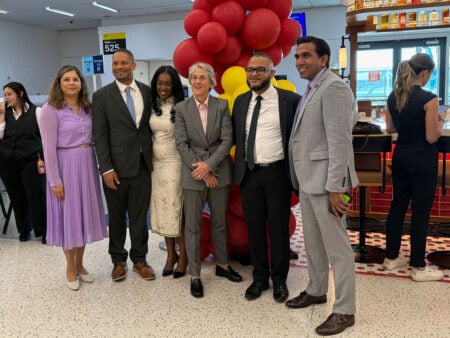
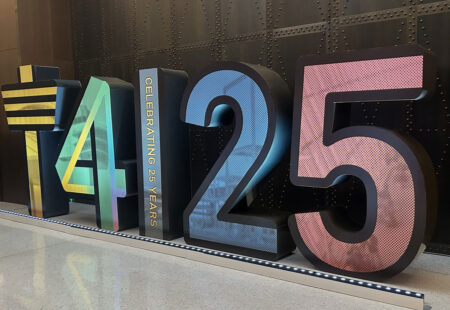
    Terminal 4 at JFK International Airport Marks 25 Years of Successful Public-Private Partnership

    May 26, 2026
    Queens Subway

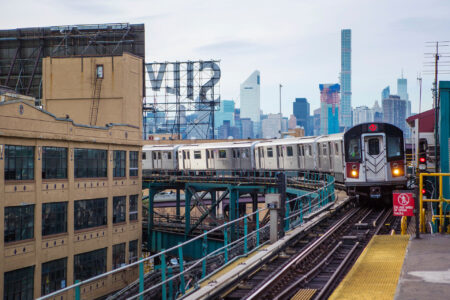
    Queens Connectivity: A Public, Urban Transit Hub 

    May 24, 2026
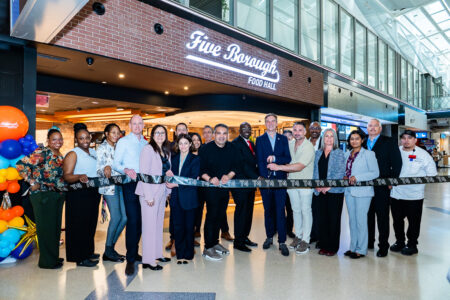
    SSP America, a division of SSP Group, a leading operator of food and beverage brands in travel locations worldwide, together with JFKIAT, the operator of Terminal 4 at John F. Kennedy International Airport, today announced the reopening of the refreshed Five Borough Food Hall, SSP America’s proprietary New York-inspired food hall concept at JFK Terminal 4. The reopening was celebrated with a ribbon cutting at Terminal 4 on May 21, bringing together representatives from JFKIAT, SSP America, For Five Coffee Roasters, joint venture partners, airport leaders, and the teams behind the refreshed dining experience. Since its debut, Five Borough Food Hall has been recognized as one of SSP America’s signature proprietary concepts, earning AXN’s Best New Concept award in 2018 and FAB Awards’ Airport Street Food Offer of the Year in 2018. Originally created by SSP America in partnership with JFKIAT, Five Borough Food Hall has been reimagined for today’s traveler while preserving the energy, variety, and unmistakable New York spirit that made the concept a standout at Terminal 4. The refreshed food hall brings together a broad all-day lineup including For Five Coffee Roasters, Dromos Fresh Greek Food, Mango Taco Truck, Five Borough Food Hall Deli, and 5BFH Pizza, offering travelers everything from locally roasted coffee and pastries to Greek-inspired bowls, tacos, burritos, New York deli sandwiches, pizza, salads, and grab-and-go items. As the international terminal of JFK, Terminal 4 is where America greets the world — and where Big City dining starts before the journey begins. Today, Terminal 4 spans more than two million square feet, serves more than 27 million passengers annually, houses 21 airlines, and supports a community of 12,000 employees. In a terminal defined by movement, diversity, and global connection, Five Borough Food Hall offers a dining experience designed to meet the moment: fast when travelers need speed, varied when they want choice, and unmistakably rooted in New York. The refreshed design moves the original concept forward from its food-truck hall roots into a modern New York neighborhood market. Warm wood details, brick textures, mural-wrapped columns, subway-inspired tile, bold menu graphics, branded refrigerated cases, and open service counters create a layered sense of place that nods to the streets, storefronts, delis, slice shops, coffee counters, and global flavors found across the five boroughs. “Five Borough Food Hall has always captured what makes New York such an extraordinary food city: its pace, diversity, and creativity,” said George Mboya, CEO of SSP America. “This refresh marks an exciting new chapter for a concept created specifically for JFK Terminal 4 and a key part of our partnership with JFKIAT. Together, we’re continuing to deliver authentic dining experiences that reflect the city outside the terminal and bring the best part of the journey to life for our travelers.” “Marking the reopening of Five Borough Food Hall at JFK T4 is a significant milestone as we continue to elevate the terminal experience for our passengers,” said Roel Huinink, Chief Executive Officer of JFKIAT. “Thanks to our long-lasting partnership with SSP America, who have been instrumental throughout our 25-year journey, passengers at T4 will have access to a curated selection of exceptional culinary options, offering a New York sense of place that aligns with the Port Authority’s vision for JFK. The addition of For Five Coffee Roasters exemplifies that vision, and we’re very pleased that this local Queens-based business will have the opportunity to enter the airport concessions space for the first time with the benefit of SSP’s global expertise and mentorship.” A key part of the refreshed offer is the addition of For Five Coffee Roasters, the Queens-born specialty coffee company known for small-batch roasting, premium beans, and cafés designed around craft, hospitality, and New York energy. Its Five Borough Food Hall menu includes hot and iced espresso drinks, cold brew, matcha, chai, pastries, and signature beverages including The Five and The Louie. "Opening our first airport location at JFK is a milestone that feels especially meaningful because it brings us back to where our story began — Queens,” said Stefanos Vouvoudakis, Co-Founder and CEO of For Five Coffee Roasters. “For Five was built to redefine what coffee hospitality could look like — combining elevated design, exceptional product, and a level of service that delivers a luxury experience within an everyday ritual. To now bring that vision to one of the world’s most iconic gateways is an exciting milestone for our team and our brand. Through our partnership with SSP America and JFKIAT, we’re proud to introduce travelers from around the world to a New York-born coffee experience rooted in craftsmanship, hospitality, and the energy that defines this city.” The refreshed Five Borough Food Hall also supports the operational realities of one of North America’s busiest international terminals. Multiple counters, clear menu identities, strong visual cues, grab-and-go merchandising, and a broad range of meal solutions help serve different passenger needs across the day — from early morning coffee and breakfast to lunch, dinner, snacks, and meals to take to the gate. The reopening comes as JFK Terminal 4 celebrates its 25th anniversary, marking a milestone year for one of the most significant public-private aviation partnerships in the United States. SSP America’s presence at Terminal 4 is part of a longstanding relationship with JFKIAT, built around a shared commitment to delivering a food and beverage program that matches the caliber, complexity, and international character of the terminal. SSP America and JFKIAT Celebrate the Next New Chapter of Five Borough Food Hall at JFK Terminal 4

    SSP America and JFKIAT Celebrate the Next Chapter of Five Borough Food Hall at Terminal 4

    May 22, 2026
    Leave A Reply Cancel Reply

    This site uses Akismet to reduce spam. Learn how your comment data is processed.

    AIRPORT & AVIATION EVENTS
    Nontraditional Employment for Women’s (NEW) 2026 Equity Leadership Awards Luncheon
    June 04, 2026
    11:30 AM to 2:00 PM
    New York Hilton Midtown
    New York, New York
    LaGuardia Airport Kids Day
    June 06, 2026
    11:00 AM to 3:00 PM
    • LaGuardia Airport-(LGA)
    East Elmhurst, New York
    ADDAPT 2026 Golf for Business Invitational
    June 15, 2026
    9:00 AM to 6:00 PM
    Colonial Springs Golf Club
    Farmindale, New York
    • >> More Airport & Aviation Events

    Subscribe for Weekly Email Updates

    Get the latest local airport news, events, and jobs delivered right into your inbox each week.

    Metropolitan Airport News Logo

    Metropolitan Airport News provides timely news, information and updates for both Port Authority of New York & New Jersey (PANYNJ) employees and businesses that provide services at, and around the major New York airports (JFK, LGA, EWR).

    John F. Kennedy International Airport
    PO Box 300877
    Jamaica, NY 11430 USA
    Phone: (718) 750-4441

    1. Guest on QueensLink or QueensWay?

      With QueensLink, you'll get both the park and train. QueensWay will provide only a park. Other cities that have tried…

    2. Maureen Katz on One Day Visit to Naples, Italy

      Hi Peter, It is great to hear from you! The 8 airlines were Evergreen International, Cosmopolitan Air Lines, People Express,…

    3. Peter Stagnitta on One Day Visit to Naples, Italy

      Hi Mo! Just curious, what were the eight airlines you worked for? You may not remember me, but I know…

    Facebook X (Twitter) YouTube LinkedIn Flickr Instagram
    • About Us
    • Advertising
    • Airport Worker
    • Charitable Giving Program
    • Back Issue Archive
    • Contact Us
    • Privacy Policy
    Copyright © 2026 Airport Media, Inc. All rights reserved.

    Type above and press Enter to search. Press Esc to cancel.