



The old saying of “If you can’t beat them, join them” may be well known. But Muse Air was the result of its unknown opposite, namely, the person who had already joined them tried to beat them. “Them” was a carrier that eventually grew into the nation’s fourth-largest airline, Southwest Airlines.
Southwest Competitor
The person whose airline ultimately bore his name and took on Southwest was Lamar Muse, a Houston native with more than three decades of aviation industry experience with the likes of Trans Texas, Continental, American, Southern, Central, Universal, and Southwest itself. Achieving the role of its president, he proposed establishing a similar Chicago-Midway carrier, but the board of directors opposed the strategy. Instead of ousting founding member Rollin King and taking control, he himself was fired, leaving colorful Herb Kelleher to take the helm.
Catalyst to his own creation came from his son, Michael Muse, who had also worked for Southwest between 1976 and 1978. After his father’s two-year retirement, during which he achieved many goals on his leisure bucket list, he urged him to re-enter the airline industry. That the period met the two-year stipulation before he legally could have, was no coincidence. And that Southwest had attracted an overwhelming number of passengers with its single-class, no-frills, “peanut fare” service, indicated that there was still untapped demand for such a competing carrier. Investors agreed.
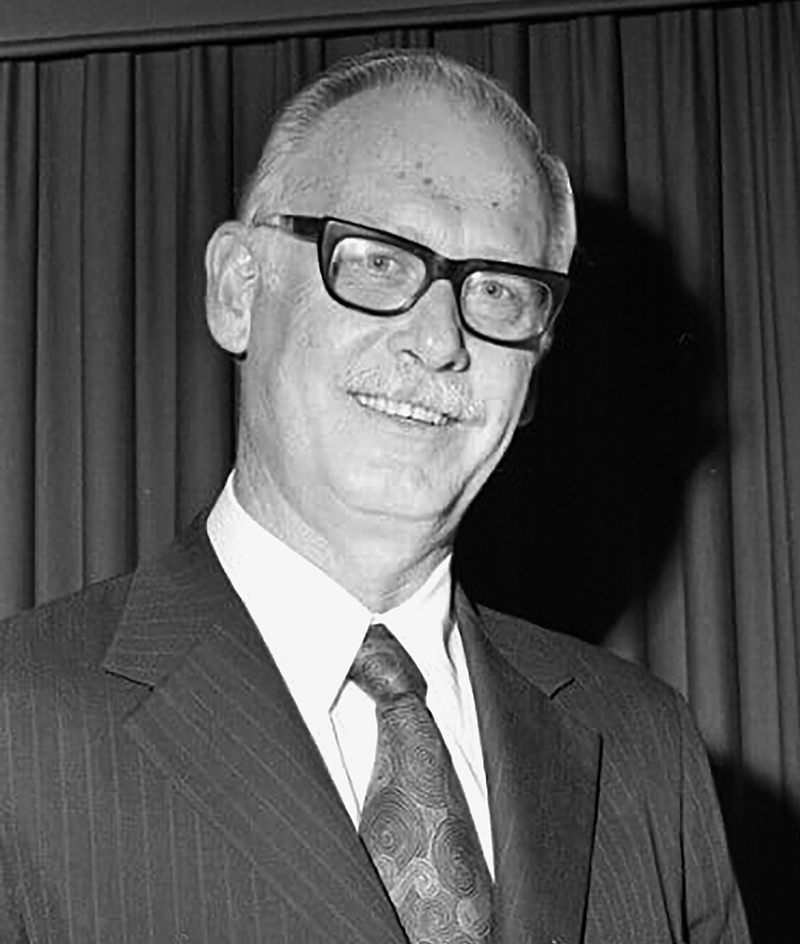
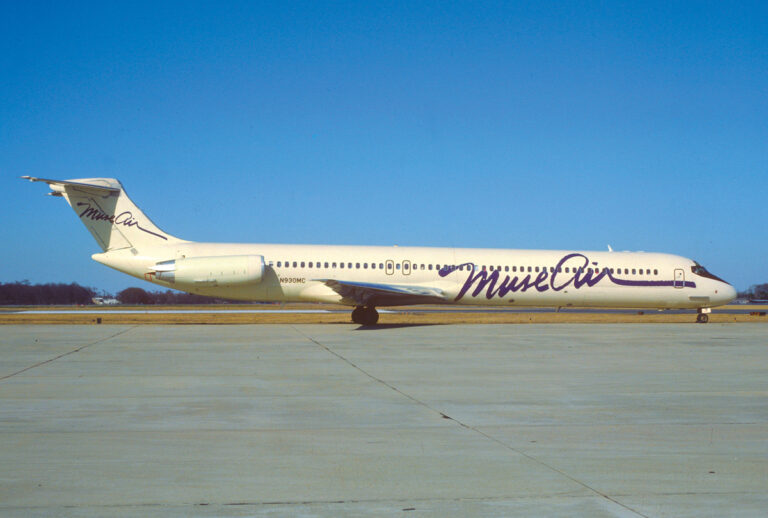
“…Investors believed that Muse’s founder, Lamar Muse, whose tenure as president of Southwest ended in 1978 when he was unceremoniously booted out by the board of directors, could mint money twice out of Texans’ need for mobility,” advises Texas Monthly’s “Musing on What Might Have Been” article. Although the attempt to challenge Southwest’s monopolistic status was originally intended for a date later than the one when it actually occurred, two MD-81s slated for financially strapped Austral Lineas Aereas of Argentina enabled it to be launched sooner with the $4 million lease-financing plan that gave it wings.
Incorporated in January of 1980, Muse Air attracted a highly experienced, seven-strong management team by March of the following year.
Originally based at Dallas-Love Field, Muse Air, now with more than $35 million in its coffers, became a publicly held corporation, and its entry into Texas skies was heralded by Time Magazine in its November 17, 1980, “Cut-Rate Fares & Hot Pants” article.
That it engaged in head-to-head competition with that carrier could not have been more apparent when its two MD-81s, “Spirit of Dallas” and “Spirit of Houston,” inaugurated service on July 15, 1981, on the same signature route as Southwest had—Dallas-Love to Houston-Hobby Airport with 13 daily roundtrips. Fares remained consistent at $25.00 for “Leisure Time” and $40.00 for “Prime Time” for the 50-minute journey in a market that attracted 1.25 million passengers annually.
Compare and Compete
Battling Southwest, its former carrier, with Muse Air, his current one, constituted, to a degree, face-to-face competition with himself.
Because of the route and fare elements, many dubbed the new carrier “Revenge Air”—or the “beat them” part of the strategy.
Peter Appleborne emphasized this phenomenon in his “Fasten Your Seat Belts” article in the November 1982 issue of Texas Monthly, when he wrote, “Once there was a scrappy little airline called Southwest. Now a giant, it is being challenged by scrappy little Muse Air.”
Lamar tempered the revenge factor when he stated, “Southwest made me a helluva lot of money, and I’m grateful to them for that, no matter what else happened. Now, we have to beat them, and it won’t be easy.”
Toward that end, Muse Air was structured so that it was not exactly a carbon copy of Southwest, striving for style and sophistication. In other words, it took the original formula and improved on it.
Southwest operated red and gold “love in the air” 737-200s with 6-abreast, unreserved seating, and offered beverage and peanut “love bite” service in the air. Muse Air operated cool-blue and cream-colored “aura of class” MD-81s with 5-abreast, reserved seating in the all-nonsmoking cabins and offered improved in-flight snack service.Muse Air also eliminated the boarding stampede sparked by Southwest’s ten-minute turnaround times by doubling the interval to 20.
“We’re aiming to be known as the best little airline in Texas, rather than the biggest bus service in the sky,” Lamar once claimed.
Despite its ambitions, the Professional Air Traffic Controllers Organization (PATCO) strike, called only 19 days after it launched its operation, thwarted its efforts, and Lamar’s son, Michael, soon assumed the CEO position. He summed up his formula for success as “good management, good equipment, and twice as much money as you think you need.”
His prophetic vision was “right on the money,” because it was that very money that was not right on. Its net loss for 1981 was $3.97 million.
In Search of a Profitable Niche
Muse Air entered its second year of operations with promise. In July of 1982, it began taking delivery of its six specifically ordered MD-82s, and they were found to be reliable and easy to maintain, and consumed 16-percent less fuel than Southwest’s 737-200s did. They also offered a greater range. The two leased MD-81s were returned in December.
Route expansion was cautiously progressive. By mid-May, it offered six weekday roundtrips to Midland/Odessa and Tulsa from Dallas, and in October, it inaugurated a Houston-Los Angeles route with three roundtrips at a $130.00 fare.
Aside from the differing operational aspects of Muse Air, the new routes underscored the fact that it never intended to exist for the sole purpose of engaging in a competitive battle with what was originally perceived as its rival.
“Muse’s long-term future does not depend on winning a dogfight with Southwest,” according to Appleborne’s article (ibid). “Even Lamar admitted the airline’s original strategy was to go head-to-head with Southwest only in markets where there was enough room for competition.”
From Competitor to Cooperator
But Muse Air was financially failing, and its continued operation could only be assured with a lifeline thrown by its very competitor—Southwest.
In March of 1985, Southwest agreed to acquire Muse Air for cash and stock valued at over $60 million, but continued to operate it as a separate subsidiary with its own identity, aircraft, route system, and onboard product.
“For almost four years, Southwest Airlines and Muse Air have been going nose-to-nose,” Muse Air stated in its “Blood, Sweat, and Cheers” advertisement. “But now that fight is over. Southwest’s acquisition has been officially approved. Southwest will continue to do what we do best. And so will Muse Air… In short, we’ve all won. And it’s time to celebrate.”
“Whatever financial problems Muse Air had, it also had valuable gate space at several airports important to Southwest; a market share on key routes; a solid crew of dedicated, well-trained employees; a low operating cost; and some excellent aircraft…,” D Magazine reported in its October 1985 “Business Flight Plans: The Story behind the Southwest/Muse Air Merger” article. “By buying Muse Air, Southwest would be able to own its competition.”
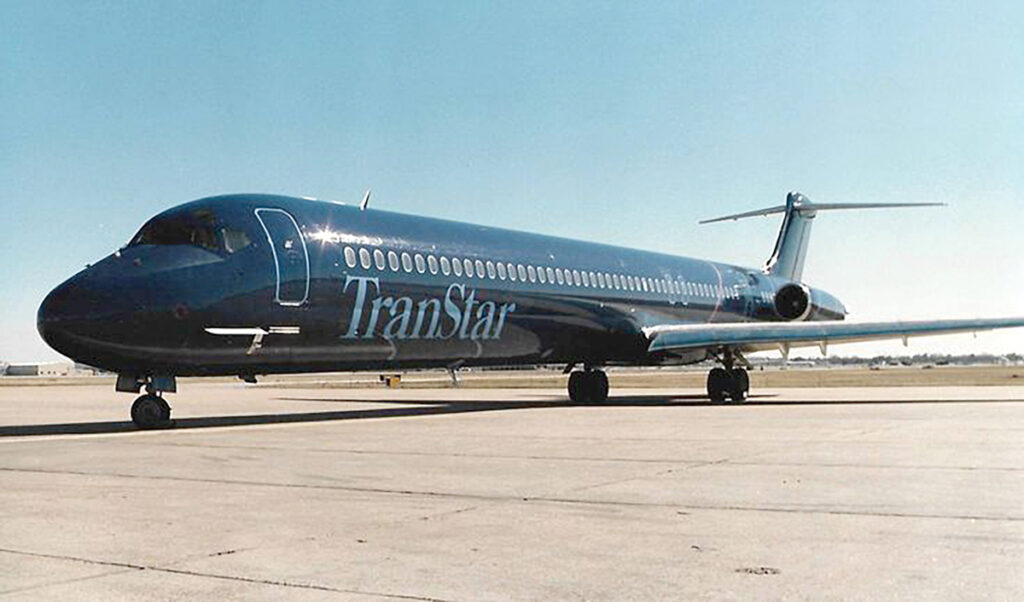
TranStar Airlines
- Southwest implemented several changes to its previous competitor.
- It realigned its route structure so that it could maximize Muse Air’s fuel-efficient, medium-range fleet, encompassing a southern transcontinental flow from Florida to New Orleans, Texas, and California.
- It reinstated an onboard smoking policy.
- It established a hub at Houston-Hobby Airport, with all flights either originating from or terminating at it, thus avoiding the Wright Amendment restrictions at Dallas-Love Field.
- Most importantly, it changed its subsidiary’s name to TranStar Airlines to distance it from the original Muse Air, as expressed in its marketing thrust of “Remarkable things happen when you change your name.”
From Beat Them to Join Them
Despite the accolades and amenities, the reinvented Muse Air could not carve a profitable niche, especially when it engaged in price wars with Continental on the Houston-Los Angeles route, forcing it to offer unsustainable, $59.00 fares to retain passengers.
Without choice, TranStar president and CEO W. W. Franklin announced, with reluctance, that the board of directors had elected to discontinue the brand and liquidate its assets as of August 9, 1987.“The existing competitive environment in the airline industry, and particularly in the markets served by TranStar, has made it virtually impossible for a small carrier such as TranStar to compete effectively.”
It operated 18 aircraft and served 13 cities in California, Florida, Louisiana, Nevada, and Texas at the time.
With its demise, the story came full circle. Muse, who had once joined Southwest, left to beat them with his own airline, Muse Air. But the battle proved too brutal to win, leaving Southwest to beat Muse Air and, after an intermittent name change to TranStar, altogether eliminate it.