

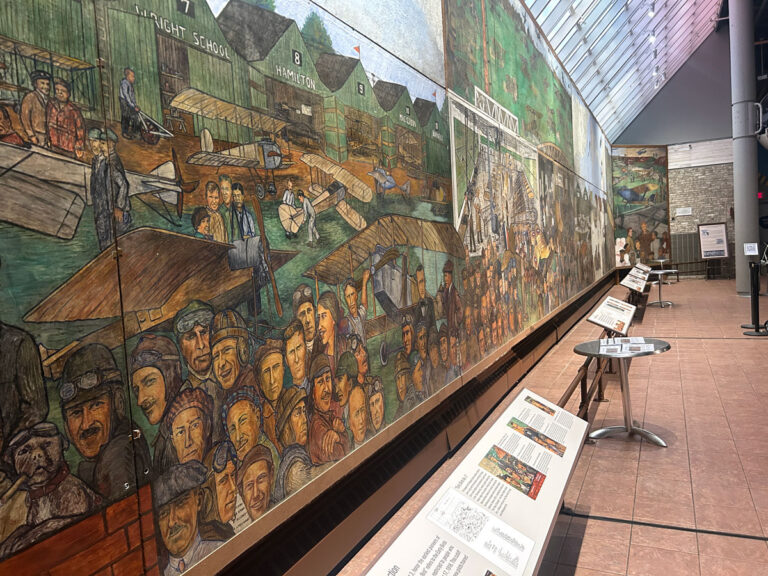
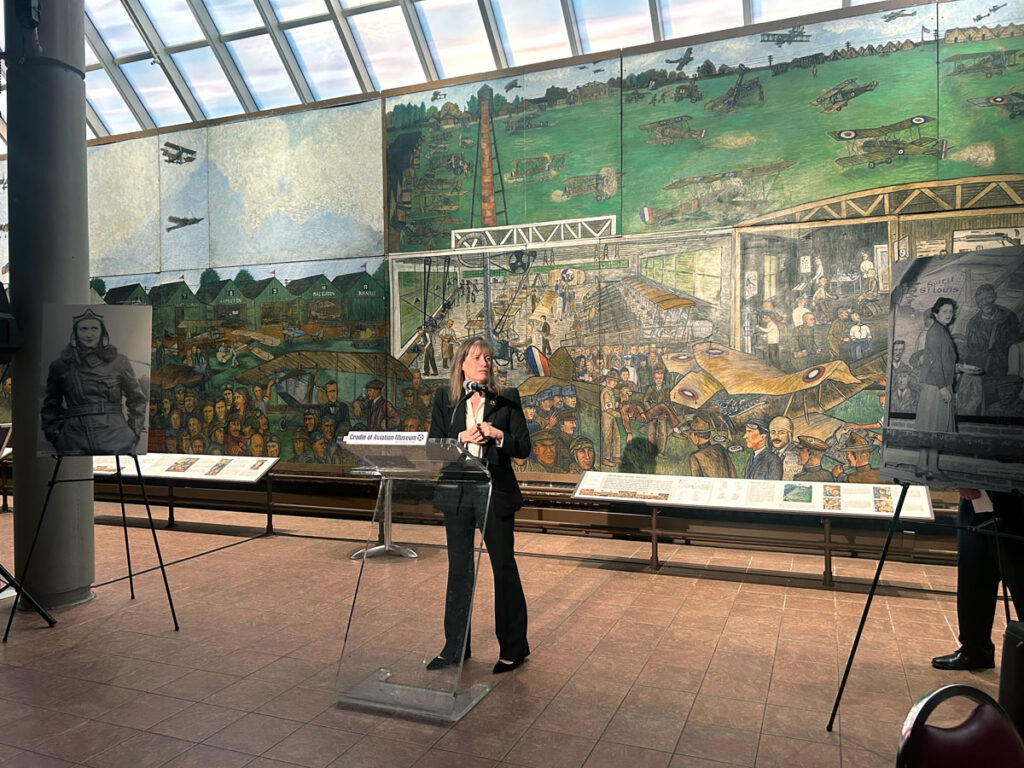
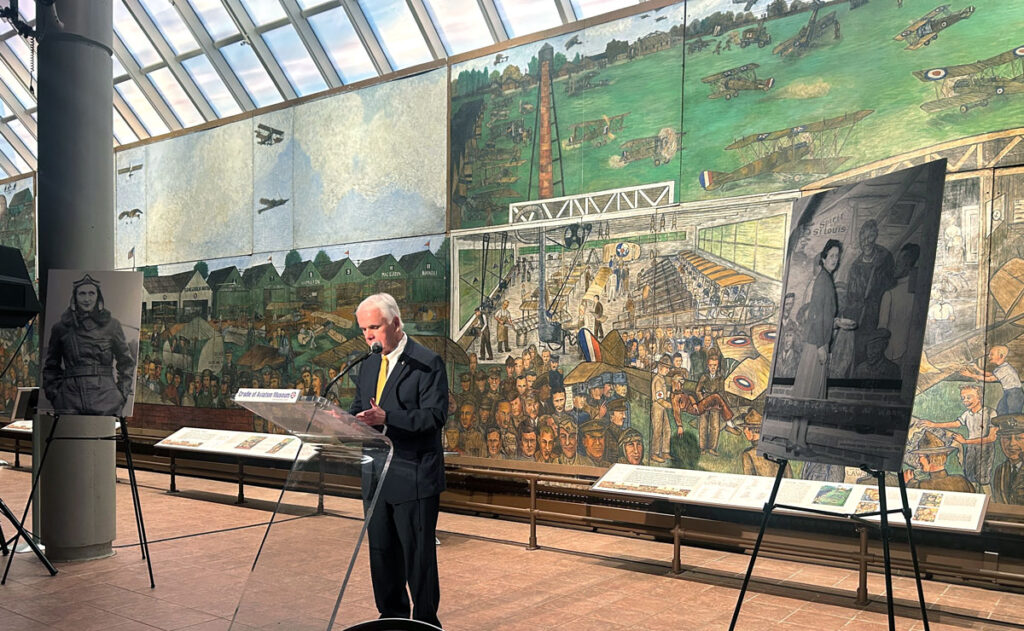
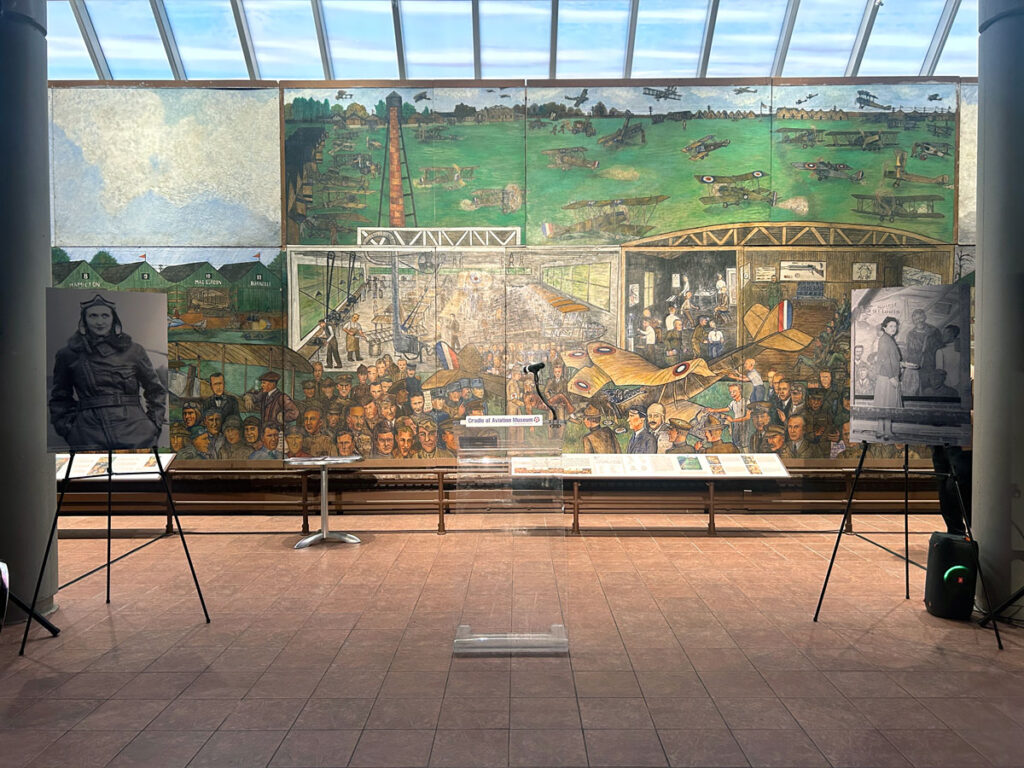
This past Thursday, the Cradle of Aviation Museum in Garden City, New York, hosted an evening cocktail reception for the opening of an historic and landmark mural called The Pre-Lindbergh Era of American Aviation, by artist and aviator Aline ‘Pat’ Rhonie.
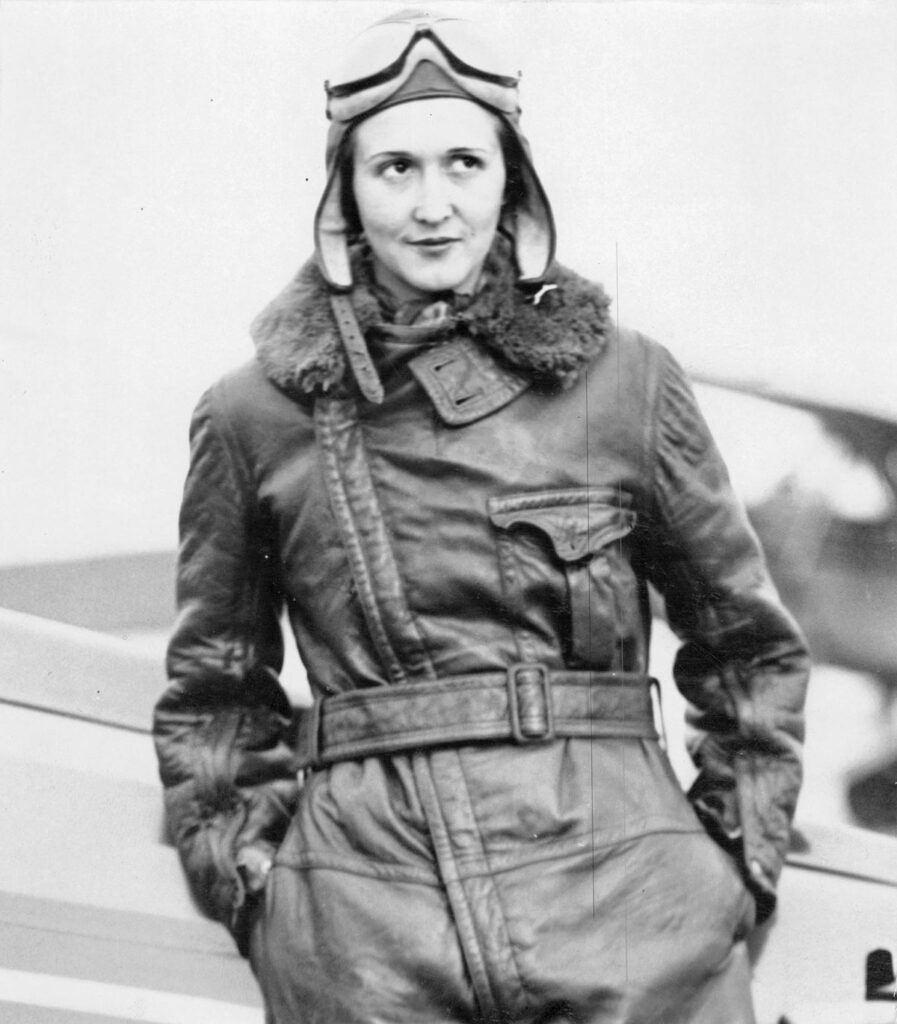
Aline Rhonie was a pioneering pilot who learned to fly in 1930 in Reno, Nevada, and at Roosevelt Field on Long Island during the Golden Age of Aviation. By the end of 1931, Rhonie earned her transport license, and in 1933, she helped found the Luscombe Airplane Company in Kansas City, Missouri.
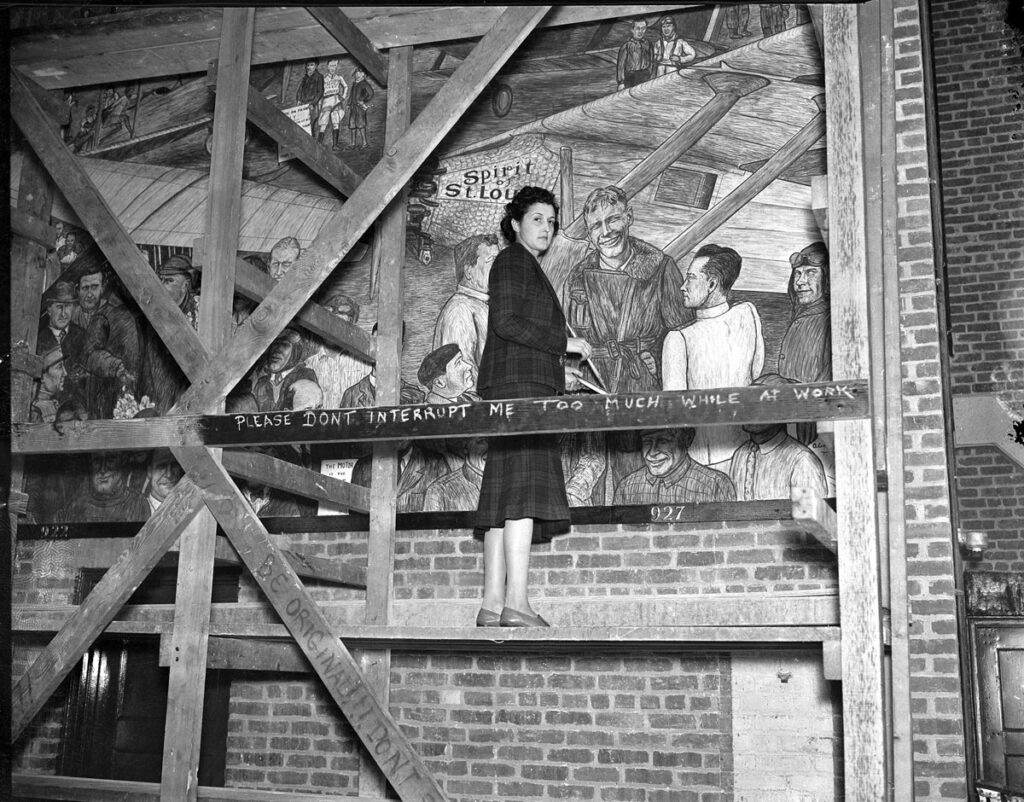
The following year, in 1934, Aline became the first woman to make a round-trip solo flight from New York to Mexico City, later obtaining her twin-engine and seaplane ratings. In 1936, she earned her English pilot’s license, and in 1938, she became the first American to obtain an Irish commercial license.
On the eve of World War II, Aline Rhonie was a seasoned pilot and airplane owner, as well as a passionate champion of supporting humanitarian causes in France and Great Britain. Working with the French Aero Club and the British War Relief Society in New York, she flew thousands of miles in the United States in her own airplane as a volunteer, arranging relief benefits for the Royal Air Force and Allied flyers’ canteens.
In September 1942, she became the fourth woman accepted into the Women’s Auxiliary Ferrying Squadron (WAFS) at Wilmington, Delaware, until her resignation at the end of December. After flying for the WAFS, she went to England and joined the Air Transport Auxiliary (ATA) in November 1944. She was the only one of Nancy Love’s ‘Originals’ who flew for both the WAFS and Pauline Gower’s ATA in England.
In addition to making a name for herself as a skilled pilot, Aline was a woman of extraordinary talents, including that of a fine artist who learned mural painting in the fresco style from renowned Mexican painter, Diego Rivera.
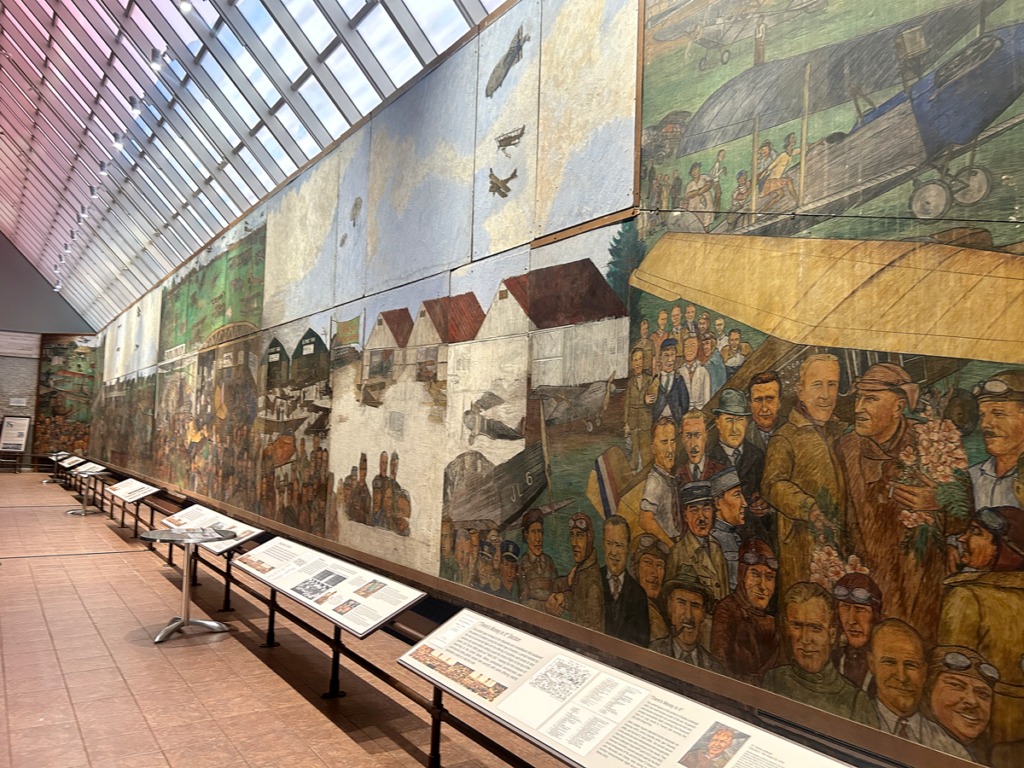
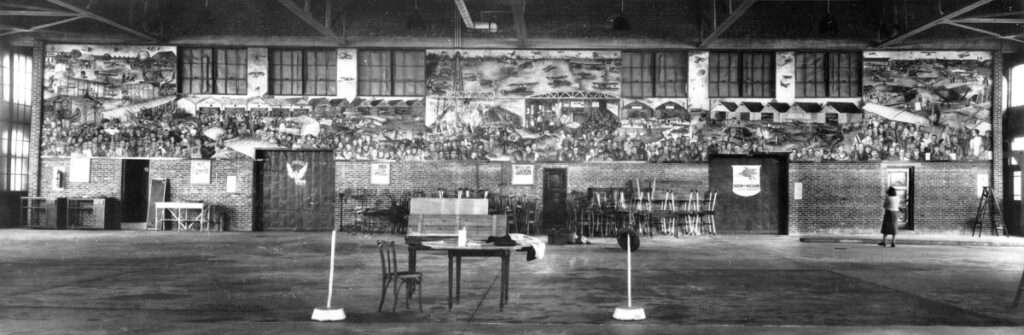
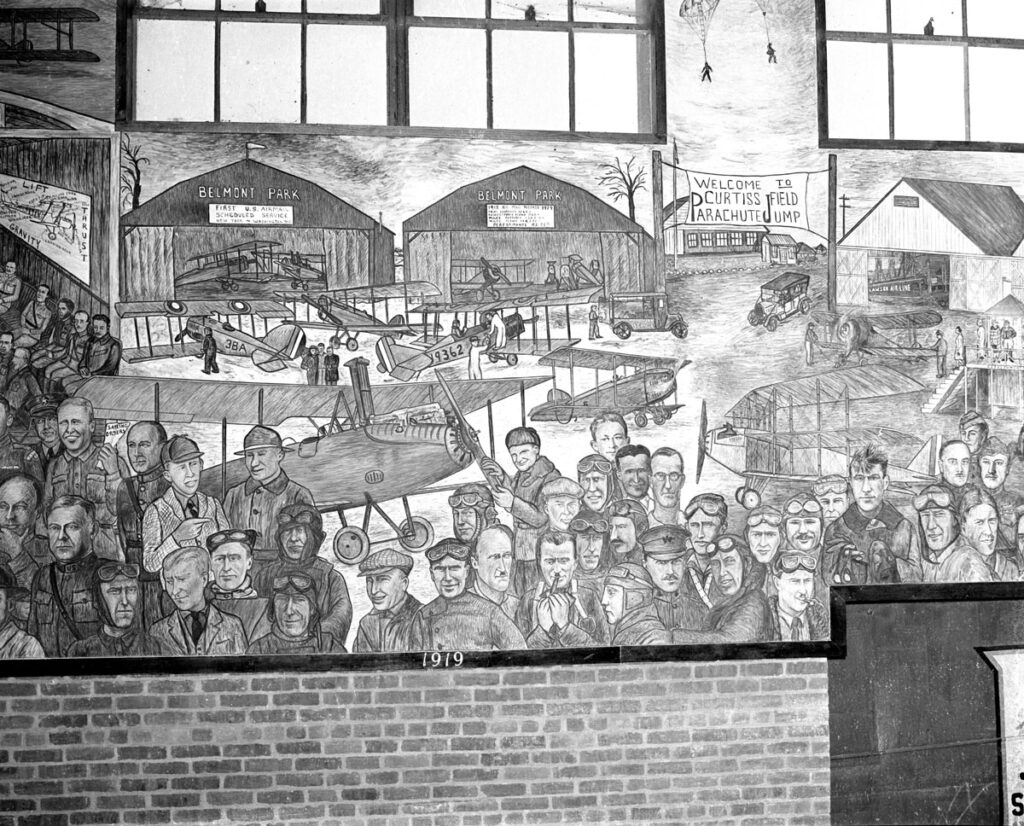
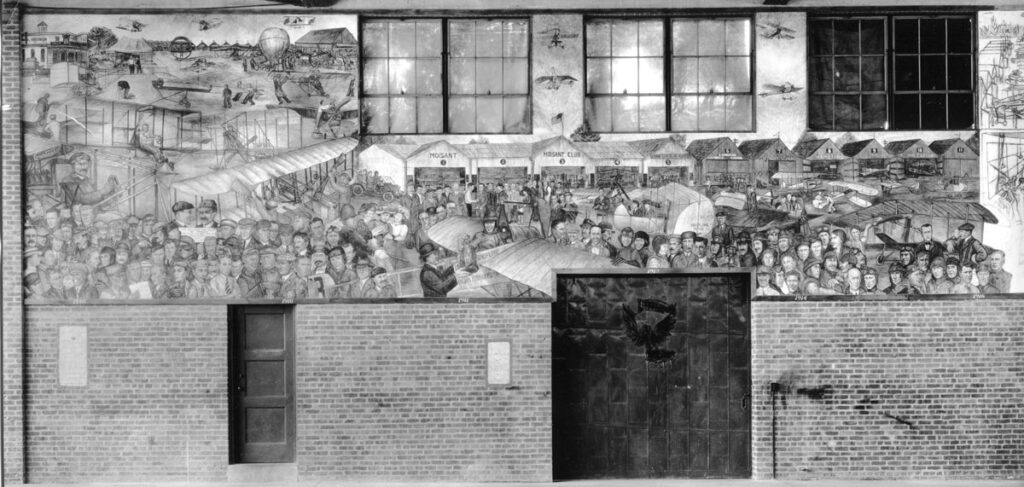
In the world of aviation art, Rhonie is best known for the fresco she painted on the 1,400-square-foot interior wall of Hangar F at Roosevelt Field on Long Island from 1934 to 1938, titled ‘The Pre-Lindbergh Era of American Aviation,’ often referred to as ‘The Rhonie Mural.’
During the Golden Age of Aviation, Long Island, especially Roosevelt Field, was the epicenter of the aviation world. Once known as the “World’s Premier Airport” during the 1920s and 30s, Roosevelt Field served as the primary hub for early aviation, manufacturing, and training. “The greatest aviators of the day made Roosevelt Field their home or port of call. Long Island, and Roosevelt Field, in particular, was a unique place among American aeronautical centers. The many flying schools centered around Roosevelt Field eagerly accepted both women and minorities for flight training, whereas most other aviation schools elsewhere in America did not,” said Joshua Stoff, Curator at the Cradle of Aviation Museum.
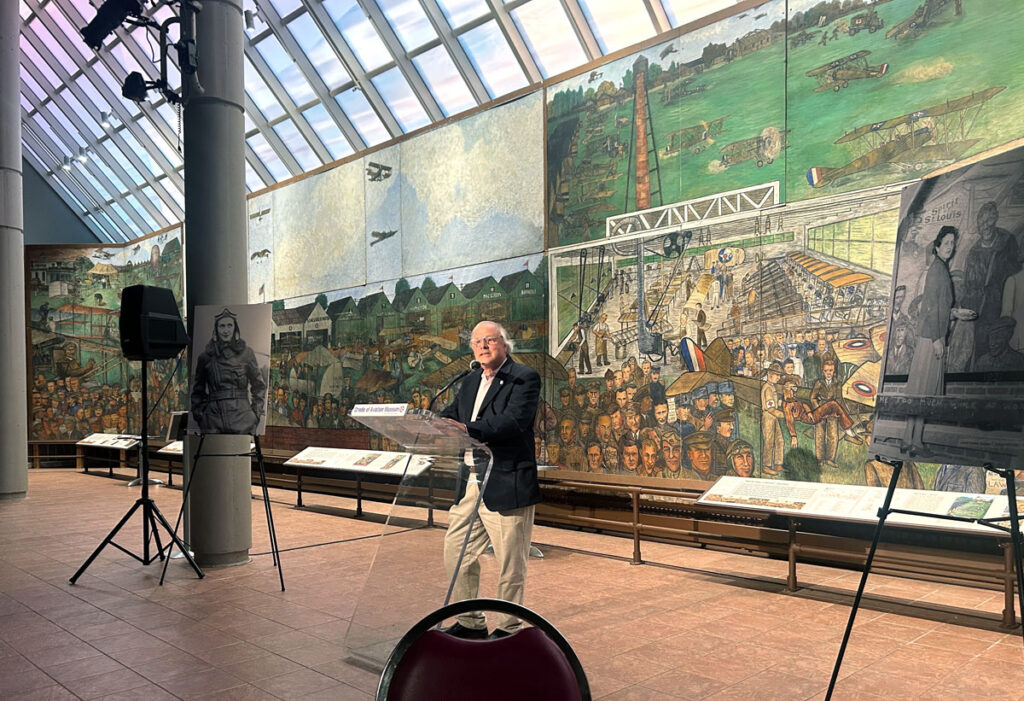
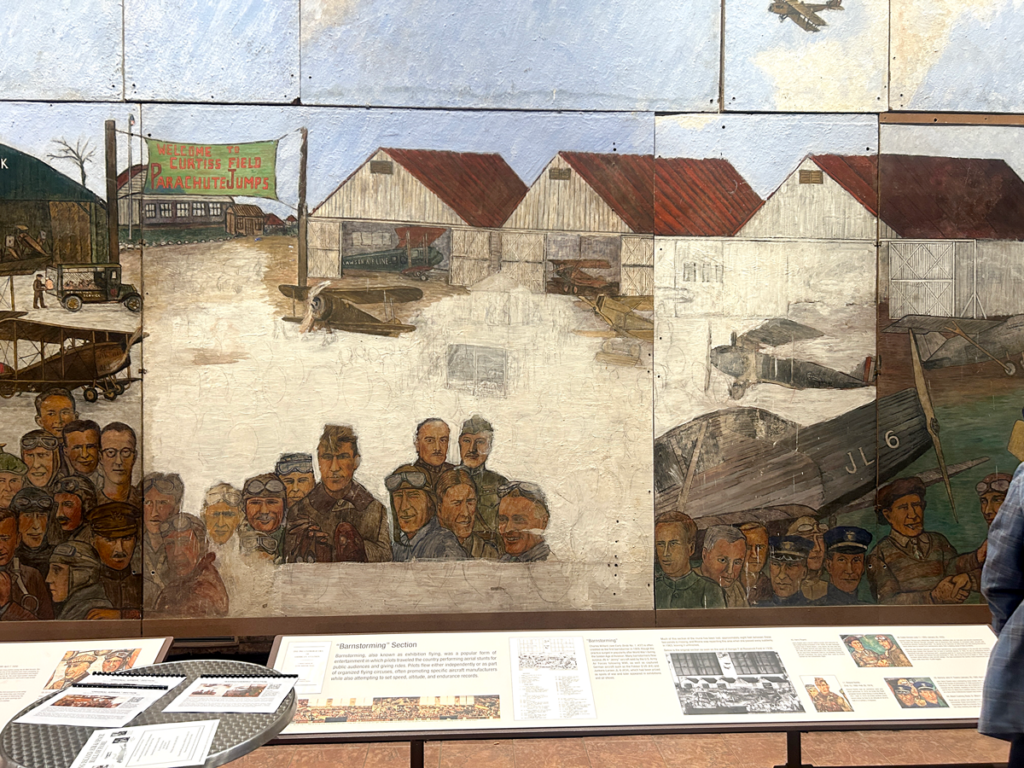
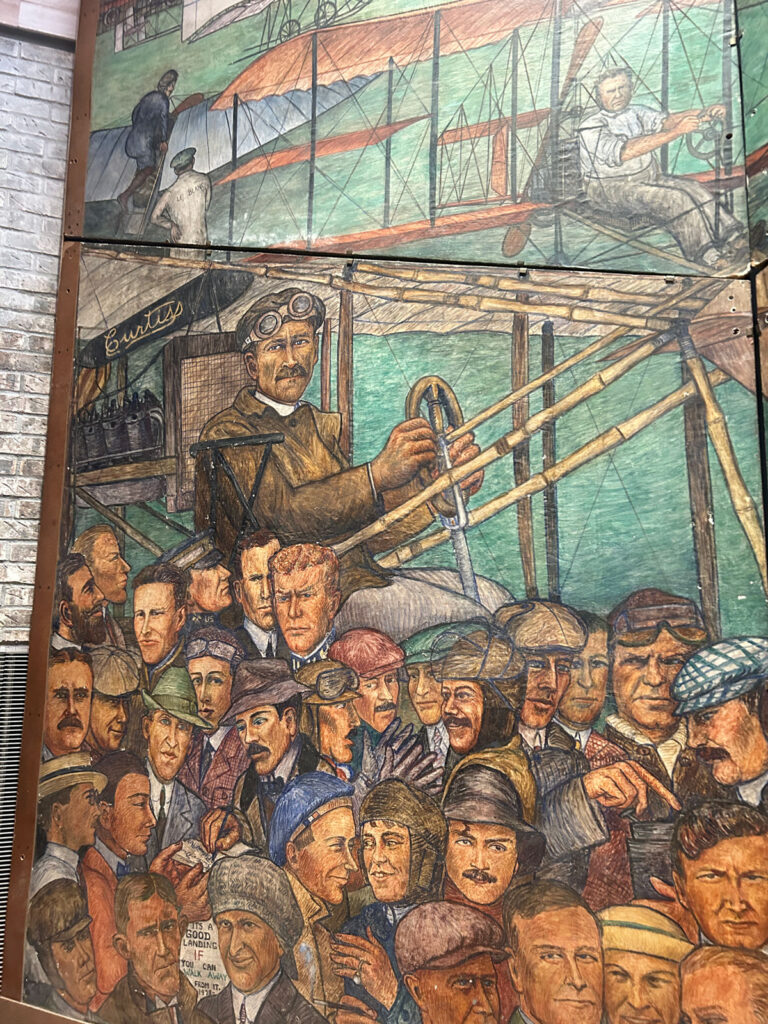
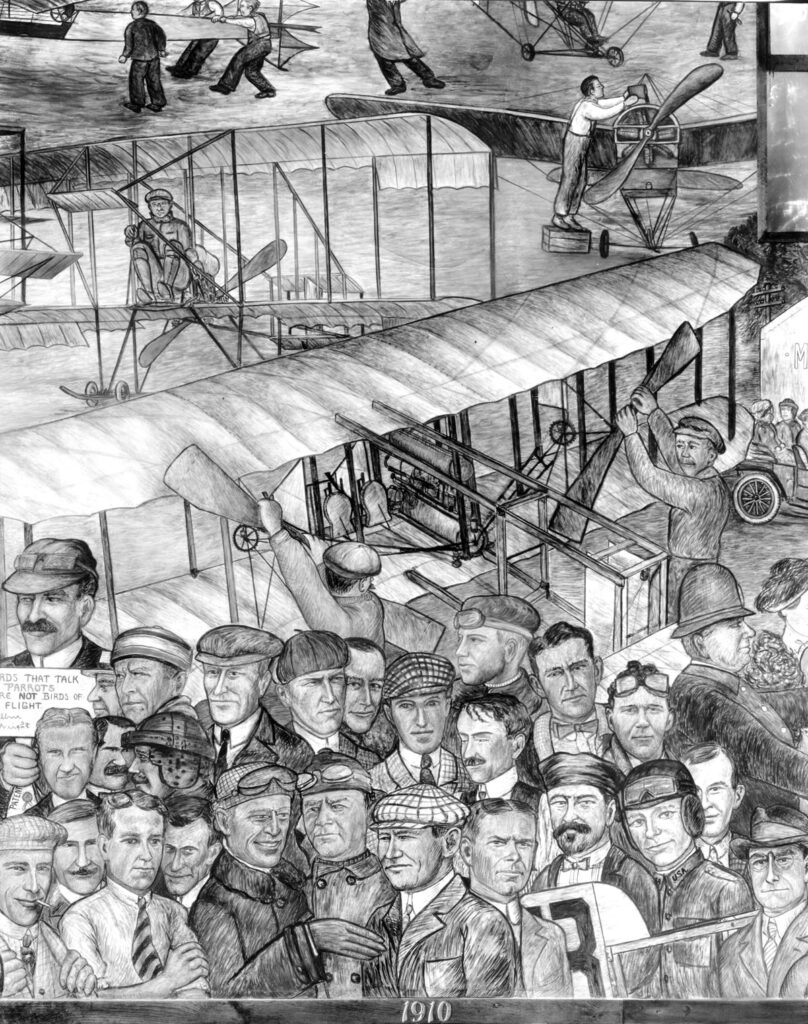
A masterpiece of aviation art, Aline Rhonie’s massive 106-foot mural depicts the history and spirit of early flight on Long Island. It captures pioneering aviators and experimental aircraft between 1909 to 1927—from the Wright Brothers and Glenn Curtiss to Charles Lindbergh’s epic solo flight in ‘The Spirit of St. Louis’ from Roosevelt Field to Paris–Le Bourget Airport.
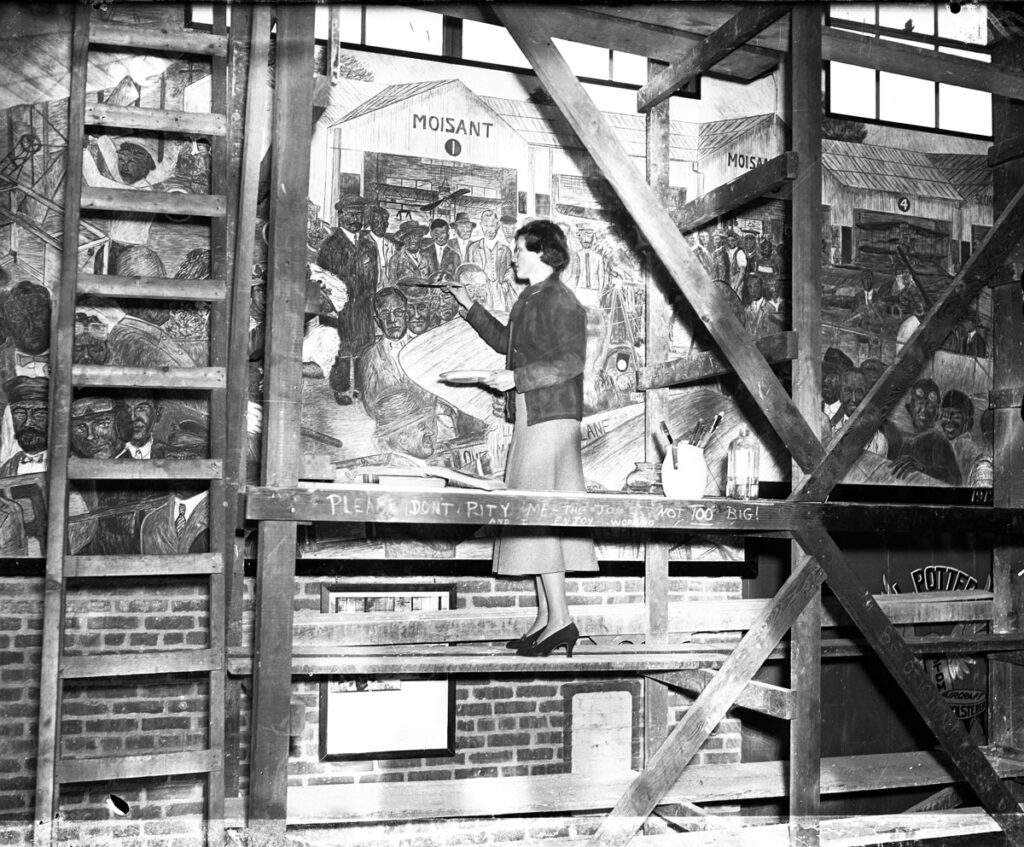
The mural, painted using the buon fresco technique, was a monumental project that began in 1934, when Rhonie began applying four coats of cement, goat’s hair, coarse marble dust mixed with slaked lime, and color pigments onto the 1,400-square-foot plastered wall of Hangar F at Roosevelt Field.
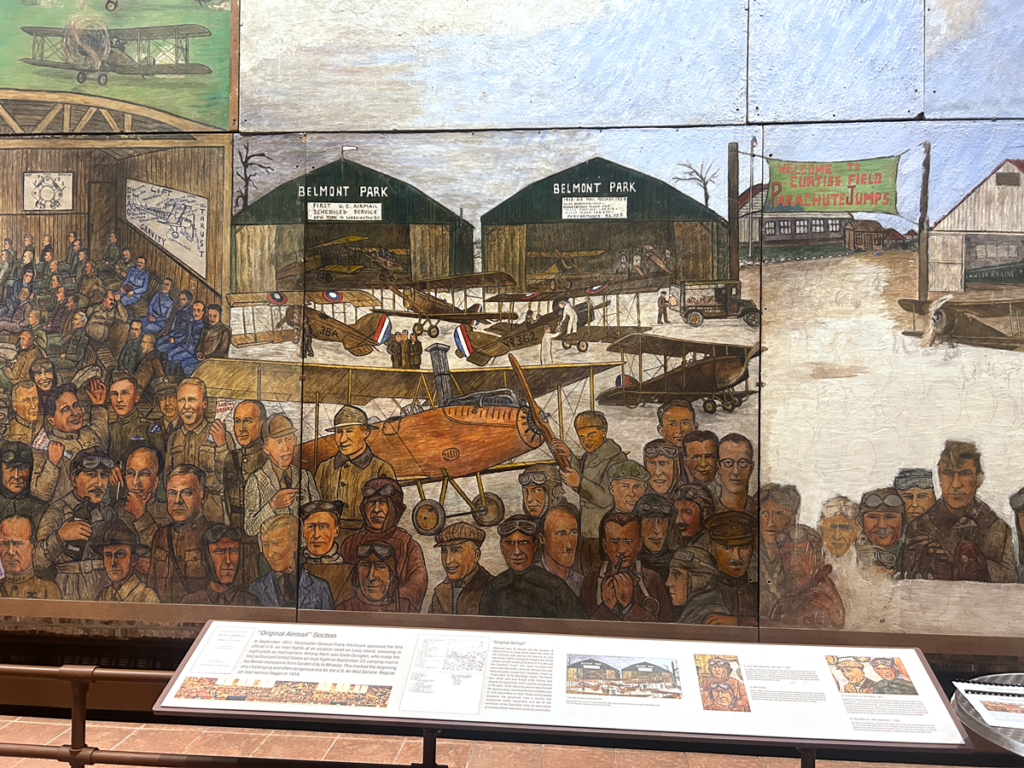
Four years later, upon its completion in 1938, Rhonie’s mural included the images of 580 named aviators, some 265 types of aircraft, and hangars connected to Roosevelt Field and Long Island aviation. In October of that year, a party was held in Hangar F in honor of Aline’s achievement in completing the ‘World’s Largest Aviation Fresco Depicting the History of Aviation’.
After Roosevelt Field closed in May 1951, the site of this once ‘premier airport’ was acquired by real estate developers and became a retail shopping complex—today’s ‘Roosevelt Field Mall’.
In 1960, Aline Rhonie learned that Hangar F was scheduled to be demolished, and along with it her mural. She immediately obtained the rights to the mural and hurriedly contacted Italian conservator and fresco expert Leonetto Tintori, who came to the United States to assist in the careful removal of the immense fresco. Through the application of heated glues and cloth to the wall of the hangar, the mural was divided into panels, and the cloths were pulled from the wall, removing a thin layer of paint, whereupon the panels were fixed to laminated Masonite for preservation.
Aline then spent months restoring the panels, ironically, in a storefront at the Roosevelt Field Mall, which now occupies the former airfield. At that time, she painted an additional 25 portraits, increasing the length of the mural to 126 feet.
In 1963, Aline ‘Pat’ Rhonie died suddenly at the age of 53, due to a chronic asthmatic condition.
The mural was preserved by the Long Island Early Fliers Foundation and later donated to Vaughn College of Aeronautics and Technology in East Elmhurst, Queens, which served as its steward for many years before its return to public view at its now permanent home at the Cradle of Aviation Museum.
As part of the Cradle of Aviation Museum’s America 250 Celebration, the permanent installation of The Aline Rhonie Mural: The Pre-Lindbergh Era of American Aviation is one of several exhibitions and programs planned throughout 2026, including new exhibits, speaker series, film screenings, interactive educational experiences, and public and family programs tied to America’s 250th anniversary.
2 Comments
Alione Rhonie was originally part of the WAFS until they were merged with the WFTD and became the WASP. She did not resign from the WASP she was forced out by Congress , like all the women in the WASP who were patriots.
Aline Rhonie (correct spelling) served in the WAFS for only three months before she resigned on her own accord in Dec. 1942.
The WAFS did not merge with WFTD (to become the WASP) until August 1943. Aline later flew with the ATA which was a completely separate auxiliary in Britain, not the WASP. She was neither ‘forced out by Congress’, nor a member of the WASP when the Women Airforce Service Pilots were disbanded in December of 1944. If you are with Red Door and making a film about the WASP, please make sure to double-check your facts, so that further misinformation about the WASP is not put out there, as it has in the past. Thank you.