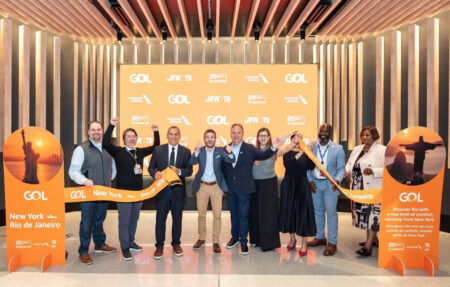
GOL Linhas Aéreas, one of Latin America’s leading airlines and Brazil’s largest domestic carrier, launched…


Robert G. Waldvogel has spent thirty years working at JFK International and LaGuardia airports with the likes of Capitol Air, Midway Airlines, Triangle Aviation Services, Royal Jordanian Airlines, Austrian Airlines, and Lufthansa in Ground Operations and Management. He has created and taught aviation programs on both the airline and university level, and is an aviation author.

Airlines can sometimes be considered completed puzzles and identifying the pieces that were used to assemble their picture can shed light on their origin. One of them was Republic Airlines. The Initial Pieces Republic’s origins, like so many others’, can be traced to a once-new breed of operators designated local service airlines. After so-called “trunk” carriers, such as American and United, developed into significantly-sized ones by establishing service at major U.S. cities, a void in smaller communities, with low populations and poor surface roads, was left. Since it was unrealistic to have expected the major companies to have operated into…
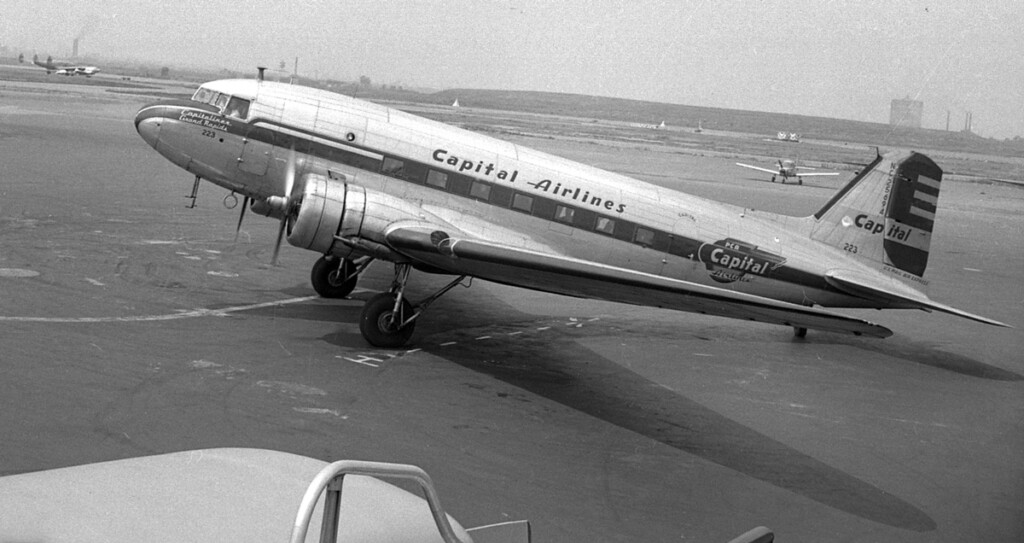
Harnessing US airline deregulation, Capitol Air was one of several carriers catapulted to temporary success after transitioning itself from charter to scheduled operations. Founded on June 11, 1946 as Capitol Airways by Jesse F. Stallings, Richmond McGinnes, and Francis Roach, Army Air Corps pilots, it was incorporated in Delaware, but headquartered in Smyrna, Tennessee. It initially operated twin-engine Douglas DC-3s and Curtiss C-46 Commandos. Military service was a significant part of its early history. In 1954, for example, it carried priority freight for the US Air Force and two years later was contracted to transport passengers for the Logistic Air…

Progressively forgotten with the advance of time and perhaps only associated with a shopping complex, the Roosevelt Field name was once a sprawling expanse of aeronautical activity that earned it the unofficial title of “World’s Premier Airport.” Like forests that ultimately spring from flat fields, it itself rose from one that was called the “Hempstead Plains.” “The central area of Nassau County, known as the Hempstead Plains, (was) the only natural prairie east of the Allegheny Mountains,” according to Joshua Stoff in Historic Aircraft and Spacecraft in the Cradle of Aviation Museum 4 (Dover Publications, 2001, p. viii). “Treeless and…
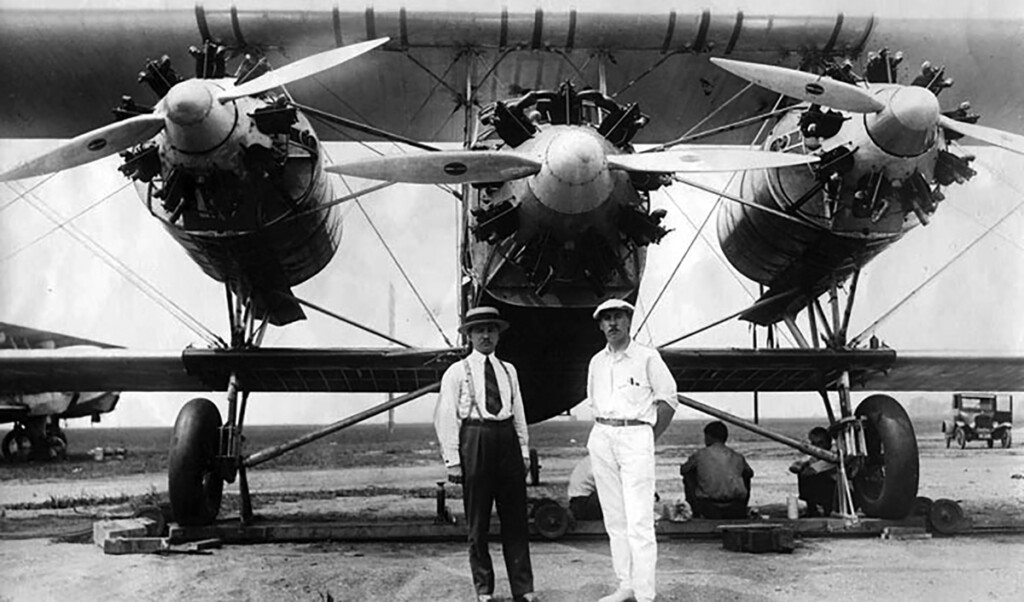
As aircraft technology advanced, making greater payloads, higher altitudes, and increased distances possible, so, too, did the goals set for them—from crossing the country and surmounting mountains to connecting continents. One of the major ones during the 1920s was crossing the formidable obstacle between North America and Europe known as the Atlantic Ocean. Catalyst to its aerial triumph was the $25,000 prize offered in 1919 by Raymond Orteig, a French hotel operator living in New York, to the first person to fly between New York and Paris without stopping. Although British aviators John Alcock and Arthur Brown made the first…
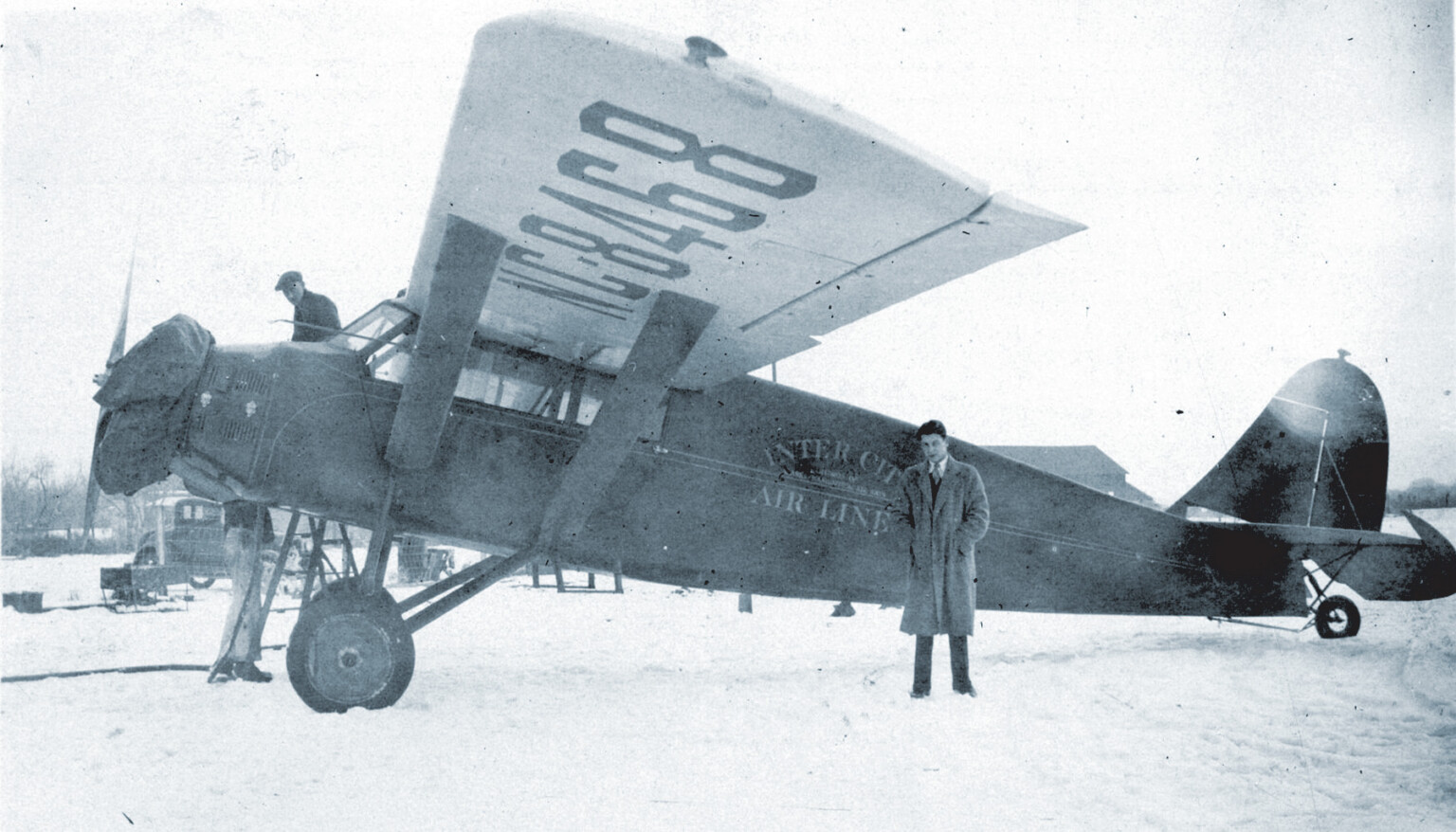
Many probably remember the once-proud airline that bore the name of its founder, Braniff. There may be fewer, however, who know that a short-lived version preceded it and that two others followed it. Cats, according to the old English proverb, have nine lives. In the case of Braniff, it had four. “Two brothers, a dreamer and a pragmatist joined forces to create one of the world’s leading airlines,” according to Richard Benjamin Cass in his article, “From Oklahoma Acorn to Texas Oak: The Story of Braniff Airways” in Braniff Boutique. “From humble beginnings that began as an Aero Club in…

A slip through the covered entrance to Old Rhinebeck Aerodrome is like the passage through a time portal to an early aviation era that has somehow been preserved in time, revealing a grass field straddled on either side by red, orange, and yellow trees in the fall reminiscent of the 1910 and 1920 barnstorming days. The hangers, as if ignorant of the calendar, proudly brave the winds, bearing such names as Albatros Werke, Royal Aircraft Factory Farnborough, A.V. Roe and Company, Ltd., and Fokker. But it is the multitude of mono-, bi-, and triplanes which most fiercely wrestles with one’s…
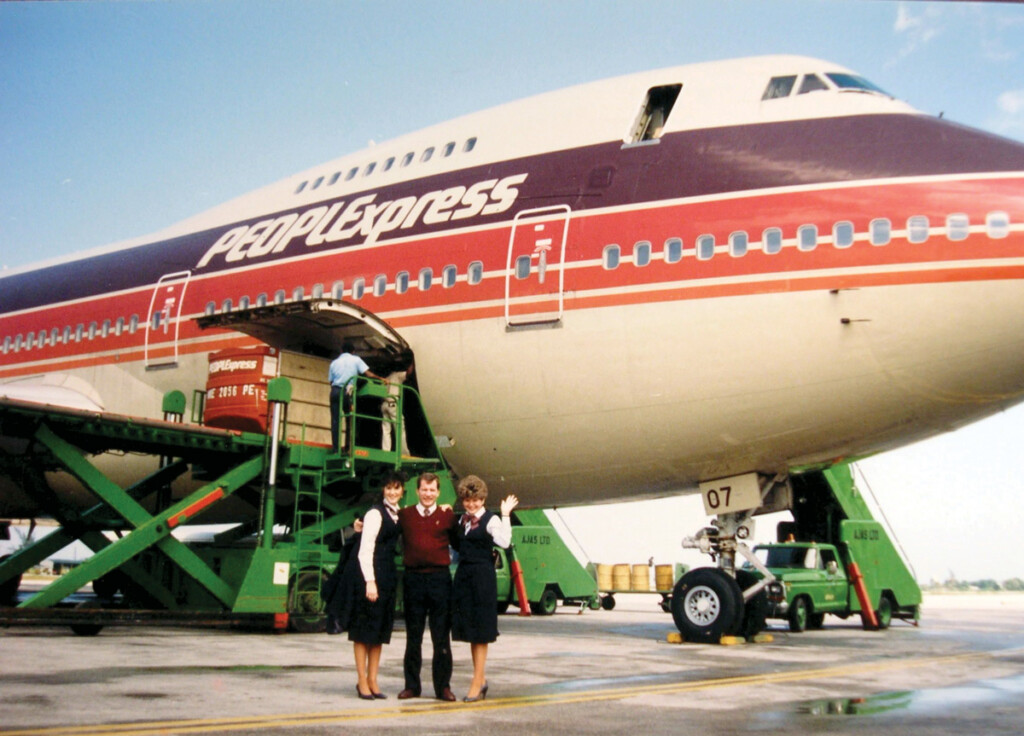
It was one of the first carriers to be established after passage of the 1978 Airline Deregulation Act (ACA), but its history would be repeated countless times after it. Both its name and service concept were reflected by its advertisement: “PEOPLExpress: Fly Smart!” Establishment Brainchild of Don Burr, who served as CEO of Texas International Airlines and was inspired by Sir Freddie Laker’s low-fare, transatlantic, DC-10 “Skytrain” service to London-Gatwick, it became his opportunity to put his own imprint on a deregulation carrier. “People Express, the innovative airline that served the eastern part of the United States with Boeing 737s,…

It was colossal, awe-inspiring, and luxurious. It was a symbol of intercontinental airship travel, but also of Nazi Germany. And its name, of course, was “Hindenburg.” Fixed-wing, heavier-than-air technology, although evolving by the end of the 1920s, was still insufficiently mature to permit long-range, transatlantic, commercial flights, leaving its lighter-than-air counterpart to be used for this purpose. The Zeppelin Company of Germany, having carried more than 50,000 passengers on 2,300 flights between 1910 and 1927, fully exploited this realm. The Airship Designated LZ 129 for “Luftschiffbau Zeppelin,” the Hindenburg stretched 803.6 feet and its 135.1-foot diameter gave it a cavernous…
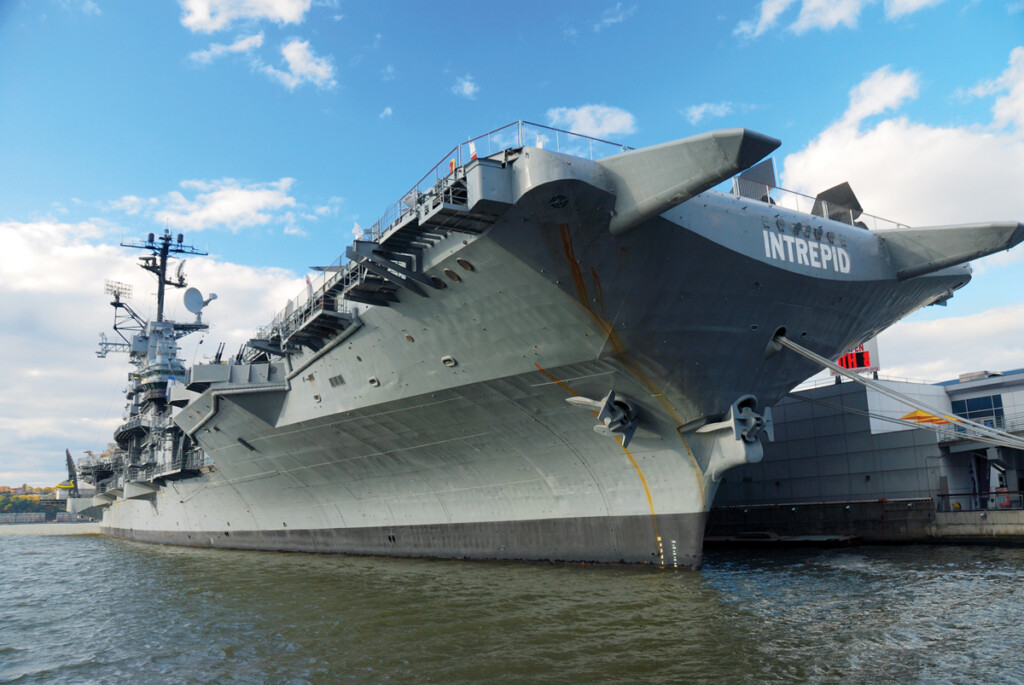
Berthed at Manhattan’s Pier 86 in the Hudson River is a superstructure that floated, moved, and accommodated the population of a sizable town. It was integral in the Second, Cold, and Vietnam wars; served as the base of many air groups operating both piston and pure-jet aircraft; became the target of torpedo and kamikaze strikes; and survived as a testimonial to its tenacity and contribution to victory as an air, sea, and space museum. Featuring a 912-foot overall length and 103-foot breadth, the ship, displacing 41,434 tons and capable of a 33-knot speed, accommodated 100 airplanes and almost 4,000 crew…

If the Atlantic could be considered a vast aquatic race track, then the US and the UK were the countries that competed to cross it. Both battled to be the first to reach the other’s side in what became the transatlantic jet race, pitting flag carrier BOAC British Overseas Airways Corporation against “chosen instrument” Pan American World Airways. New York served as the former’s destination and the latter’s origin. But the supplier of their aircraft seemed the least likely to do so–the UK’s de Havilland Aeroplane Company, whose last major airliner, the DH.95 Flamingo, only attracted 16 sales because of…