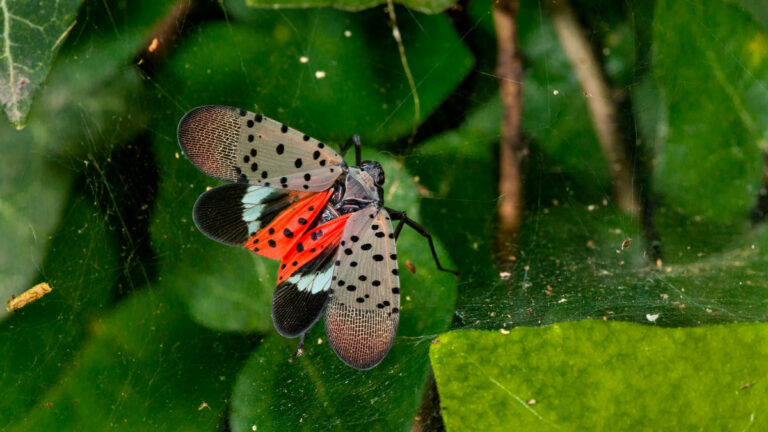
Spotted Lanternfly was introduced into the United States approximately ten years ago. It has worked its way from remote areas of Pennsylvania into the I-95 corridor, mainly through human movement. Spotted Lanternfly is a Hemiptera, or leaf hopper, and uses its mouthparts to suck sap from small branches and the bark of trees. It is considered a farm pest, especially harmful to grape production. Although it is an unwanted guest for us, it is a remarkable insect. It readily moves by itself, is very good at hitchhiking at its different life stages, has a wide variety of hosts for feeding, and can lay its egg masses on any surface, including non-living ones. This increases its chances of being moved inadvertently and introduced into new areas.
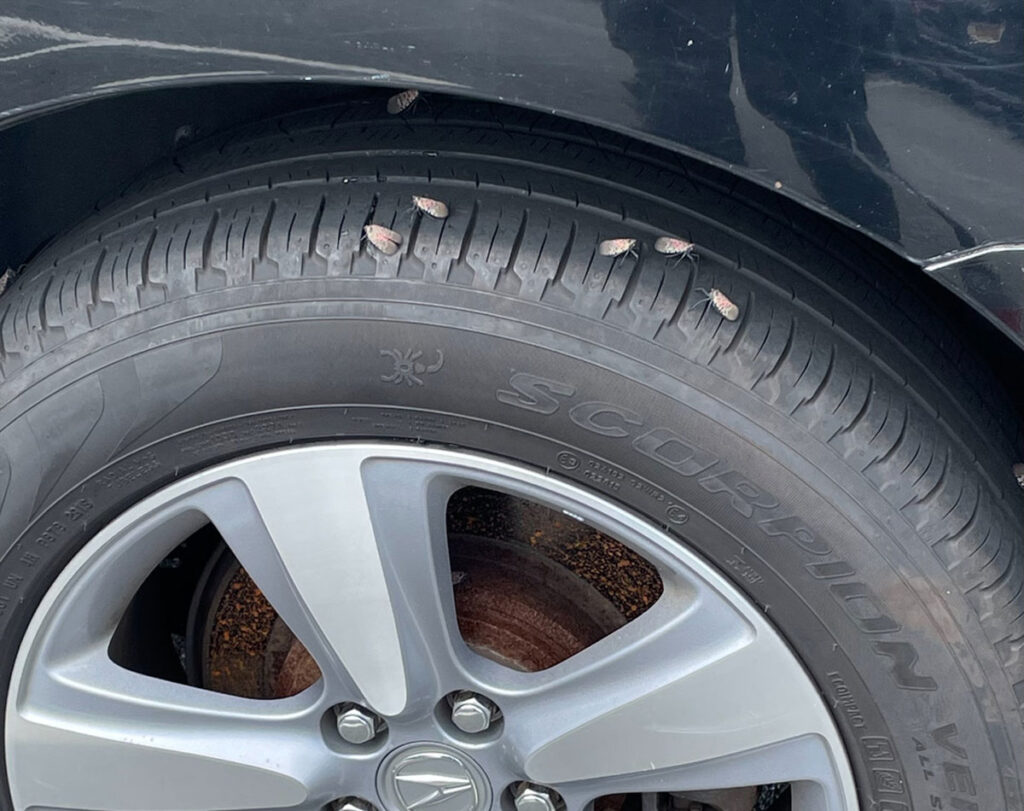
What we have observed over the last two years in the metro NY/NJ area is that they are crazy climbers, going up tall structures on inanimate objects such as light and telephone poles, concrete buildings, and glass windows. They love garbage cans. They are also attracted to vibrations or noise from ventilation or air conditioning units. The adults are excellent hitchhikers, even on fast-moving trucks, trains, ocean vessels, and cars. Gravid females will lay eggs on trees, under rocks, concrete eaves, and rust-covered structures. We have found their egg masses as high as 60 feet up on trees, which makes any treatment or mitigation very difficult.
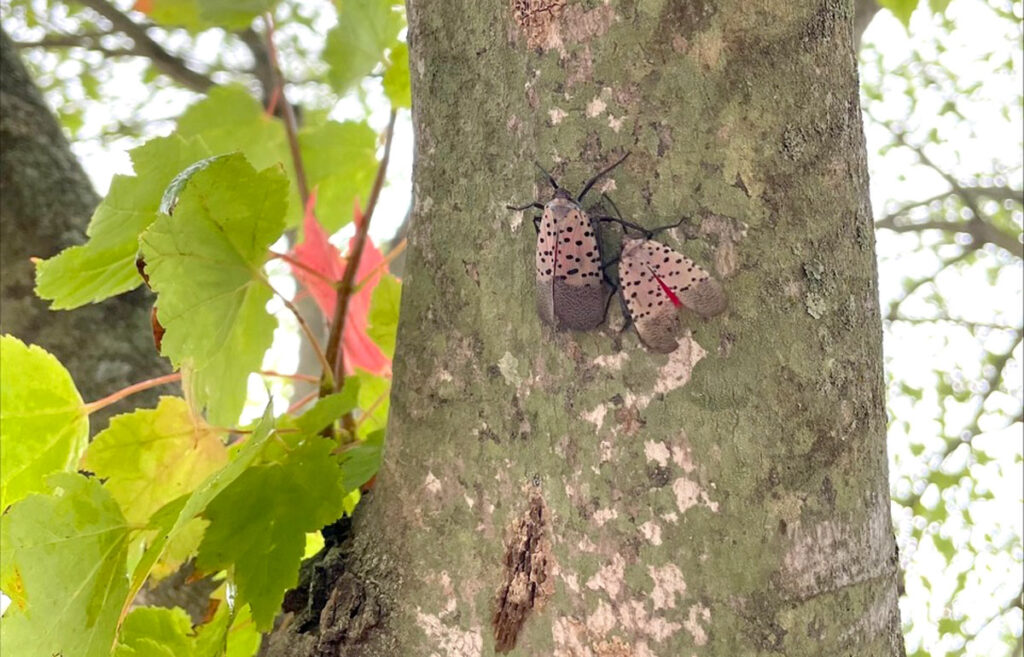
The good news is that the population of New York City seems to be lessening a bit. One of the primary ways to control SLF is to remove their food sources. By removing Tree of Heaven (Ailanthus altissima, which is their favorite tree), and other primary hosts from a designated area, adult populations seem to decline. The public can help mitigate the spread of SLF, too. Checking vehicles and transported goods before movement reduces hitchhiking pests and the likelihood that SLF could become established elsewhere or cargo could get detained at their final destination due to their unwanted presence. Spotted Lanternfly, for most of us, is a nuisance pest. It does not carry disease or destroy buildings. It stresses plants and trees that it feeds on, but it will not kill them.