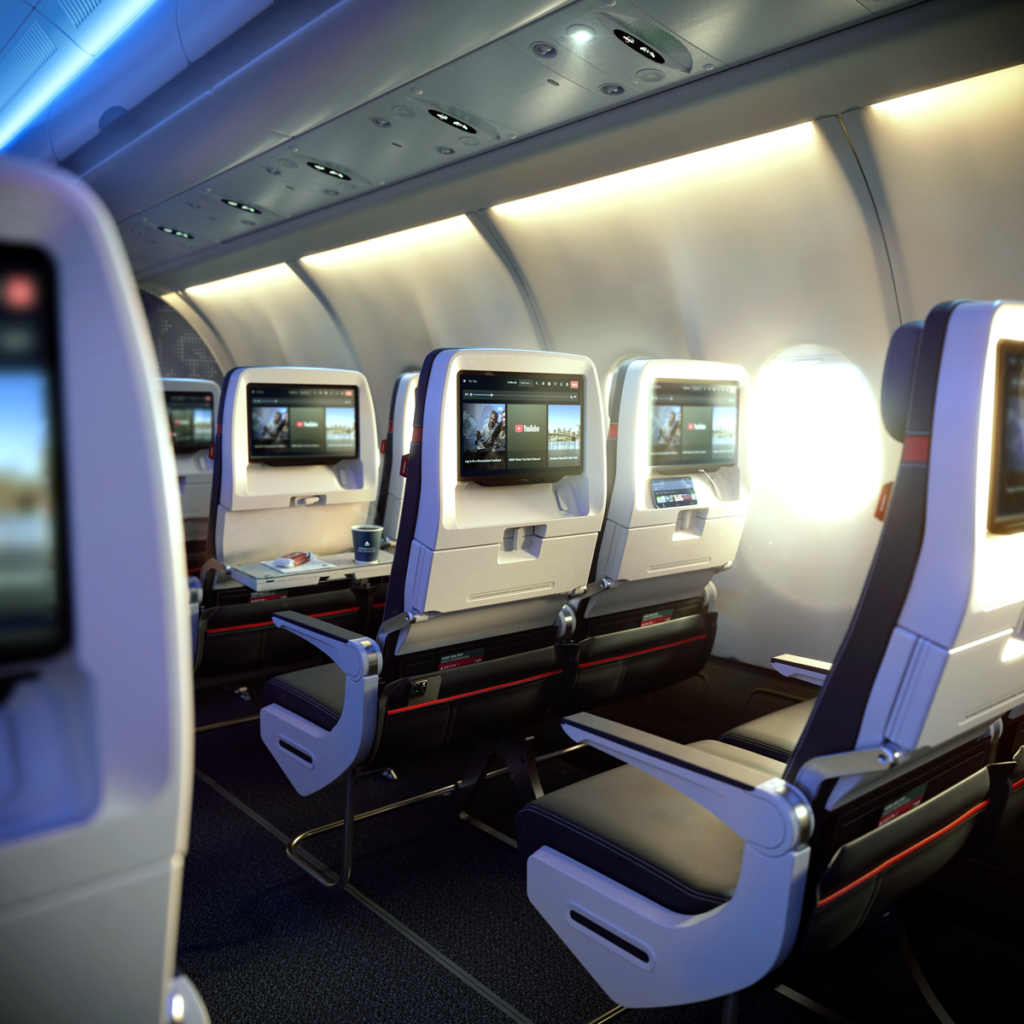




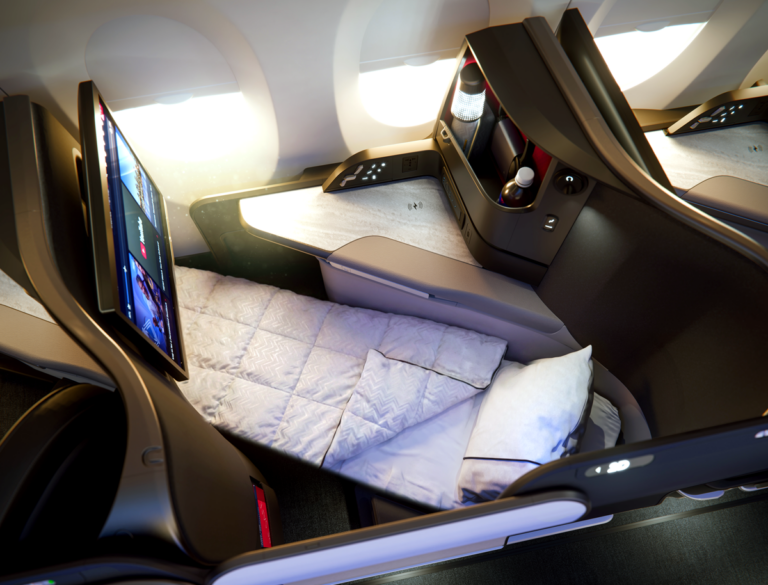
Delta Air Lines rolled out new business class seats for its Delta One product on Monday, which are set to enter service on its upcoming Airbus A350-1000 aircraft starting in 2027.
The new Delta One suites will feature up-to-date amenities and accommodations, including privacy doors, wireless charging, and 24-inch in-flight entertainment screens with Bluetooth capabilities. Its bed will measure three inches longer than the current Delta One suites on the Airbus A350-900. The airline looks to continue pushing its premium products and reel in high-spending customers.
The airline will also upgrade its Airbus A330-200/300 aircraft with new suites with privacy doors.
“Every time a customer boards a Delta flight, the experience and surroundings should feel familiar — creating a sense of home and comfort when you’re away,” said Mauricio Parise, vice president of Brand Experience. “That was the driving factor behind every intentional design feature and investment we made in developing our brand new A350-1000 experience, which we extended through nose-to-tail upgrades of our A330-200/300s and will continue to roll out across our fleet.”
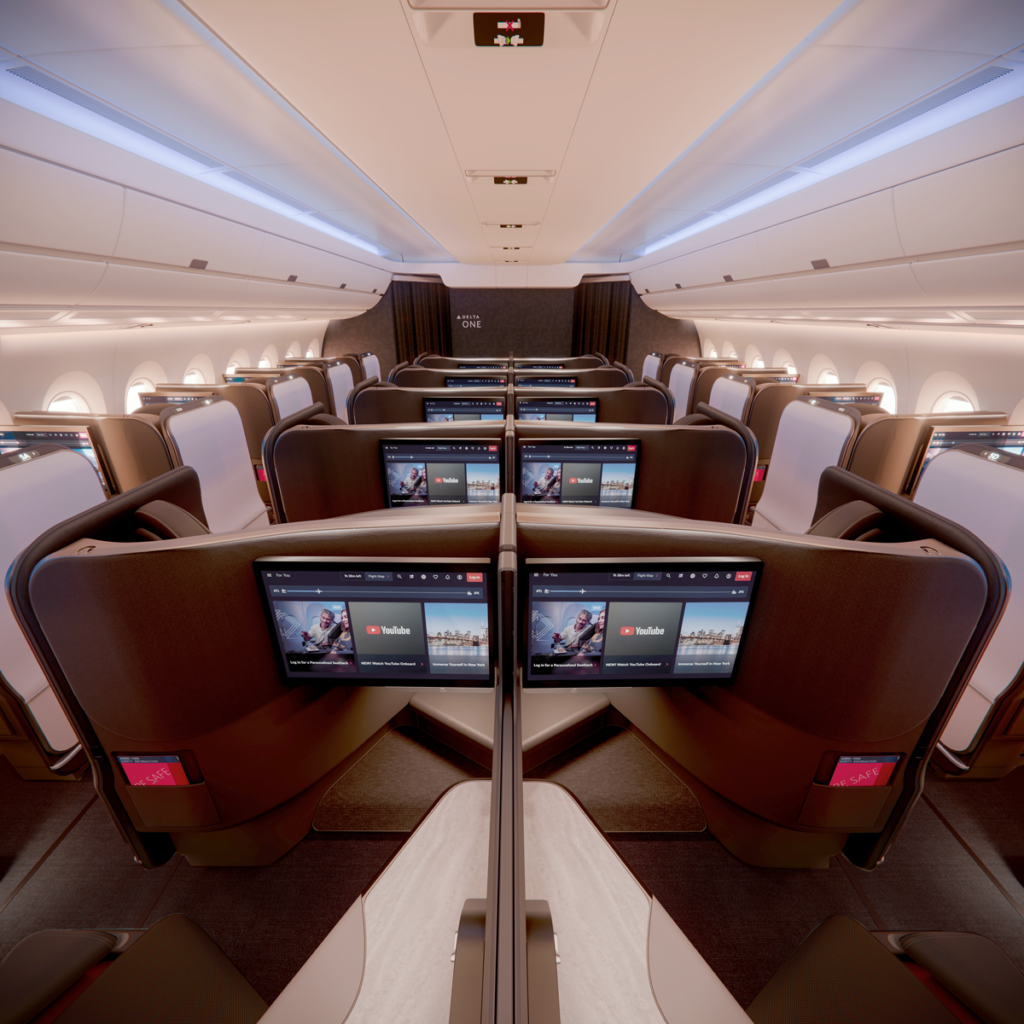
“The experience is designed to be deeply human-centric, with every inch within the aircraft created to provide top-notch comfort and connectivity,” said Parise. “As we expand our network into Asia, Africa, the Middle East and beyond, these aircraft ensure we have the right capacity, efficiency and experience our customers want on Delta.”
Main Cabin will also see a refresh, with new seats and up-to-date technologies.
Delta’s new A350-1000s will have about half of its aircraft dedicated to premium seating. Many U.S. carriers have been betting on the resilience of premium customers amid higher fares and an uncertain economy.
Rival carriers American and United Airlines have both introduced new interiors with plush seating over the past year.
Chief Executive Officer Ed Bastian noted during his company’s earnings call last week that the airline saw a $400 million spike in jet fuel prices in March, and plans to “meaningfully reduce” capacity until the volatile cost environment improves.