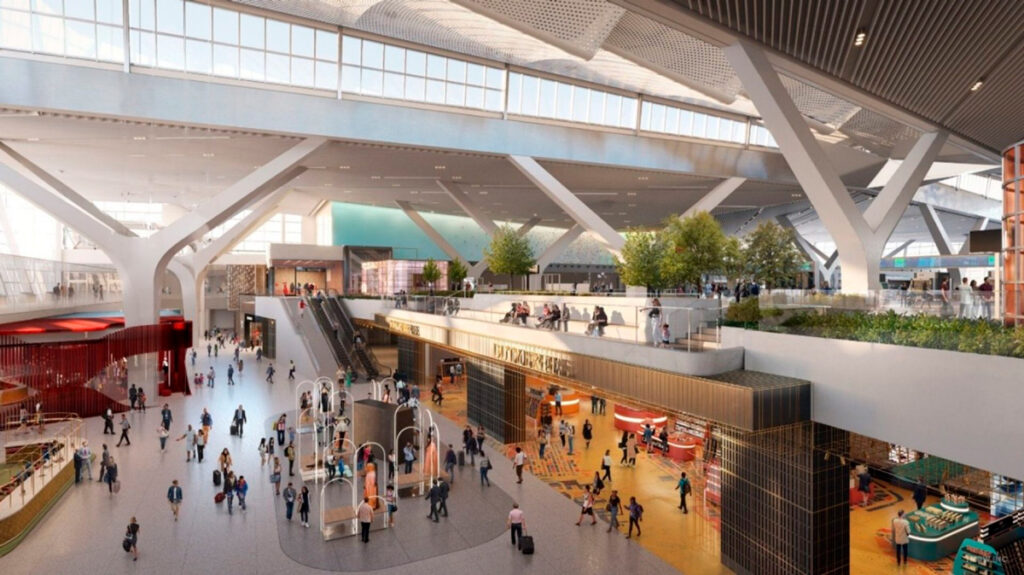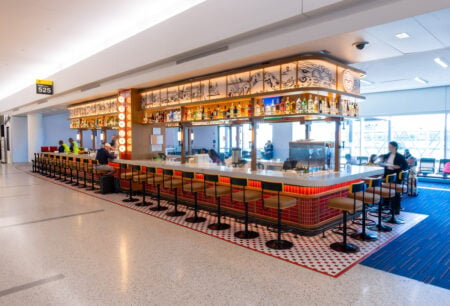



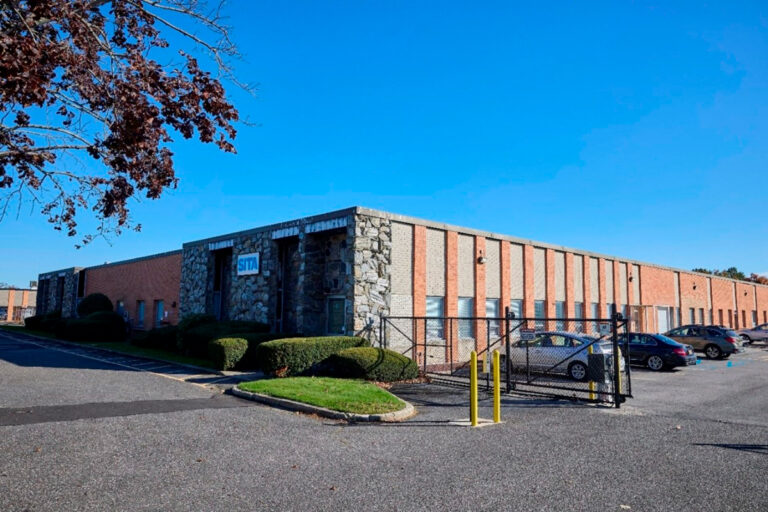
The information screens can tell you where to find food and drinks. The ticketing kiosks can spit out a boarding pass. The conveyor belts can weigh and move your luggage. The check-in gate can turn green and swing open. You might think you were inside a real airport.
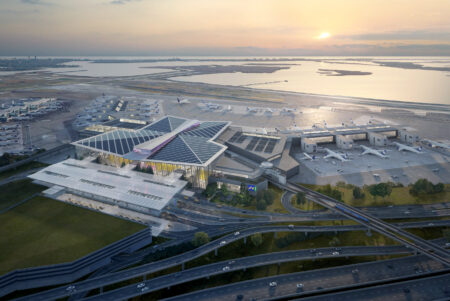
In reality, an unassuming office park some 40 miles from John F. Kennedy International Airport is a fake airport terminal to test the very real state-of-the-art technology that will create one of the most exceptional passenger experiences in the world at the airport’s new $9.5 billion international terminal.
The Port Authority’s private partners constructed the replica airport terminal to build JFK’s new Terminal One, supported by AECOM Tishman and aviation and travel technology provider SITA, to get the band ready to play some impressive tunes together. The required teamwork is perhaps most evident in one of the new terminal’s defining features: the use of facial recognition. Instead of rummaging around for boarding passes, passports, and IDs at several stops along the terminal journey, future New Terminal One passengers will have the option to get from curb to gate using only their faces. After registering at a check-in kiosk, data is transmitted to several different systems across the terminal to allow equipment to recognize different passengers and clear them through various checkpoints.
Pioneering systems to handle baggage will also hinge on communication and collaboration between terminal systems, ensuring a passenger’s journey mirrors that of their luggage, including any last-minute itinerary or aircraft changes.

“We will be using cutting-edge technology to ensure a seamless experience from the minute they enter the airport to the minute they get to their gate and take off,” said Hersh Parekh, the Port Authority’s deputy chief of intergovernmental affairs. “That’s the technology that’s being tested at this site, from check-in to baggage handling and everything that comes as part of the airport experience.”
While passengers will have no shortage of impressive tech in front of them, the most transformative changes may be behind the scenes, where new systems will be in place to manage the flow of aircraft to and from the apron, the aviation term for the airside area between terminal gates and taxiways. The space can easily get congested, resulting in delays that can quickly cascade.

At the new Terminal One, the apron will be managed by software from ADB Safegate, integrating a stream of constantly changing information from a multitude of sources to make lightning-fast decisions around aircraft movement, all in the hopes of minimizing delays and maximizing efficiency. Beyond the federally run air traffic control, the new terminal will have its own ramp management tower where controllers can keep a close eye on specific aircraft.
Advanced docking systems will give planes parking instructions customized to their aircraft model, supplementing on-the-ground workers and providing backup during severe weather. The software also integrates artificial intelligence, collecting data on all arriving and departing flights to make predictions around aircraft schedules and turnaround times.
For Parekh and the Port Authority, the cutting-edge technology going into the new terminal encapsulates the larger goal around the agency’s $19 billion renovation of John F. Kennedy International Airport, which includes two new terminals, expansion and modernization of existing terminals, streamlined roadways, local shops and restaurants, and New York-centric art that gives travelers an unmistakable sense of place.
“The work going on here will play an important role in achieving the Port Authority’s goal of transforming JFK into one of the world’s great new global gateways. The new terminal will be nothing less than world-class. That’s what we’re striving towards.”
Hersh Parekh, Port Authority Deputy Chief of Intergovernmental Affairs
Pinillos, who has worked on new airport terminals across the world, said he understands the gravity of this particular assignment.
“New York stands alone over any other city in the world,” he said. “We’re building a gateway to the U.S. for international visitors. This is what they’ll see first. Just as much as they remember the modern building and the art and the concessions, we want them to remember the easy, smooth experience they had coming and going.”