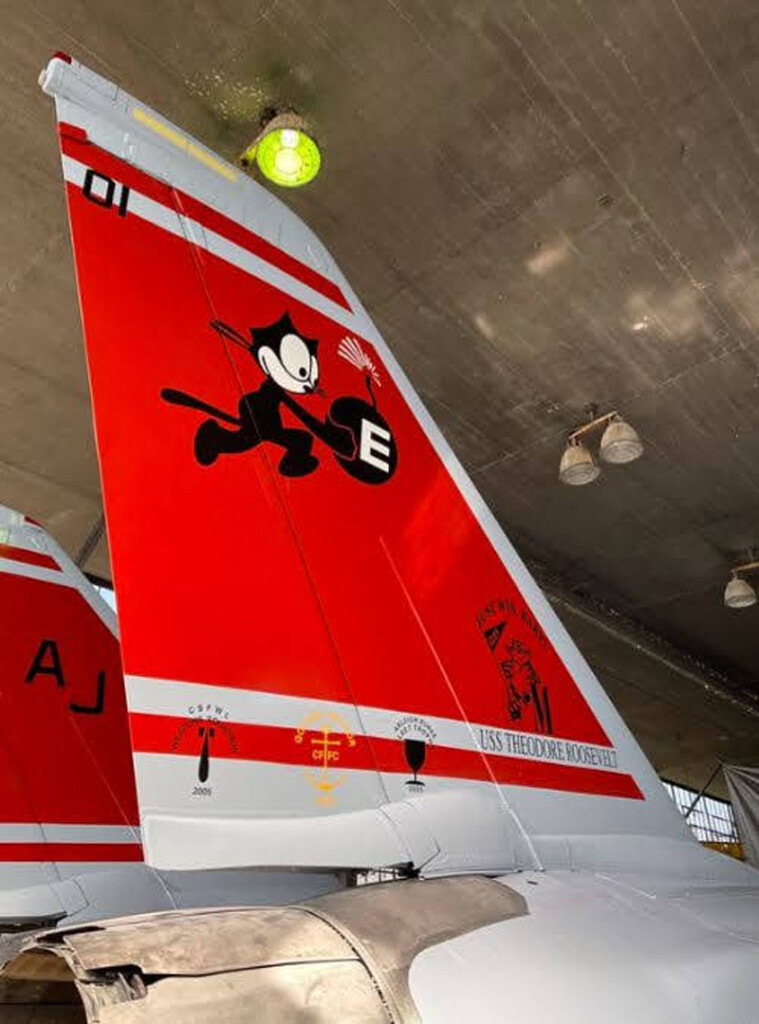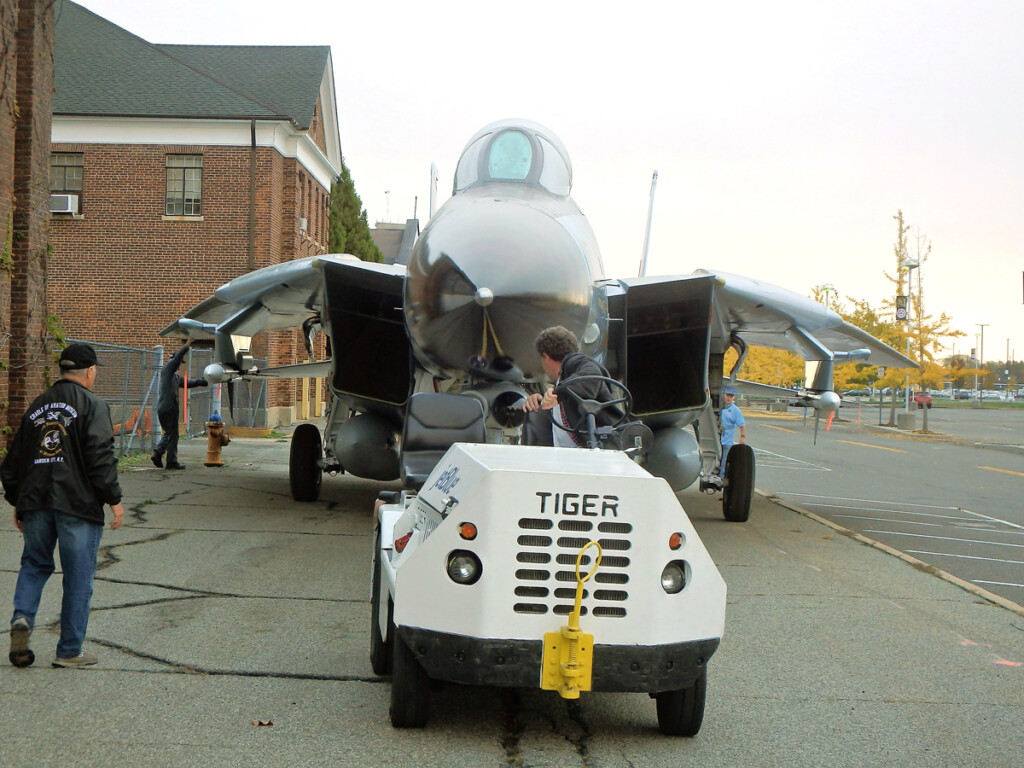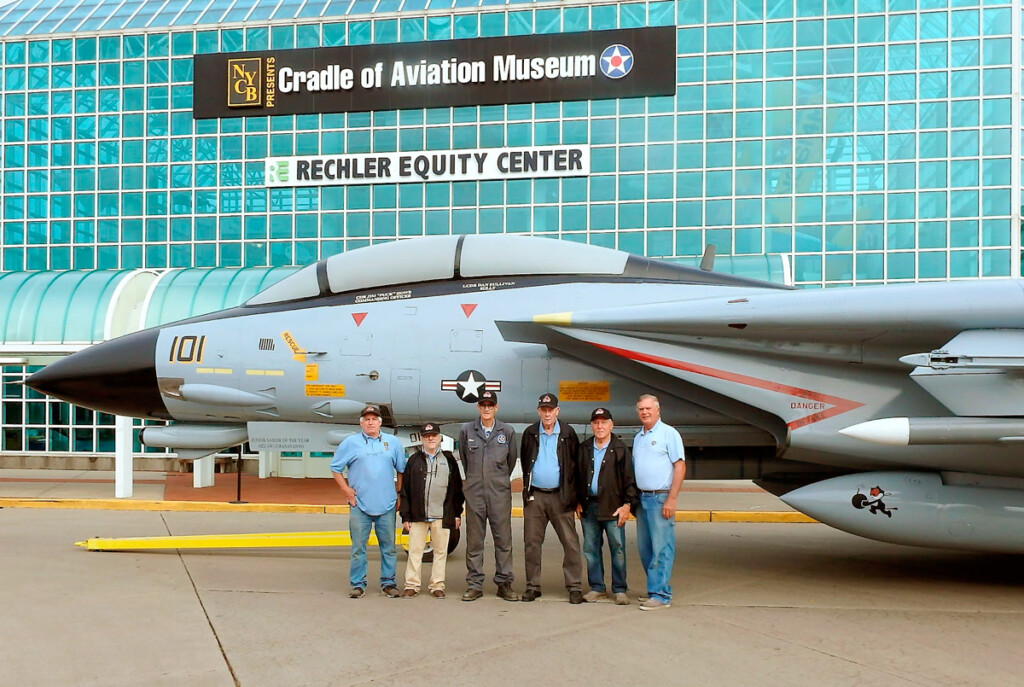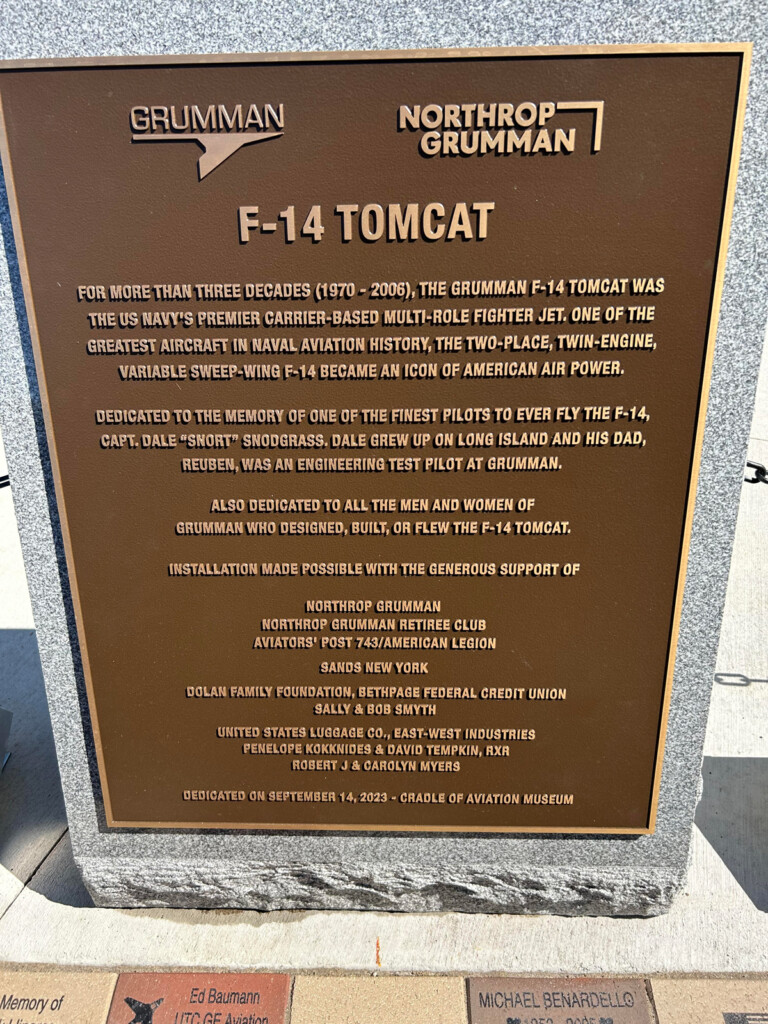




Behind every great aviation museum is a great curatorial staff and its volunteers. On Thursday, September 14, the curatorial staff and dedicated team of restoration volunteers at the Cradle of Aviation Museum knocked the ball out of the park at the highly anticipated roll-out and ribbon-cutting ceremony of the newly restored ‘Felix 101’ F-14D Tomcat, now permanently displayed at F14 Tomcat Plaza, outside of the entrance to the Cradle of Aviation Museum in Garden City, New York.
A large crowd of spectators, museum officials, and aviation enthusiasts gathered before the sleek, twin-engine, swept-wing fighter at its inauguration on this sparkling, blue-sky September day. Among those present at the ribbon-cutting of ‘’Felix 101”, and introduced by Museum president Andrew Parton, were Nassau County Executive Bruce Blakeman and distinguished guest Captain Robert ‘Hoot’ Gibson, who honored the legacy of the Grumman F-14 Tomcat and its vital role in aviation history.

The F-14, affectionately known as ‘’Felix 101” holds a unique distinction as the last American F-14D Super Tomcat in US Navy service and is the 711th of the 712 F-14s built by the Grumman Corp. on Long Island. Its distinguished service includes deployments with VF-124 Gunfighters, VF-2 Bounty Hunters, VF-213 Black Lions, and VF-31 Tomcatters, where it demonstrated exceptional capabilities and dedication. Its combat record over Afghanistan and Iraq during Operation Enduring Freedom and Operation Iraqi Freedom further attests to its significance.
Retired from active duty in 2006, the final flight of ‘Felix 101’ took place on October 4, 2006 when it flew from NAS Oceana to Republic Airport in Farmingdale. The aircraft was later transferred to the Northrop Grumman Corporation in Bethpage where it had been stationed outside of Plant 25 since 2008.
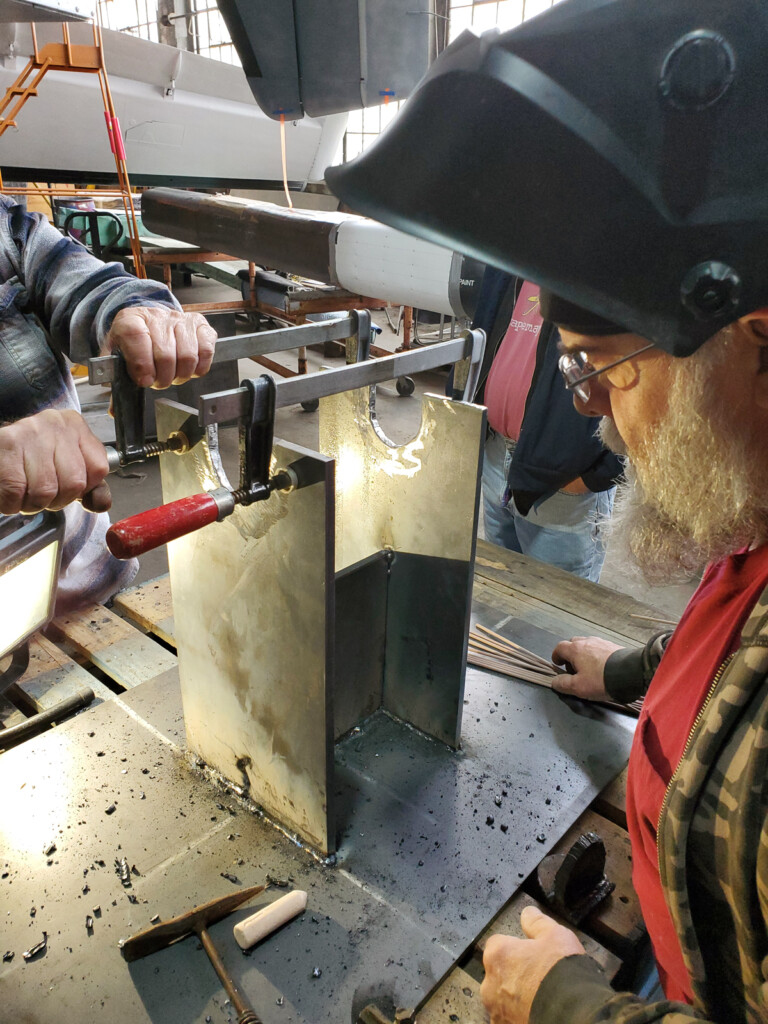
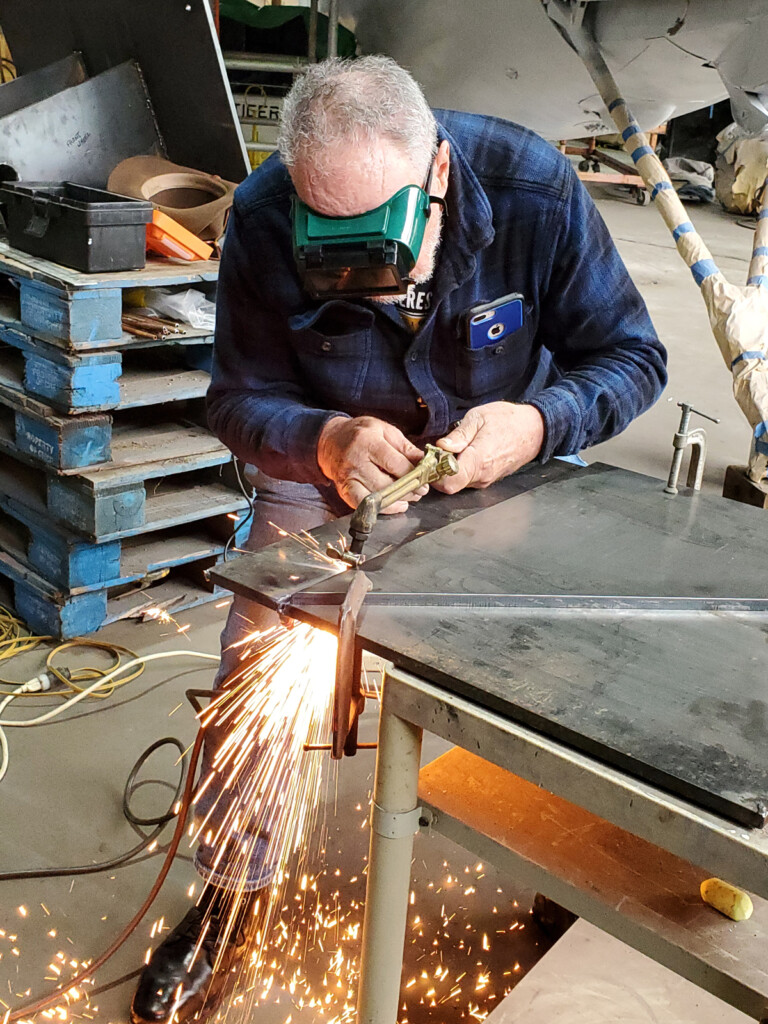
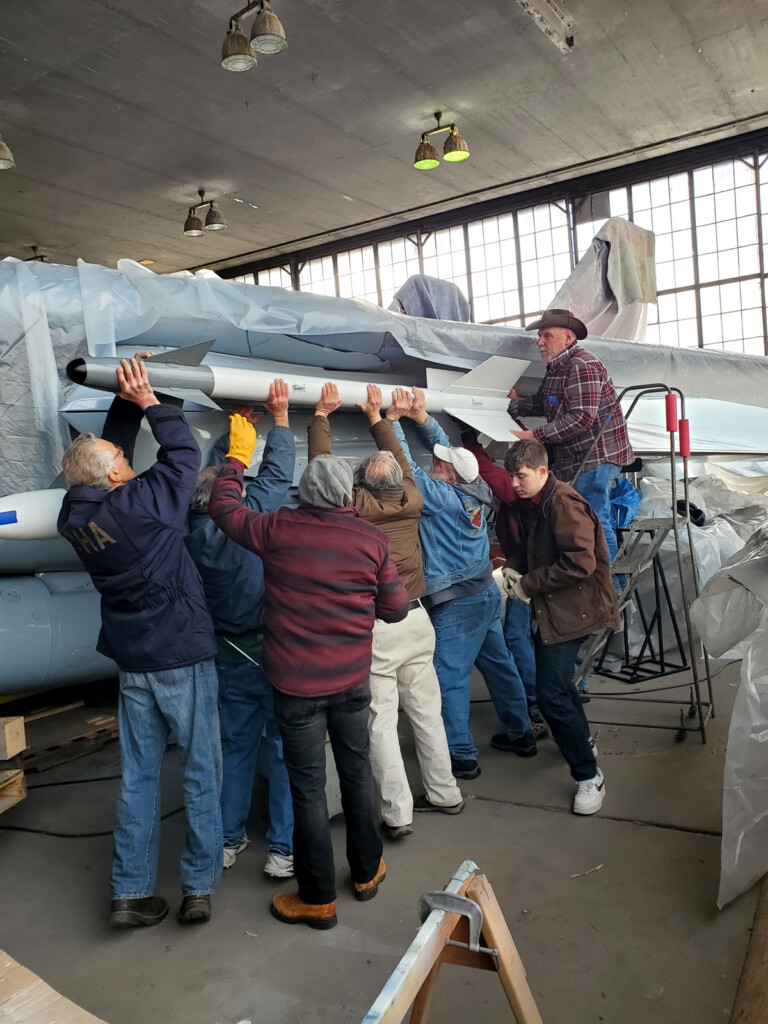
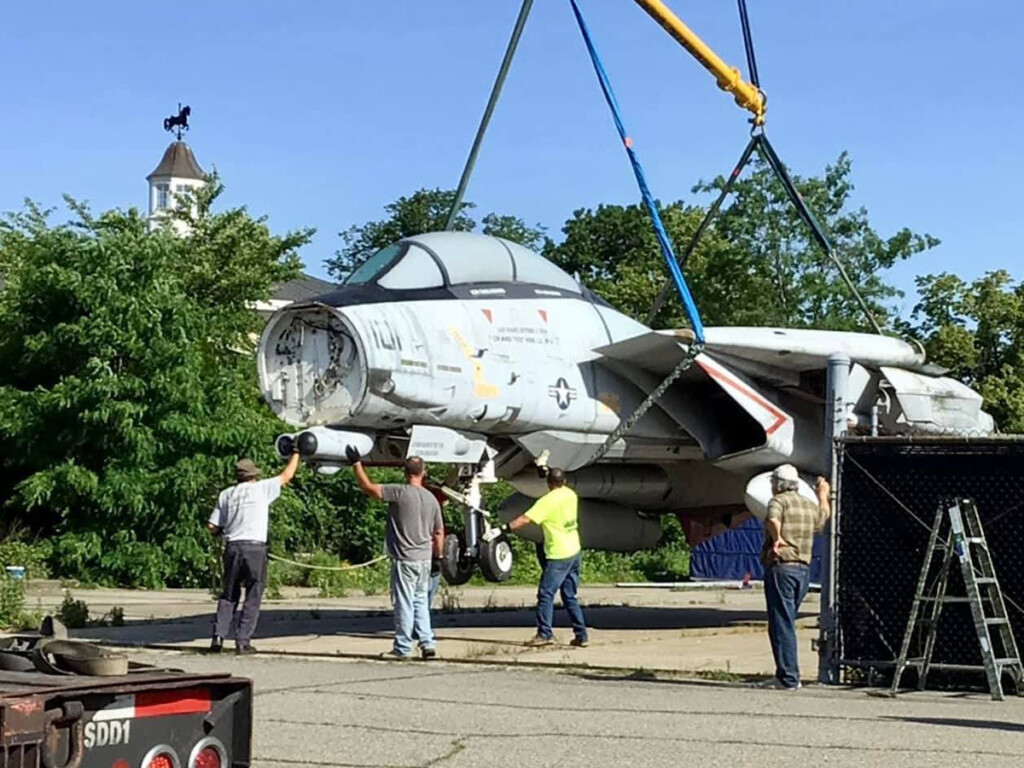
Northrop Grumman sponsored and financially supported the restoration of the F-14 and in June 2022, the aircraft was transported to the Cradle of Aviation Museum’s Hangar 5, where a committed professional crew skillfully undertook its preservation and restoration back to its infamous glory. Overseeing the entire project from start to finish were Josh Stoff, the museum’s curator, and Peter Truesdell, restoration lead.

Days before the ribbon cutting, Alan Cagan, a long-time restoration volunteer at the Cradle, spoke proudly of his team’s work in readying ‘Felix 101’ for its big day, saying, “It’s been a lot of fun, and I call it my puppy…I can’t wait to bring my puppy outside, Oh… it is gorgeous. The tie-down pegs are all in the concrete and all set and they’ll be about eight cables coming from the plane to the concrete, which is 18 inches thick.”
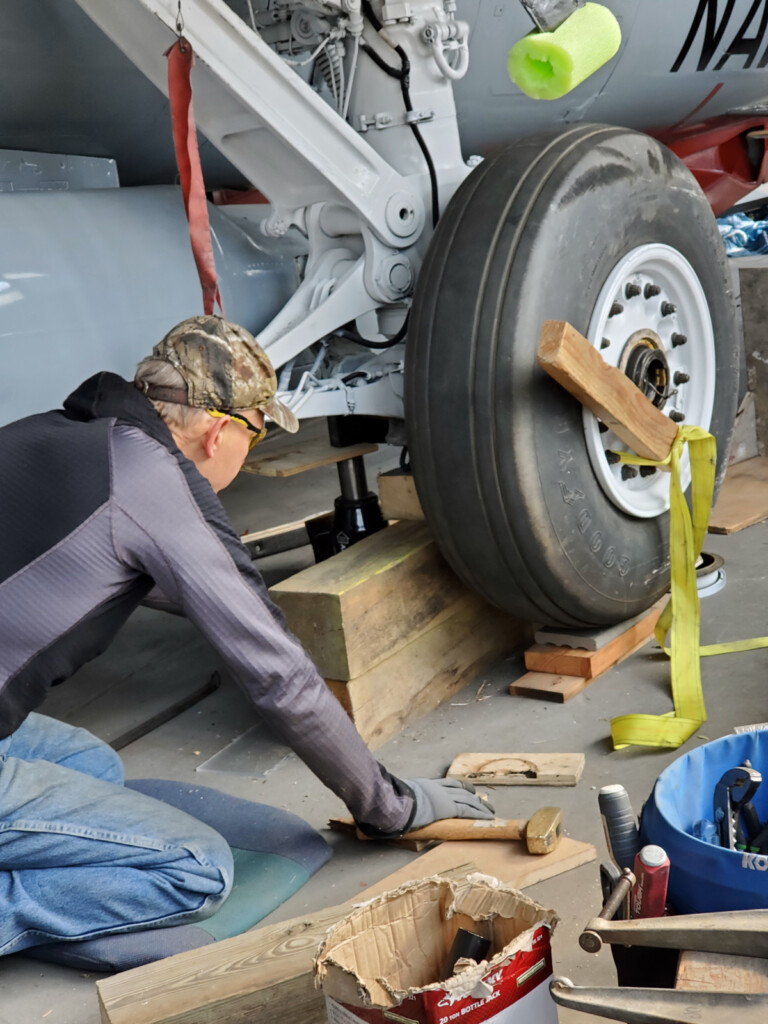
Two crews of restoration volunteers worked on the aircraft since its arrival to the Museum. Alan Cagan’s crew, of five, called ‘The Wrecking Crew’, designed and built three stands, one to go under each wheel so that the aircraft tires were suspended just off the ground. “Sounds easy,’’ said Cagan, “but we’re supporting 30,000 pounds!”
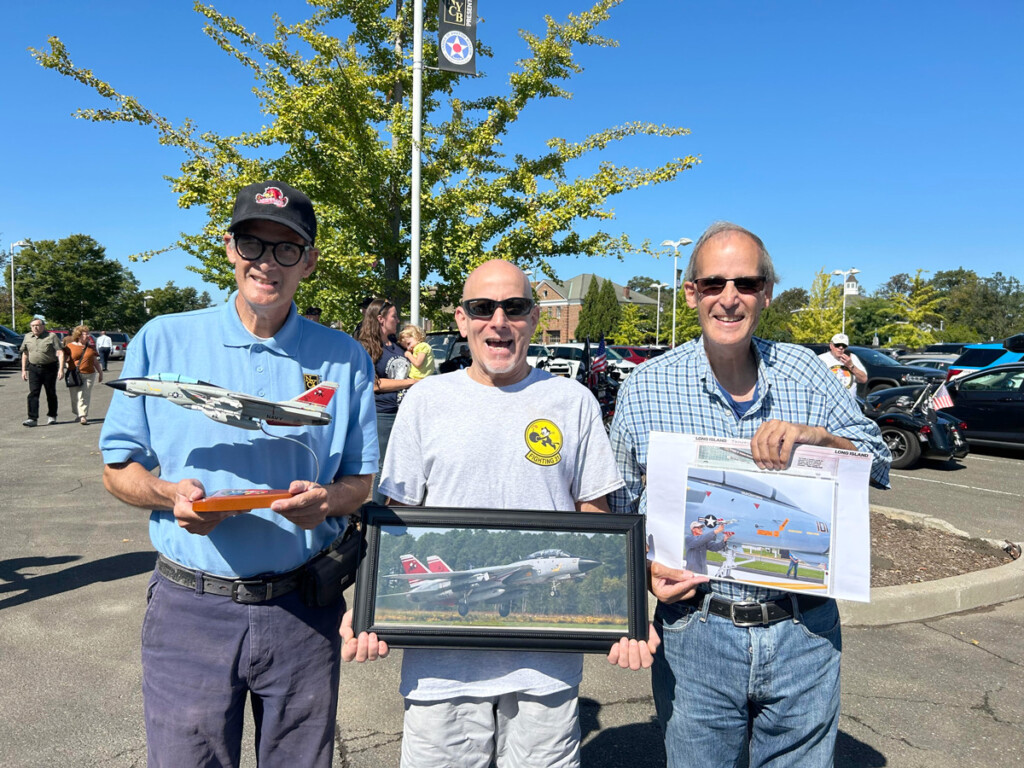
Richard Kalen’s crew worked tirelessly cleaning and prepping the Tomcat for its new paint job, stenciling, and finish. At the beginning of the project Kalen went to speak to Bob Sheppard at Trio Hardware to ask for some help with materials and ideas; they put their heads together and got the plane cleaned up and ready for its closeup. “Rich did an amazing job,” said Sheppard. Kalen, a Grumman retiree, worked on the F-14 in 1974 in Plant 1 and Plant 3, where he built its wings and fuselage. His brother Mark also worked on the F-14 and both were present at the ribbon-cutting.
The Cradle of Aviation Museum is also home to the third F-14 ever built, a pre-production model primarily used for determining structural loads and flight characteristics under extreme conditions at Grumman’s Calverton facility, according to curator Josh Stoff. It is on display in the Cradle’s Hangar 2 Jet Gallery. Stoff said, “We have the oldest F-14 that survives and the last American F-14 to fly. So, we have the first and the last, which is kind of unique.”
The warm reception that Felix 101 received at the Cradle of Aviation Museum for the ribbon cutting was most appropriate after all…the Grumman F-14 Tomcat is a Long Island and worldwide legend of aviation, and one that has now been lovingly preserved, cared for, and that will be fondly remembered for generations to come.