

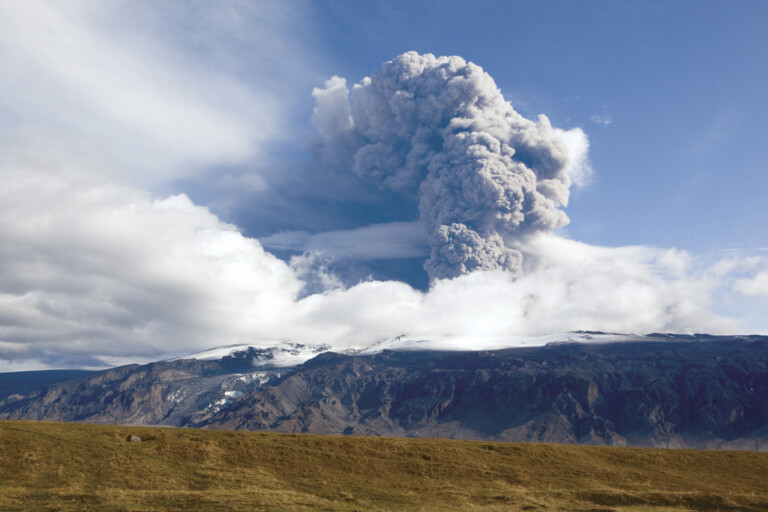
Just when you think you are finished with snowstorm interruptions at the airport, who would have guessed that a volcanic eruption in Iceland would impact airport operations around the world? Well, it did. The now infamous Eyjafjallajökull Volcano in Iceland erupted in April 2010, spewing volcanic ash that impacted more than 100,000 flights over seven days.
The impact of this event on aviation operations that canceled flights had not been felt since World War II. An estimated 250 million meter ash plume rose to 30,000 feet. The ash damaged military aircraft from various European countries, leaving thousands of passengers stranded worldwide.
When the first signs of volcanic ash appeared in the skies, we knew it would be an impactful event; the damage to aircraft from the volcanic ash could be catastrophic. European flights from the UK, Germany, Italy, and Spain, to name a few, were all impacted for days. It soon became apparent that passengers traveling to and coming from Europe would not be able to access John F. Kennedy International Airport (JFK). The hundreds of passengers stranded at the airport needed to be taken care of. This was not a typical flight cancellation, which would be the responsibility of the airline carrier; it was now an entire JFK airport community emergency event. All hands on deck. The community included staff from the PANYNJ, airlines, terminal operators, federal agencies, concessionaires, contractors, and clergy. The safety and security of the stranded passengers now becomes the airport’s responsibility.
All airport terminals providing international flights were impacted, including T1, T4, T7, and T8. The surrounding airport hotels were completely booked, meaning the passengers had to remain at the terminals. Concessionaires began to supply stranded passengers with free meals, and the Port Authority provided cots and blankets and Customer Service Reps to assist with passenger requests. Local businesses surrounding JFK were also quick to send meals and supplies.
On day two, I was able to bring two trailers to the airport, which provided showers and essential amenities for the passengers. The trailers provided some comfort for stranded travelers but not enough to offset the ongoing dilemma of the volcanic ash keeping them grounded. As each day went by, the tolerance of the stranded passengers lessened. Many had family, jobs, and friends they needed to get back to in Europe.
Several British dignitaries who happened to be in New York when this incident occurred visited the British Airways terminal to meet with the stranded passengers and assure them that they would all be on their way as soon as the skies were safe enough to fly. The clergy from Our Lady of the Skies were instrumental in delivering food and supplies where needed and provided much-needed comfort and support for the stranded passengers.
Hourly updates with federal agencies monitoring the ash movement continued for several days. The news media and Airline System Operations Control Centers also provided continual updates.
When all was said and done, this event cost the airline industry more than $1 billion in lost revenue. Who would have ever thought that volcanic ash almost 3,000 miles away could make such an impact? At least now we have a checklist for the next time.