

Close Menu

    Subscribe for Updates

    Get the latest local airport and aviation news delivered right into your inbox each week!

    News Updates
    IMG 1390 Metropolitan Airport News

    Welcome to Eataly!

    June 11, 2026
    Thai Airways Pilots

    Accommodations Plus International Announces Partnership with Thai Airways International

    June 11, 2026
    LaGuardia Airport Aerial

    Temporary Flight Restrictions: Why They Matter in the Tri-State Area

    June 11, 2026
    Facebook X (Twitter) Instagram YouTube Flickr
    Metropolitan Airport News
    • Airport & Aviation Events
      • Submit FF Event
    • Latest Airport News
      • Publisher’s Message
      • Editor’s Notebook
      • Leadership Insights
      • New York Aviation History
      • Fast Five
      • Non-Rev Traveler
      • On Duty
      • Company Spotlight
      • Air Cargo
      • Airline News
      • Airport Community
      • Airport Employment News
      • Airport News
      • Airport Safety & Security
      • Ground Services
      • Intermodal
    • Airport Employment
    • Back Issue Archive
    Metropolitan Airport News
    Home»Aviation News»Temporary Flight Restrictions: Why They Matter in the Tri-State Area
    Aviation News

    Temporary Flight Restrictions: Why They Matter in the Tri-State Area

    From presidential visits to stadium events, how TFRs keep the skies secure—and why they pose a unique challenge for the world's busiest airspace.
    Tanya AustinBy Tanya AustinJune 11, 20264 Mins Read
    Facebook Twitter LinkedIn Email
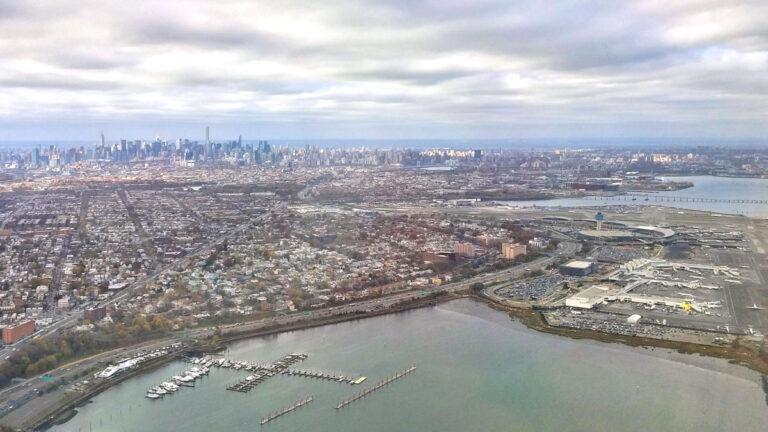
    LaGuardia Airport Aerial

    For pilots, air traffic controllers, airlines, and passengers, few acronyms can create as much disruption as a TFR. Short for Temporary Flight Restriction, a TFR is a designated area of airspace where certain aircraft operations are restricted for a specific period of time. While these restrictions are implemented to enhance safety and security, they can significantly affect airport operations, airline schedules, and general aviation activity—especially in the busy airspace surrounding New York, New Jersey, and Connecticut.

    The Federal Aviation Administration (FAA) issues TFRs for a variety of reasons. Some are related to national security, while others are designed to protect people and property on the ground. Regardless of the reason, pilots are required to know and comply with active TFRs before every flight.

    One of the most common reasons for a TFR is a presidential visit. Whenever the President of the United States travels, a security perimeter is established around the location where the President will be staying or conducting official business. This includes not only temporary visits but also areas near private residences frequently used by current or former presidents. During these periods, aircraft operations within the restricted area may be prohibited or heavily regulated.

    The Tri-State Area experiences these presidential TFRs more often than many other regions due to its proximity to New York City, one of the nation’s most important political, financial, and media centers. When a presidential TFR is active, airports located within or near the restricted airspace may experience delays, reroutes, and operational limitations.

    Another frequent source of TFRs in the region is the annual session of the United Nations General Assembly. Each year, world leaders, heads of state, and high-ranking government officials arrive in New York City to participate in meetings and diplomatic events. The concentration of dignitaries requires extensive security measures, including temporary restrictions on portions of the surrounding airspace.

    For air traffic controllers and pilots, these restrictions often result in altered flight routes, increased workload, and additional coordination requirements. Airlines may need to adjust arrival and departure procedures at JFK, LaGuardia, Newark Liberty, and Teterboro.

    Sporting events can also trigger TFRs. Since 2003, federal regulations have required temporary flight restrictions over stadiums seating more than 30,000 people during major sporting events. These restrictions generally apply during professional football, Major League Baseball, major college football games, and certain NASCAR events.

    In the Tri-State Area, stadium TFRs are common during games at MetLife Stadium, Yankee Stadium, and Citi Field. While airline traffic is generally accommodated through established procedures, general aviation pilots operating nearby must remain vigilant to avoid inadvertently entering restricted airspace.

    Other reasons for TFRs include disaster response operations, wildfire suppression efforts, space launches, air shows, major public gatherings, and emergency situations requiring the protection of personnel on the ground.

    The impact of a TFR often extends far beyond the restricted area itself. Aircraft may be rerouted around the affected airspace, increasing flight times and fuel consumption. Air traffic controllers must manage altered traffic flows while maintaining safe separation between aircraft. Airlines may experience delays that ripple through the national airspace system, affecting flights hundreds of miles away.

    In the New York metropolitan region, where some of the busiest and most complex airspace in the world already exists, even a relatively small TFR can create challenges. The combination of high traffic volume, multiple major airports, corporate aviation activity, and international operations leaves little room for error.

    For pilots, the lesson is simple: always check for active TFRs during preflight planning. Failure to comply can result in enforcement action, certificate suspension, or even interception by military aircraft. More importantly, compliance helps ensure the safety and security of everyone operating within the National Airspace System.

    Whether it’s a presidential visit, the arrival of world leaders at the United Nations, a sold-out football game, or an emergency response operation, Temporary Flight Restrictions remain an important tool for protecting people and maintaining order in the skies above one of America’s busiest aviation regions.

    Share. Facebook Twitter LinkedIn Email
    Tanya Austin
    • LinkedIn

    For more than twelve years, Tanya Austin has worked in the aviation field as a first responder, brand ambassador, and customer service representative to travelers worldwide, as operations and safety manager, representing regional and global carriers such as Delta Airlines and United Express. Tanya has worked in charter, private, and commercial aviation. She has been passionate about her work with nonprofit groups such as Black Pilots of America and Tuskegee Airmen Inc., where she is a national board member and Eastern Region Representative. Tanya is an active member of Women in Aviation International, the Organization for Black Aerospace Professionals, Sisters of the Skies, and the Aircraft Owners and Pilots Association. She contributes her spare time supporting those who need help in these and other organizations. Tanya is an aviation business owner and commercial pilot. She is a Certified Aviation Safety Manager. Tanya has over 25 years of sales, service, and management experience and has worked for both government and private sectors. Tanya attended Kaplan, where she completed studies in business and real estate. She also has an international mediator certification.

    RELATED NEWS & UPDATES

    IMG 1390 Metropolitan Airport News

    Welcome to Eataly!

    June 11, 2026
    PANYNJ Operation Legal Ride

    PANYNJ Launches New Initiatives with $100 Million ‘Operation Legal Ride’ to Tackle Illegal Hustling at Airports

    June 9, 2026
    NY Knicks 2026

    Knicks Fever Takes Flight

    June 5, 2026
    Turnaround story continues with United's Newark operation delivering best-ever on-time* performance in April and May, flying nearly 5.8 million passengers

    Newark Liberty Leads Northeast for On-Time Flights in 2026

    June 3, 2026
    Newark Liberty International Airport (EWR) Vison Plan (Rendering)

    Port Authority Approves $200M Upgrade for Newark Airport’s Terminal B

    June 2, 2026
    T5 JFK Concessions Grand Opening

    Terminal 5 at JFK Airport Unveils Iconic NYC Dining Experiences

    June 2, 2026
    Leave A Reply Cancel Reply

    This site uses Akismet to reduce spam. Learn how your comment data is processed.

    Subscribe for Weekly Email Updates

    Get the latest local airport news, events, and jobs delivered right into your inbox each week.

    Metropolitan Airport News Logo

    Metropolitan Airport News provides timely news, information and updates for both Port Authority of New York & New Jersey (PANYNJ) employees and businesses that provide services at, and around the major New York airports (JFK, LGA, EWR).

    John F. Kennedy International Airport
    PO Box 300877
    Jamaica, NY 11430 USA
    Phone: (718) 750-4441

    1. Guest on QueensLink or QueensWay?

      With QueensLink, you'll get both the park and train. QueensWay will provide only a park. Other cities that have tried…

    2. Maureen Katz on One Day Visit to Naples, Italy

      Hi Peter, It is great to hear from you! The 8 airlines were Evergreen International, Cosmopolitan Air Lines, People Express,…

    3. Peter Stagnitta on One Day Visit to Naples, Italy

      Hi Mo! Just curious, what were the eight airlines you worked for? You may not remember me, but I know…

    Facebook X (Twitter) YouTube LinkedIn Flickr Instagram
    • About Us
    • Advertising
    • Airport Worker
    • Charitable Giving Program
    • Back Issue Archive
    • Contact Us
    • Privacy Policy
    Copyright © 2026 Airport Media, Inc. All rights reserved.

    Type above and press Enter to search. Press Esc to cancel.