


An Unmanned Aerial Vehicle (UAV), more commonly known as a drone, is a small or medium aircraft without a pilot or passenger on board. A drone system integrates robotics with aeronautics. Drones can be guided by remote control or autonomously by an onboard computer and are capable of a controlled, sustained level of flight.
Most drones have four propellers (Quadcopters), but there are models that may have up to eight (Octocopters). Closely akin to a helicopter or rotorcraft, after a drone’s engine is turned on, its propellers rotate; two propellers rotate in one direction while the others rotate in the opposite direction, enabling flight. A drone pilot then uses a remote control to direct its flight from the ground.
Other drones equipped with embedded software-controlled flight plan systems that work in conjunction with onboard sensors and GPS can fly autonomously and automatically when a course is set to an assigned destination. As its route is recorded by a camera, the pilot can see the image from their command position, while a drone’s central flight controller operates like a compass to measure the strength and direction of the magnetic field. The controller receives information on the drone’s location through GPS; it then sends information to an Electronic Speed Control (ESC), which lets the motor use the revolutions needed to make the flight stable and safe.
The technology of today’s drones has come a long way, from the first pilotless aircraft built for military purposes to the rapid growth and advancement of drone technology that has evolved into an accessible consumer electronic.
Pilotless aircraft actually date back to 1849, when Austria launched unmanned incendiary balloons carrying explosives controlled with timed fuses over the city of Venice. Several of the balloons exploded, causing little damage, but most blew off course due to a sudden change in wind direction.
The early development of drones began in 1907 when the Breguet brothers, with French physiologist Charles Richet, developed an early example of a gyroplane (quadcopter), the precursor of the helicopter. It was neither steerable nor controllable but was flown to an elevation of 0.6 meters, requiring four men to steady the structure.
Pilotless aircraft progressed after the outbreak of World War I. In 1916, the Ruston Proctor Aerial Target, based on Nikola Tesla’s designs, was developed by British engineer and inventor Archibald Low, often referred to as the ‘father of radio guidance systems.’ The Ruston Proctor Aerial Target was the first powered drone that used a radio-guided system. Germany later refined this technology for its V1 rocket program in World War II.
In 1917, following the U.S. declaration of war with Germany, American inventor and engineer Charles Kettering invented the unmanned Kettering Aerial Torpedo, nicknamed the ‘Bug’. Using gyroscopic controls, it was launched from a four-wheeled dolly down a portable track. Its internal preset pneumatic and electrical controls stabilized and guided it toward a set target.
Between 1930 and 1945, the British developed the ‘Queen Bee’ radio-controlled target drone in 1935; its name is attributed to the present term ‘drone.’ The Radioplane OQ-2 was a remote-controlled model airplane developed by British actor Reginald Denny and engineer Walter Righter, leading to the first mass-produced UAV products in the United States by the Radioplane Company. The company manufactured almost 15,000 during the war. In 1945, Norma Jeans Dougherty, later known as Marilyn Monroe, was discovered while working at Radioplane’s OQ-3 drone production factory.
The continuing and immeasurable advancement of drone technology progressed rapidly for military use, with guidance systems and autopilot controlling altitude and airspeed…, gyroscopes controlling yaw and pitch…magnetic compass and pressurized air used to control rudder and elevator operation.
The first known use of cameras on drones for military purposes was during the war in Vietnam, during aerial surveillance and reconnaissance. In the 1980s, military assault drones were used by Israeli forces to gain victory over Syrian forces with minimal losses. The U.S. began its Pioneer UAV Program to build inexpensive drones for fleet operations and reconnaissance, focusing on alternative power sources, such as solar. Newer drone models became more sophisticated, with designs that centered on endurance and altitude at which they could safely operate.
From 1990 to 2010 military and civilian development of drones resulted in mini and micro-versions of UAVs. The USAF MQ-1 Predator flew nearly 200 combat missions in Afghanistan, and they were instrumental in the search for Osama bin Laden.
In 2006, the FAA officially issued the first commercial drone permit, recognizing the potential of non-military, non-consumer drone applications and new uses for drones; by the middle of the decade, the FAA saw tremendous growth in demand for permits estimated at 1,000 commercial drone permits in 2015 which tripled one year later. In recent years, the commercial use of drones has experienced incredible growth, and a growing number of industries are realizing the potential benefits of drones, including improving efficiency and risk reduction across many sectors.
In addition to military applications, federal and commercial applications for drones include governmental, law enforcement, and inspection applications; under these segments of enterprise are the sub-sets of Infrastructure Inspection and Maintenance, Search and Rescue Operations, Agriculture and Precision Farming, Public Safety, Aerial Photography and Videography, Mapping and Surveying, Environmental Monitoring and Conservation, Emergency Response and Disaster Management, Telecommunications and Power Line Inspection, Medical and Cargo Delivery.
Today, drones are used to identify failures, malfunctions, and material losses without the need to physically send personnel to facilities or areas that are too dangerous for humans to investigate in person, including power plants, solar and wind farms, fires, preparing for disaster relief, and more.
With high-definition cameras built into drones, precise images of large land areas and agricultural fields can be recorded and documented, substituting both ground and air surveying vehicles. Drones can measure air quality, pollen levels, and atmospheric conditions through built-in sensors and be later used to identify patterns and climate.
Drones that are equipped with cameras are common in both recreational use and commercial photography and videography. The merging of remote control aircraft and smartphone technology, along with the rapid growth of smartphone use, has dramatically reduced the price of microcontrollers, accelerometers, and camera sensors.
As drone technology becomes more sophisticated, much of the design of newer models is centered on improving their endurance and altitude at which they can safely operate. Advancements in miniature radio-controlled components and transistor technology have enabled drone enthusiasts to purchase them at reasonable costs. Do-It-Yourself (DIY) kits are now available, allowing hobbyists to build and fly remote-controlled drones outdoors.
Additionally, as drone technology progresses and governments continue to establish guidelines, regulations, and restrictions that ensure their safe operation worldwide, drone delivery will be a common sight in both city and suburban areas. Drones with GPS, cameras, and sensors will be enabled to navigate autonomously and precisely deliver packages from retailers to consumers at specified locations.
The drone market is expected to experience outsized growth in the coming years. According to industry experts, drone shipments are expected to experience a compound annual growth rate of 66.8% in 2023, with total global shipments reaching 2.4 million. By 2025, shipments are expected to reach $63.6 billion.
Whether a novice drone pilot or one with many years of aviation experience, drone safety is the law. Rules and safety tips exist to ensure safe flight in the National Air System (NAS) and are outlined by the FAA on its website.
The specific rules and laws for operating a drone for Safety & Government; Recreational Flyers; Certified Remote Pilots are outlined at: www.faa.gov/uas
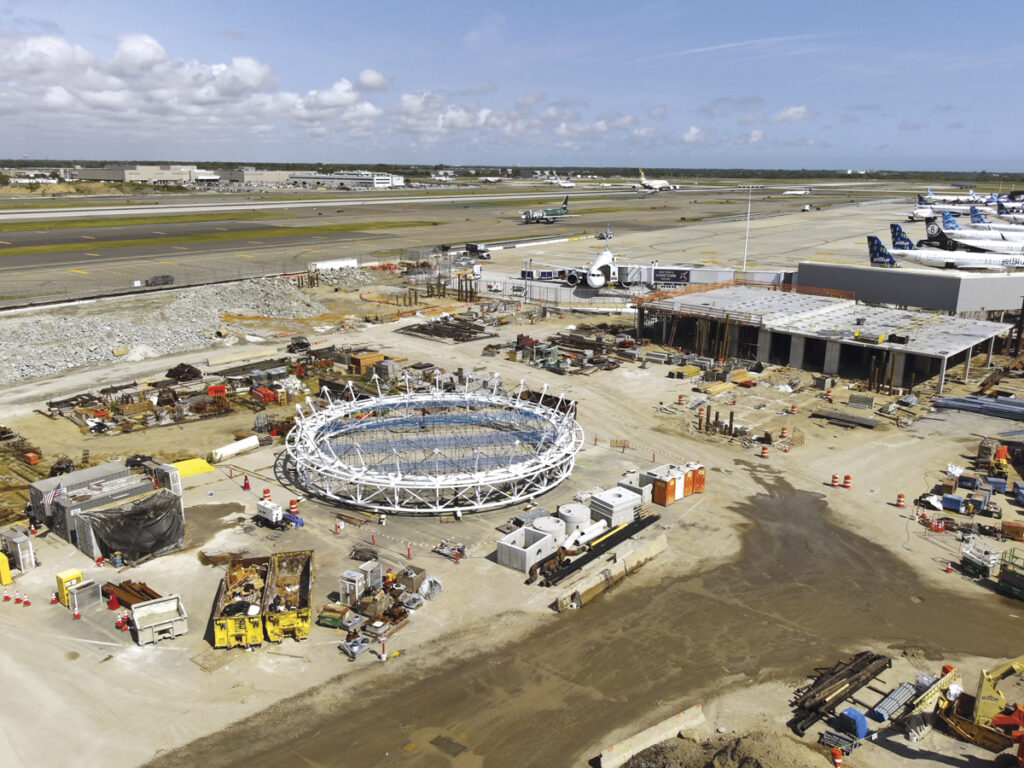
Construction Progress Photography
Drones are quickly becoming the standard tool for construction progression photography. Progression photographers document the planning and progress of construction projects, redevelopment, and infrastructure projects.
Beverly Holder is a drone photographer specializing in progression photography at redevelopment and construction job sites throughout the New York metropolitan area.
Born and raised in Queens, Holder attended Baruch College and earned her degree in advertising and graphic art. Beverly began freelancing in graphics and picked up a camera in college to take a class in photography, learning how to print, develop, and shoot with film. Venturing out to explore street photography, she submitted a photo to the Queens Chronicle and was paid $5. From there on, she became a professional photographer. While shooting for the Chronicle around Jamaica, Queens, she discovered that there was a niche for photographers to photograph construction sites.
Mentored by Nat Valentine, Holder went to a construction site with him, and he explained the type of work he did with construction photography for his clientele. That opened the door for her and showed her the niche she could and would work in.
One day, while freelancing at an event, Holder learned that the City of New York was hiring photographers. So, she went downtown, had her interview, got the job, and worked for an NYC agency for 12 years.
She began shooting construction progress photography and learned that she needed to become certified, so she completed the paperwork, earned her certification, and began shooting digitally for general contractors, engineers, and architects in 2011. NYC agencies also wanted pictures on film since they could not be manipulated and could then be archived.
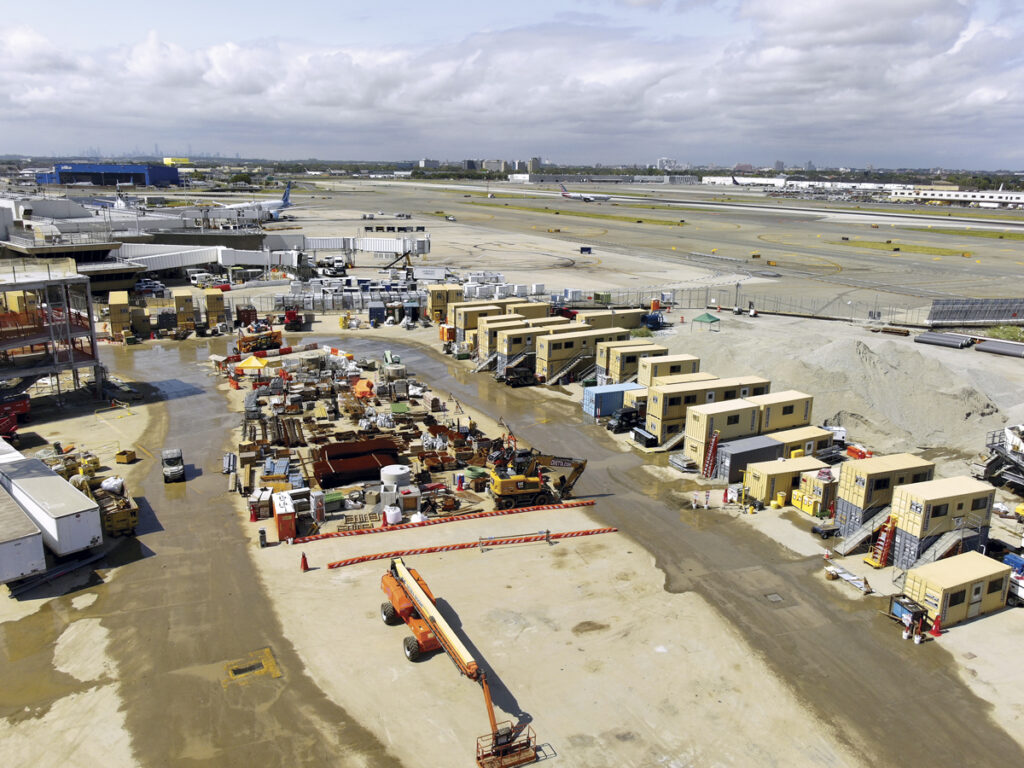
Indicative of its name, progress photography shows the progression of a construction project, documenting it over time from start to finish. On the job at a construction site, Holder documents the progress of a project from the same angle, and its details from all four corners. Progress photos and videos document what’s going on so that project managers, who are not present every day on site, are able to see the progression in detail.
Construction photo documentation provides visual evidence that work is up to code. It also helps coordinate timelines across different contractors and communicate scheduling adjustments when changes are detected. Finally, it helps avoid disputes and possible litigation for incomplete or unsubstantiated claims, particularly in advance, during, and after construction.
Time-stamped and geo-tagged photos can show who worked on what and when during the construction process. “Say, for example,’’ said Holder, “when taking a picture of the sidewalks for a general contractor about to redo sidewalks, contractors want professional photographs should anything go wrong….for instance…a claim such as, ‘You broke the flower pot on my property.’ The contractor can go right back to the picture and determine whether, ‘Yes, we did,’ or ‘No, we didn’t.’”

After 10 years as a progression photographer, drones became necessary for Holder’s now thriving business. “A friend said, ‘Look you gotta do this’! And at first, when drones came out, I didn’t want anything to do with them and I didn’t think I could do it,” said Holder. But then that friend gave her a drone and urged her to ‘just try it, practice it!’ “And from the time it took off, I was sold!” exclaimed Holder.
After that, Holder took an online course through the Drone Launch Academy to prepare for the FAA Part 107. She learned all the facets of becoming a certified drone pilot, such as drone rules and FAA regulations, the National Airspace System (NAS), reading sectional charts, necessary waivers, airport operations, weather and meteorology, and drone operations.
She took the FAA exam, which is literally a pilot’s exam, saying, “The FAA really wants you to be a responsible person when it comes to flying. They want to ensure that you follow the rules. So, I would go to a park and practice often. There are also apps to assist you, and I’m also in a group on Facebook called the NYC 5 Borough & Beyond Drone Meetup, where members support, share, and help one another to fly safely and responsibly in New York City. From the first day I went to the park, other drone pilots were very gracious and really helpful. They offered to assist me as I prepped for the exam, and they offered their encouragement.” It took about two years before Holder took the test, which she passed in May 2023.
Today, Beverly Holder is the CEO of B.Holder Photo, Inc. She often works with 5D Architecture and Engineering, LLC and its team of engineers, surveyors, and architects, who have contracts and obtain all necessary waivers to fly drones at airports in the New York metropolitan region.
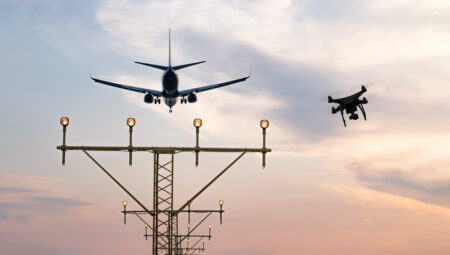
“When you fly a drone at an airport, you’re a plane. You have to get a call sign, call into Air Traffic Control, and have tens of millions worth of insurance.”
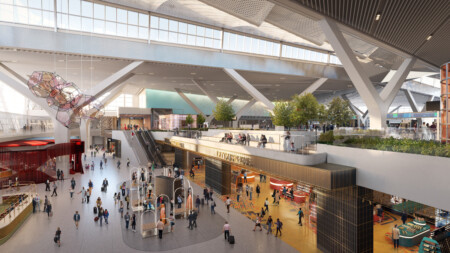
In doing this type of drone progression/documentation photography, Holder literally has a birds-eye view of the redevelopment projects taking place at New York metropolitan airports.
Speaking of the future of drone photography from a personal point of view, Holder said, “The technology is getting better and better, and it is really amazing. It’s really surprising when you fly and look through the controller and see such beautiful images, especially places that you’re dreaming about seeing.
You look at your uploads and can’t believe it, especially when the weather is good.” She added, “Most drone photographers who do it for leisure are people who want to go up and see what everything looks like. We just want to take pictures from the sky.”