


Deciphering the acronyms that aviation and airports rely on to accurately and safely communicate worldwide.
Whether a passenger or anyone who works at an airport or in the aviation industry, acronyms and airport codes are seen everywhere. They are on luggage tags at airport check-in, printed on flight tickets and itineraries, on travel booking websites, in documents, on ATC and flight charts, and more.
At airports and within the aviation industry, acronyms and abbreviations are a common way to communicate formal terminology more effectively. Acronyms use parts of a phrase to abbreviate a word so that it is pronounced as a word. A common example of an acronym is RADAR, ‘Radio Detection and Ranging.’ And a NOTAM (Notice to Air Missions, Notice to Airmen, or Notice to Airman) is a notice filed with an aviation authority to alert an aircraft pilot of potential hazards along a flight route or a location that could affect the flight.
Another type of abbreviation is initialisms, which are pronounced as individual letters, such as TSA, ‘Transportation Security Administration,’ or FAA, ‘Federal Aviation Administration.’
Airport acronyms and abbreviations appear in FAA airport standards and related publications.
Airport acronyms and abbreviations appear in FAA airport standards and related publications. Airport codes are used to clearly identify an airport, as the codes are much shorter than an airport’s name. These codes avoid language barriers, complex airport names, and mixing up airports that share the same or similar names.
There are two primary types of airport codes: IATA (International Air Transport Association) codes and ICAO (International Civil Aviation Organization) codes. Additionally, FAA (Federal Aviation Administration) LIDS, Location Identifiers, are assigned to airports in the United States and consist of a combination of three or four characters that include letters and numbers.
Every airport has one, two, or all three of these codes, but small, remote airstrips and private airfields may not have one. Airport codes are considered permanent and rarely changed unless there is strong justification for air safety.

The Coding Genesis and IATA
Airport coding was first established in the 1930s, with airlines typically choosing their own two-letter designation representing codes with airports using the National Weather Service two-letter identifier. With the expansion of air travel by the late 1940s, the number of airports exceeded the number of available two-letter airport codes (numbering a possible 676 combinations), so the system eventually shifted to the 3-letter code that is used today (allowing for a potential 17,576 combinations). Around the time of that shift, some airports had an X tagged onto their two-letter code as a placeholder, such as Los Angeles International Airport, which was initially ‘LA’ but became LAX in 1947.
By the 1960s, it was apparent that an international organization was needed to standardize the airport coding process. IATA stepped in to become that organization and to continue establishing new airport codes worldwide.
The IATA issues 3-letter codes for airports, airlines, aircraft types, and stations and is an integral part of the aviation and travel industry. These codes are necessary for identifying an airline, its destinations, and its traffic documents and are essential to the smooth operation of electronic applications that have been developed around these coding systems for both passenger and cargo traffic purposes.
IATA location codes are strictly used for commercial airline purposes and are issued at the request of an airline.
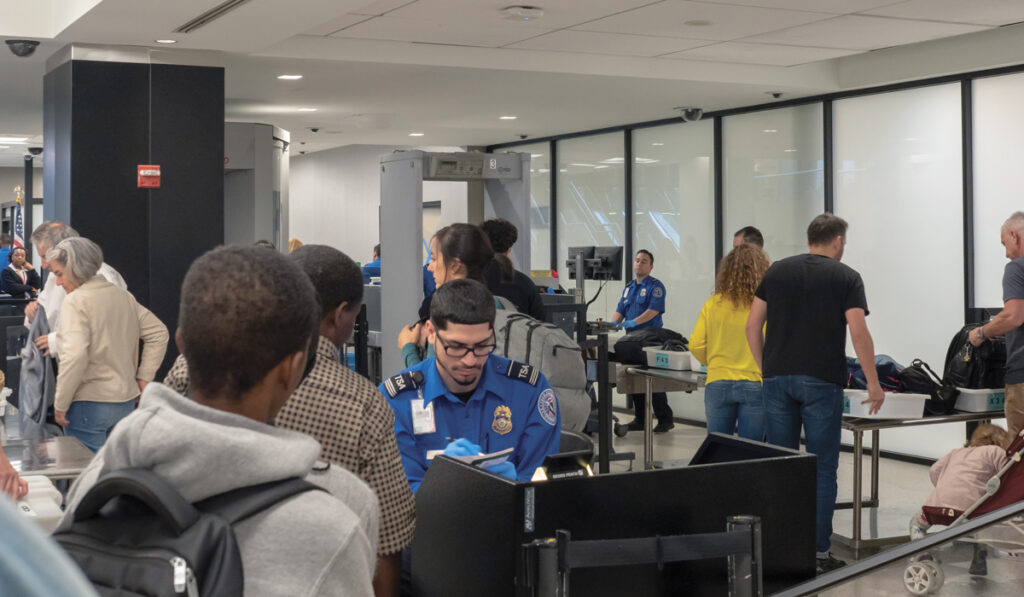
The familiar 3-letter airport codes are used to refer to each airport nationally and internationally. IATA codes are also commonly consigned to bus, rail, helicopter, and ferry terminals involved in intermodal airline travel or with airlines for ticketing and baggage transfers.
The rules for the assignment of airport codes are established in IATA Resolution 763, with its main objective to ensure that each 3-letter code is unique. A code is assigned to:
- An airport receiving air services by an airline.
- A location that must be identified and published for intermodal transportation.
When assigning a new airport identifier, the procedure is to:
- Select an unassigned code using the first three letters of the location’s name as a first choice.
- Choose an unassigned combination, preferably starting with the first letter of the location’s name, as a second choice.
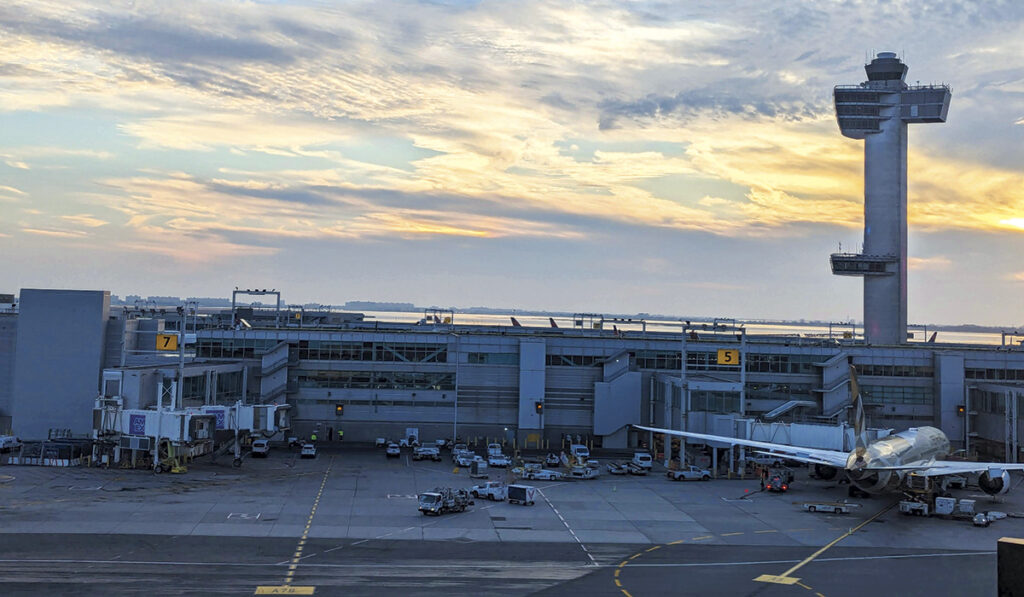
The system of airport codes has advanced so that no two airports share the same 3-letter code. Each airport code is unique to a specific airport and, in its simplest terms, can be based on the airport’s name, especially those serving cities with multiple airports, such as JFK for John F. Kennedy International Airport, LGA for LaGuardia Airport, EWR for Newark Liberty International, or acronyms for an airport, like LHR for London Heathrow Airport or CDG for Paris’ Charles de Gaulle Airport.
Some airports were assigned three-letter codes to match their city names, such as MIA for Miami, PHL for Philadelphia International Airports, ISP for Long Island MacArthur Airport (formerly known as Islip Airport), HKG for Hong Kong International Airport, FRG for Republic Airport, Farmingdale.

Since no two airports can have the same code or a specific code has already been taken, IATA must move on to another option. In many cases, the option is based on the historical name of the airport or something relevant to the airport’s location, such as ORD for Chicago O’Hare International Airport, which originates from its previous name, Orchard Field Airport. Another example that refers to a city or an airport’s history is Louis Armstrong New Orleans International Airport, coded as MSY, which stands for Moisant Stock Yard, the former grounds on which the airport was built and named for the pioneering American aviator John Moisant, who had a fatal airplane crash there in 1910.
In Canada, IATA airport codes start with a ‘Y.’ The reason for that stems from the fact that in the 1930s, it was essential to know whether an airport had a weather or radio station located on its premises for safety reasons, and if it did, the letter ‘Y’ for ‘Yes’ was prefixed to the existing airport code. Additionally, the prefix ‘N’ is reserved for the US Navy for all its 4-letter codes; hence, no airports outside the USN begin with ‘N,” as is the case with Newark Liberty International Airport assigned as EWR.
According to IATA of the over 17,000 possible code combinations, approximately 11,300 codes are assigned, and on average, approximately 40-50 codes are assigned annually.
ICAO Codes
The ICAO (International Civil Aviation Organization) manages and assigns a separate airport code system. ICAO airport codes are 4-letters, most commonly used by pilots in their charts and onboard systems, air traffic control officials, and airline logistics personnel when developing and tracking flight plans. They are associated as radio call signs to aeronautical navigation aids. ICAO codes are consistent worldwide.
- The first letter represents the general region in which the airport is located. For example; K = United States; L=Western Europe; S=South America; C= Canada).
- The second letter narrows it down, generally to a country where the airport is located if in a region with more than one country.
- The last two letters refer to a specific airport.
Examples include: KJFK (John F. Kennedy International); KLGA (LaGuardia Airport) SBBR (S=South America; B=Brazil; BR=Brasilia International Airport).
Other ICAO codes can be much more involved to easily interpret, as they relate to cities within a region, specific airport names and designations.
FAA LIDS
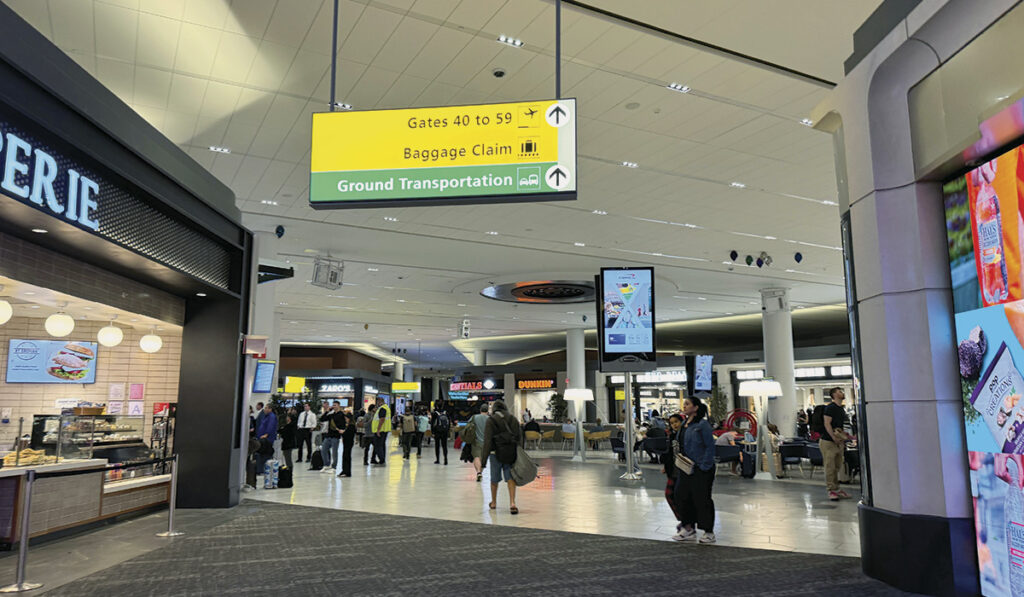
Every airport in the U.S. has an FAA (Federal Aviation Administration) LID, or Location Identifiers, used to simplify the identification of a landing facility, navigational aid, weather station, or manned ATC facility. The FAA LID is also used by flight plans, especially for small airfields and private airstrips that do not have ICAO codes.
The FAA’s LID system of naming an airport works in parallel with ICAO codes. They can be three to five characters long using a combination of 3 letters and numbers depending on the size of the airport within the United States and its jurisdictions. FAA LIDS do not start with the following letters as they are reserved for:
- K – Public radio stations
- N – Naval Air Bases
- Q – Morse Code
- W – Public Radio
- Y – Used for airports in Canada
- Z – Designates air route traffic control centers
Major airports with a 5,000-foot or longer runway or an advance weather station are only assigned 3-letter alphabetic codes, as in LaGuardia Airport = LGA; Philadelphia International = PHL; Westchester County Airport = HPN its 3-letter code represents the airport’s three neighboring communities, Harrison, Purchase, and North Castle. (Sometimes referred to as White Plains Airport, the ‘W’ was never used, as it is reserved for public radio)
A three-character FAA LID is an alphanumeric combination typically assigned to small private-use airports. For instance, Bayport Aerodrome = 23N is a rural airport located one-mile northwest of Bayport on Long Island.
The two-letter, two-number LIDs are assigned to private-use airport landing facilities and are based on the state’s post office abbreviation or supplemental abbreviation. The two-letter code may appear in the first two, middle, or last two positions of the four characters, Rose Field Airport=2NK3 (NK is supplemental code for New York)
Regarding communications with airports, air traffic control, and weather stations, brevity and precision are of the utmost importance. The FAA publishes a Pilot/Controller glossary with literally hundreds of acronyms and abbreviations as a handy reference .
Security Identification Display Area (SIDA)
In the aftermath of the 9/11 attacks, the TSA (Transportation Security Administration) was established by the Aviation and Transportation Security Act and signed into law on November 19, 2001. The TSA is the governing agency for airport and airline security.
Every year, real threats to civil aviation security exist at airports like JFK, EWR, LGA, and SWF. The Port Authority of NY & NJ, under the guidance of the TSA, has developed a training course to familiarize all persons with a need to be in the restricted Security Identification Display Area (SIDA) and the Secured and Sterile Areas of the airport.
The rules and procedures in this training course are essential in preventing unauthorized access to restricted areas, minimizing the potential for unlawful activities, and for the safety and security of all persons.
The SIDA study guide, available online, is a summary of the requirements needed to obtain an Airport Security ID Card provided by Federal regulations and terms. The SIDA study guide contains many definitions and terms that are primarily airport-specific. All personnel applying for an Airport Security Card must undergo a fingerprint-based CHRC (Criminal history records check) and STA (Security Threat Assessment) before being issued an Airport Security Card.
Only after successfully completing the security training course will the employee have access to restricted areas such as the Security Identification Display Area (SIDA) and the airport’s Security and Sterile Areas according to their company’s business needs.