




A Time Capsule of Restored Treasures at Floyd Bennett Field
Standing on the old 6-24 Runway at Floyd Bennett Field, looking northeast some 12 miles across Broad Channel, a Delta 767 takes wing from nearby John F. Kennedy International Airport (JFK) and dips to the right before climbing to its cruising altitude. The distant thunder of its engines is a sound familiar to those on the ground and near the airport.
But long before the presence of JFK Airport, formerly known as Idlewild, there was Floyd Bennett Field, New York City’s first municipal airport, located on Barren Island along Jamaica Bay. Built primarily in response to the growth of commercial aviation after World War I and after Charles Lindbergh’s solo across the Atlantic in 1927, Floyd Bennett Field was dedicated on June 26, 1930, and officially opened on May 23, 1931.

Given the IATA designation of NOP, Floyd Bennett Field received the U.S. Department of Commerce’s highest A-1-A rating due to its state-of-the-art facilities, which included a modern terminal, reinforced concrete runways, and advanced lighting systems for nighttime flying.
Today, at Floyd Bennett Field, the remnants of a bygone era in aviation stand tall…remnants that reflect America’s rich history of flight and are now dedicated to the celebration of aviation and the former airport’s remarkable history.
Surrounded by its historic hangars and administration building (now the Ryan Visitor Center), which served as both the air traffic control station and the passenger terminal at Floyd Bennett Field’s airport, you can close your eyes and imagine the sound of swirling aircraft propellers on their novel, record-breaking, and exploratory flights across the Atlantic during the Golden Age of Flight in the 1930s.
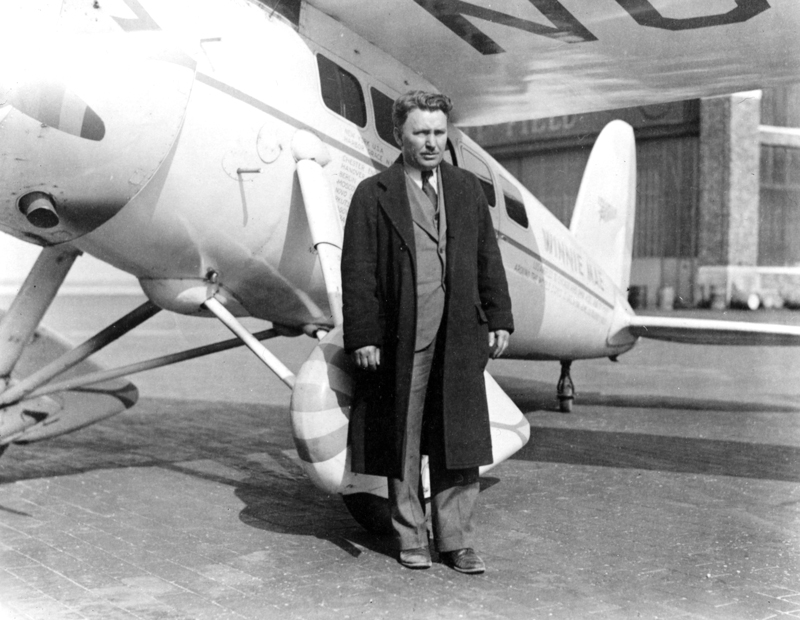
It was during this era of aviation at Floyd Bennett Field that legendary pilots such as Jimmy Doolittle, Amelia Earhart, Wiley Post, Howard Hughes, Jacqueline Cochran, Roscoe Turner, Douglas’ Wrongway’ Corrigan, and many others made significant contributions to aviation through their intrepid vision of air travel’s potential while raising awareness of its value as a safe and viable means of transportation. Whether these flights began or ended in success at Floyd Bennett, they had a far-reaching effect on the history of aviation in the United States and throughout the world.
A little over a decade later, from 1941 to 1971, Floyd Bennett Field was called Naval Air Station-New York serving vital functions, defending the airways and shores of the East Coast during World War II, the Korean and Vietnam Wars. In 1972, Floyd Bennett Field became a part of Gateway National Recreation Area, one of the nations first urban national parks preserved by the National Park Service (NPS).
Historic Aircraft Restoration Project
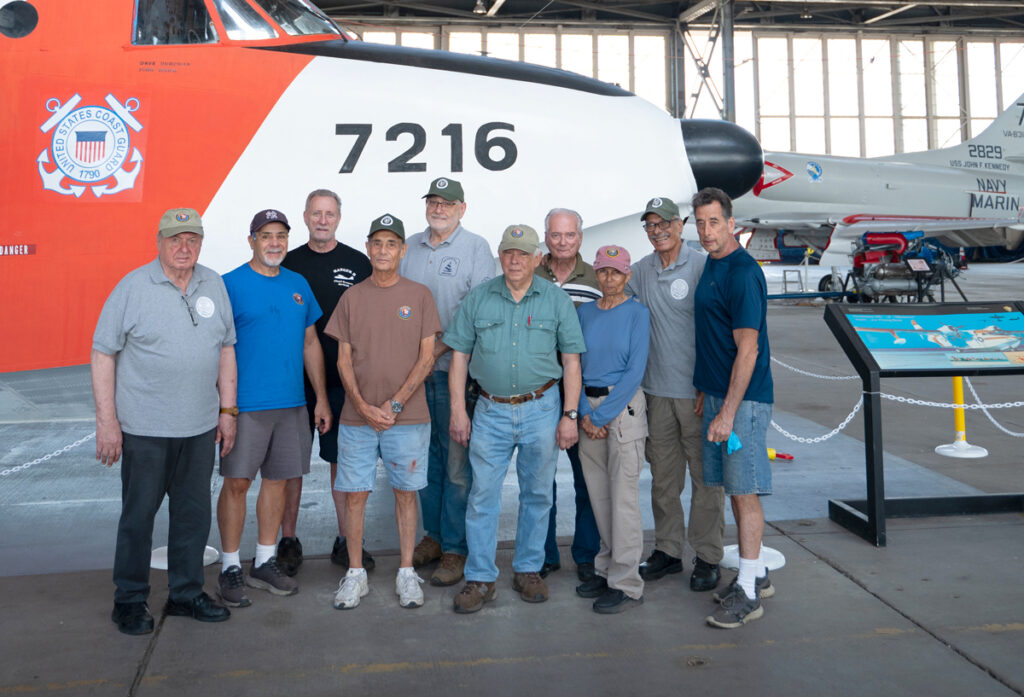
Historic Aircraft Restoration Project (H.A.R.P.), located at Hangar B on the east side of the field, is a National Park Service Volunteer In Parks program that is dedicated to preserving the aviation history of Floyd Bennett Field by restoring artifacts and examples of aircraft that once flew from this historic site.
Hangar B was constructed by the U.S. Navy during World War II and served as the base for VRF-4, one of the squadrons of the Naval Air Ferry Command, headquartered at Naval Air Station-NY. After the Second World War, the Naval Air Reserve used Hangar B as a training facility to help keep the nation’s naval aviators and support staff prepared for national emergencies. Pilots and ground crews were readied for service overseas during the Korean War, Cuban Missile Crisis, and Vietnam War.
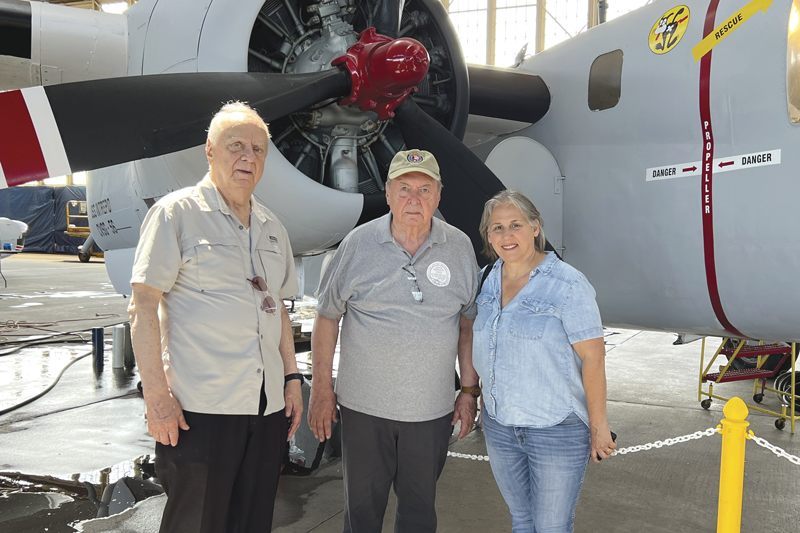
Today the historic Hangar B is once again utilized for the care, maintenance, and preservation of aircraft that advanced aviation’s progress through its nascent years. Since 1995, H.A.R.P. volunteers have devoted thousands of hours to restore vintage aircraft and their components, displayed at the Gateway National Recreation Area’s Hangar B. These aircraft enable volunteer docents and park rangers to tell the story of aviation at Floyd Bennett Field as it relates to New York City, the nation, and the world.
H.A.R.P. volunteers are people of all backgrounds, ages, and skill levels, but the common thread woven through their efforts is their love of airplanes and their passion for aviation. One of those volunteers is Paul Garcia who recently guided me through the incredible time capsule housing the aircraft and artifacts preserved inside and on display at Hangar B. During the walk-through, his wealth of knowledge and narrative greatly expanded upon the rich history of, not only the aircraft, but their significance at Floyd Bennett Field.
In 1961, Garcia, a veteran of the U.S. Navy, enlisted at age 17 and served in the USN for three years. After his discharge, he began his career in aviation as a flight attendant for a charter company, Saturn. In 1971, he went to work for American Airlines, where he spent the next 51 years of his 53-year career before his retirement.
One day, over 22 years ago, Garcia was driving down Flatbush Avenue past Floyd Bennett when he saw a vintage aircraft parked outside its grounds. “I wanted to find out more. I was an aircraft mechanic in the Navy, so of course, I gravitated to the work here,” said Garcia.
After Garcia learned about the Historic Aircraft Restoration Project (H.A.R.P), he enthusiastically volunteered with the organization. Two decades later, he arrives at Hangar B three times a week to dedicate his time to H.A.R.P.’s mission; the restoration and preservation of Floyd Bennett Field’s history and the examples of the aircraft that once flew there.
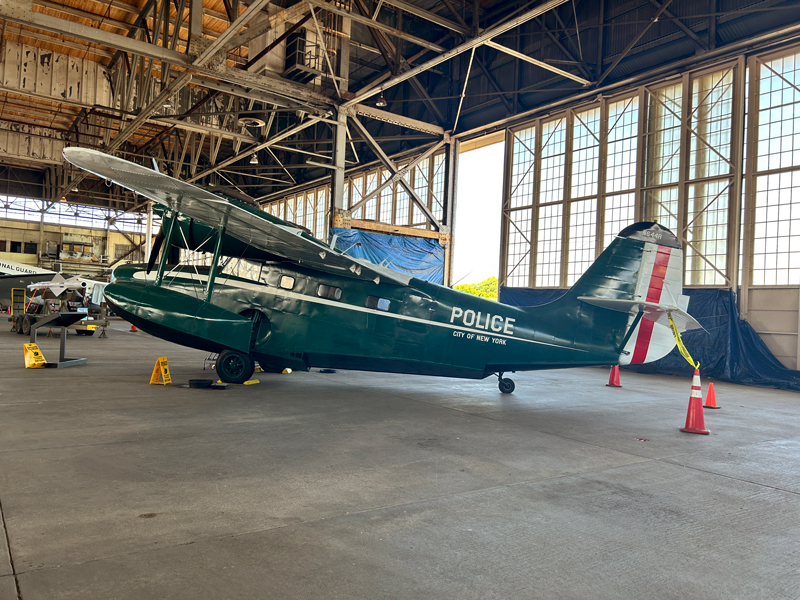
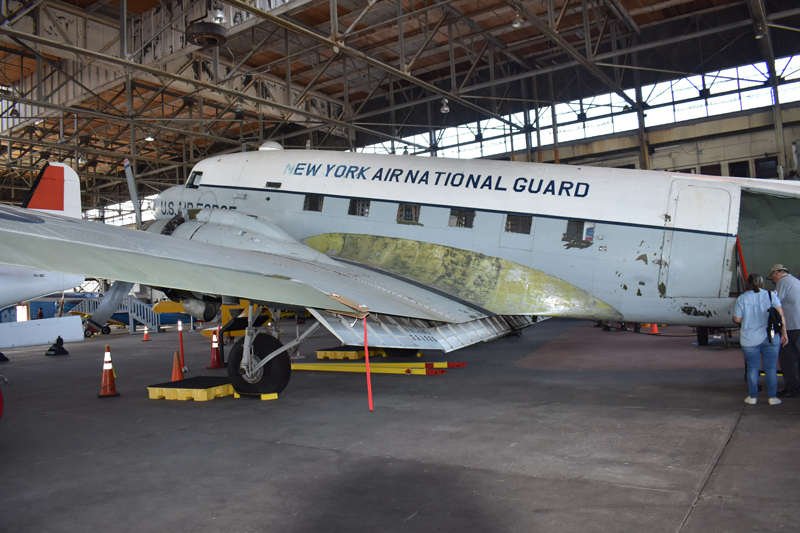
The aircraft restored by H.A.R.P volunteers represent several different eras of flight at Floyd Bennett, from the 1930s as a municipal airport to the 1940s and through to 1971. The aircraft also represents the different services that flew from the Field. At least one of the aircraft in the hangar represents the U.S. Navy, Marine Corps, Coast Guard, Air National Guard, and the New York City Police Department, with both fixed-wing aircraft and helicopters.
There is a lot to see and learn about in Hangar B, with both civil and military aircraft on display. In the room adjacent to the volunteer’s small cafeteria, which is lined with an array of photographs of past and present volunteers, panels outlining the history of Floyd Bennett Field, there is a long table used for fabric work; beside it, wrapped in protective plastic, are two refurbished cockpit seats.
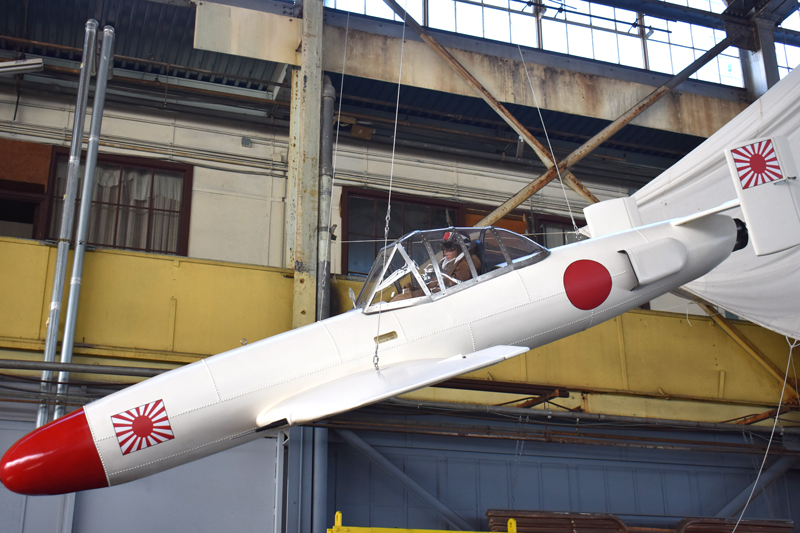
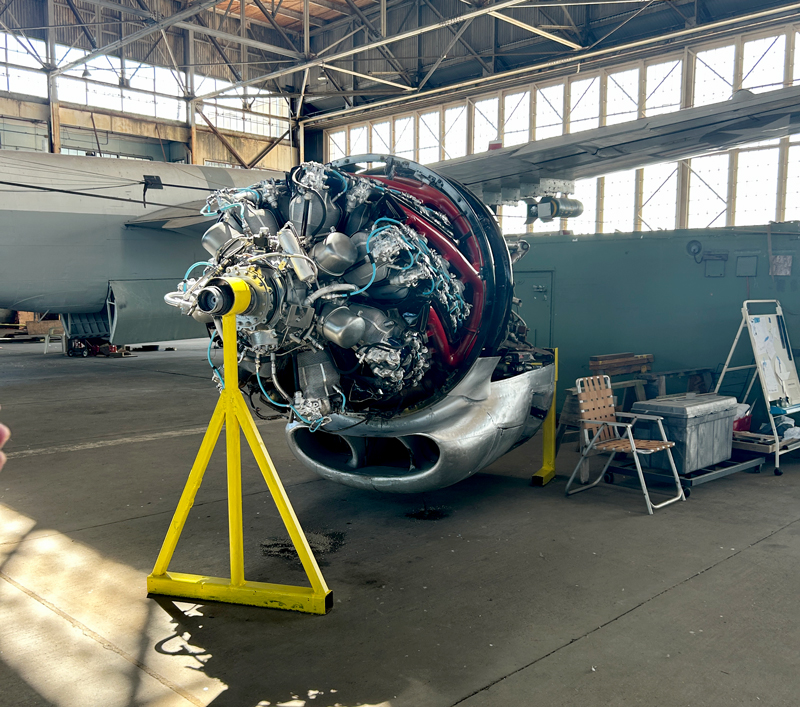
Next comes the ‘pièce de résistance’…as you walk into the immense Hangar B. One of the first artifacts on display is an 18-cylinder F4U R2800 engine that rests on a stand. Beside it is a 1917 Gnome rotary engine that was built in Long Island City and was most commonly used on WWI aircraft. Overhead is a recently suspended Japanese Kamikaze aircraft whose size pales in comparison to the majority of the other vintage aircraft housed in the hangar that have been restored, reproduced, or are currently under restoration.
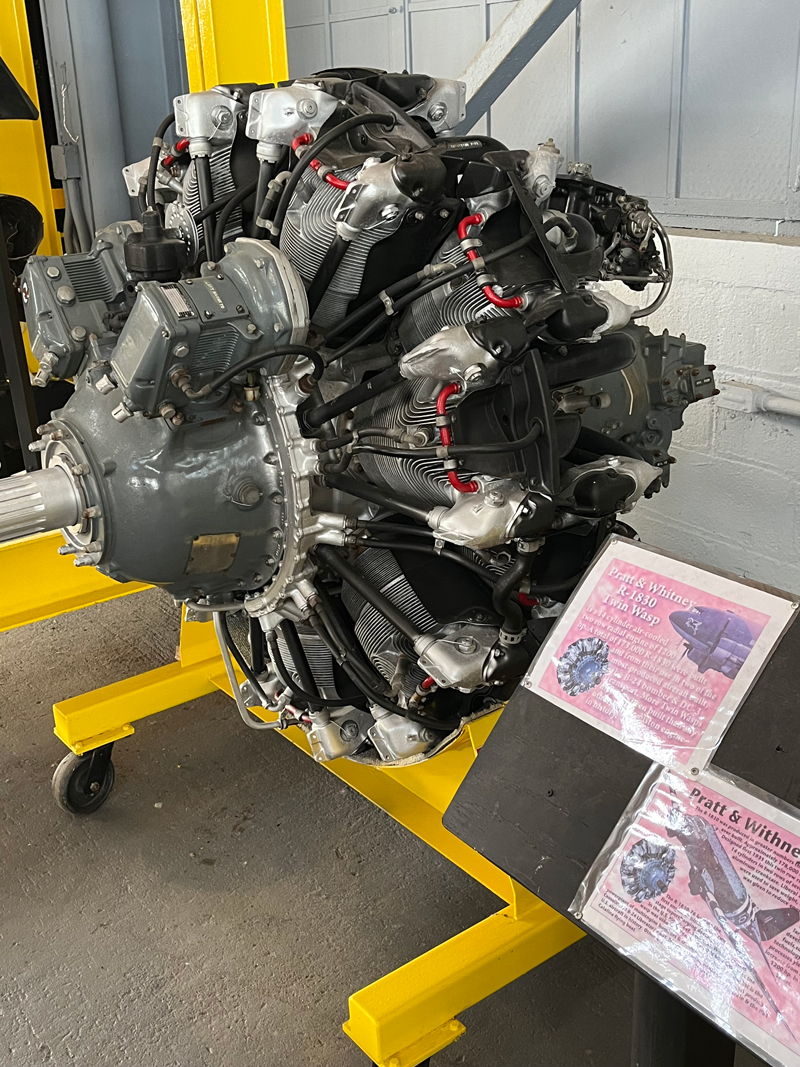
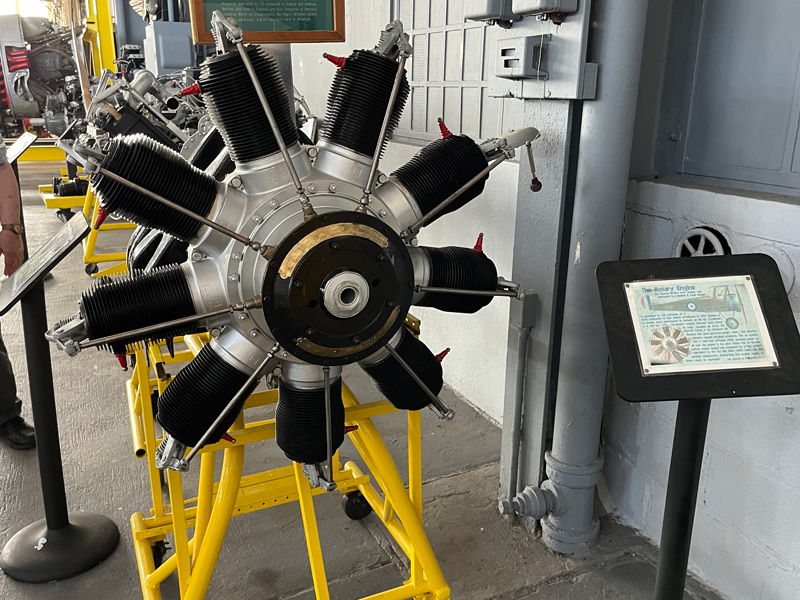
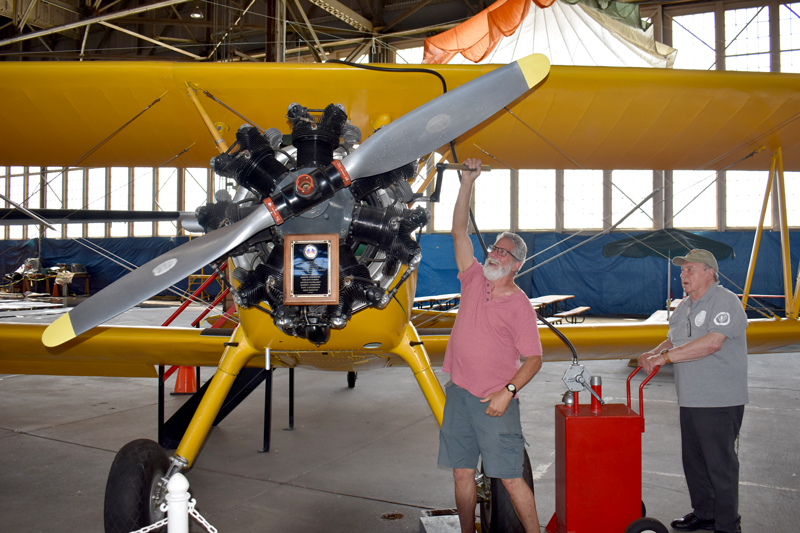
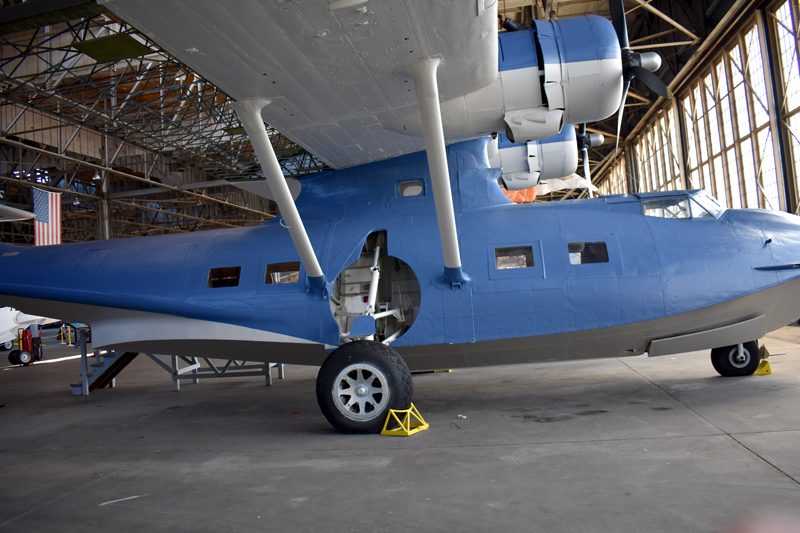
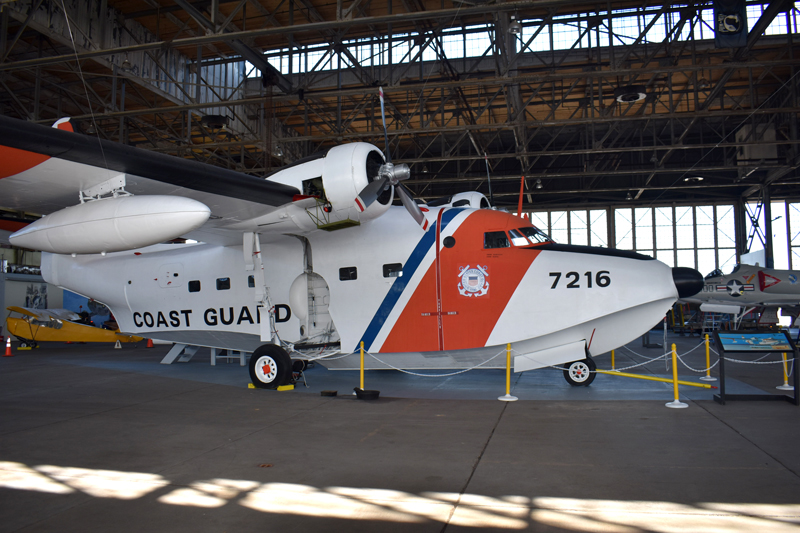
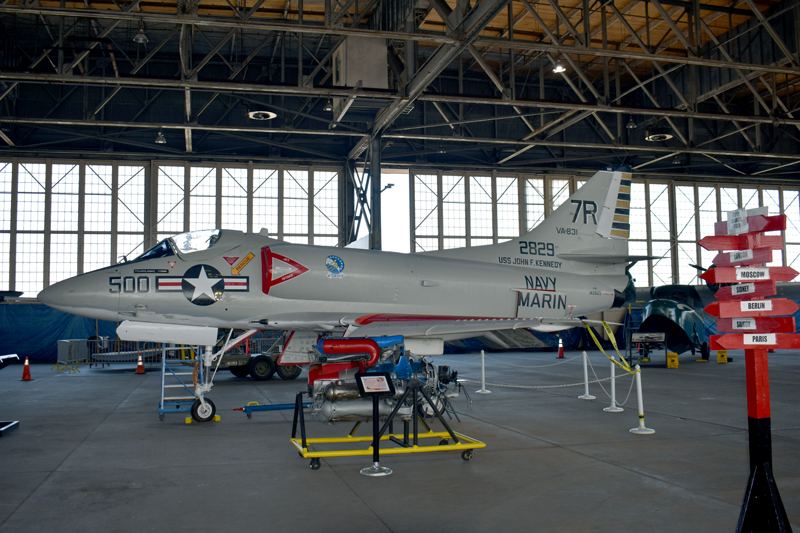
Aircraft on display include a replica of the Wright Flyer, a Beechcraft JRB ‘Expeditor’ military transport, a Consolidated PBY-5 ‘Catalina’ patrol bomber, a Douglas C-47 ‘Skytrain’, a Grumman G-21’ Goose and HU-16’ Albatross’ military patrol, a Fairchild PT-26, an SNJ /AT-6 Trainer, the Douglas uA-4 ‘Skyhawk’, the massive USAF C-97, a Sikorsky HH-3 “Pelican’ air-sea rescue helicopter, a Lockheed SP2H ‘Neptune’ anti-submarine bomber, a Stearman N2S-2 ‘Keydet’ and much more.
One of the most historically significant civilian aircraft at Hangar B is an exact full-scale model of the Lockheed Vega “Winnie Mae”, which commemorates the first solo flight around the world by Wiley Post, who circumnavigated the globe and returned to Floyd Bennett Field in 7 days, 18 hours, 49 minutes on July 22, 1933.
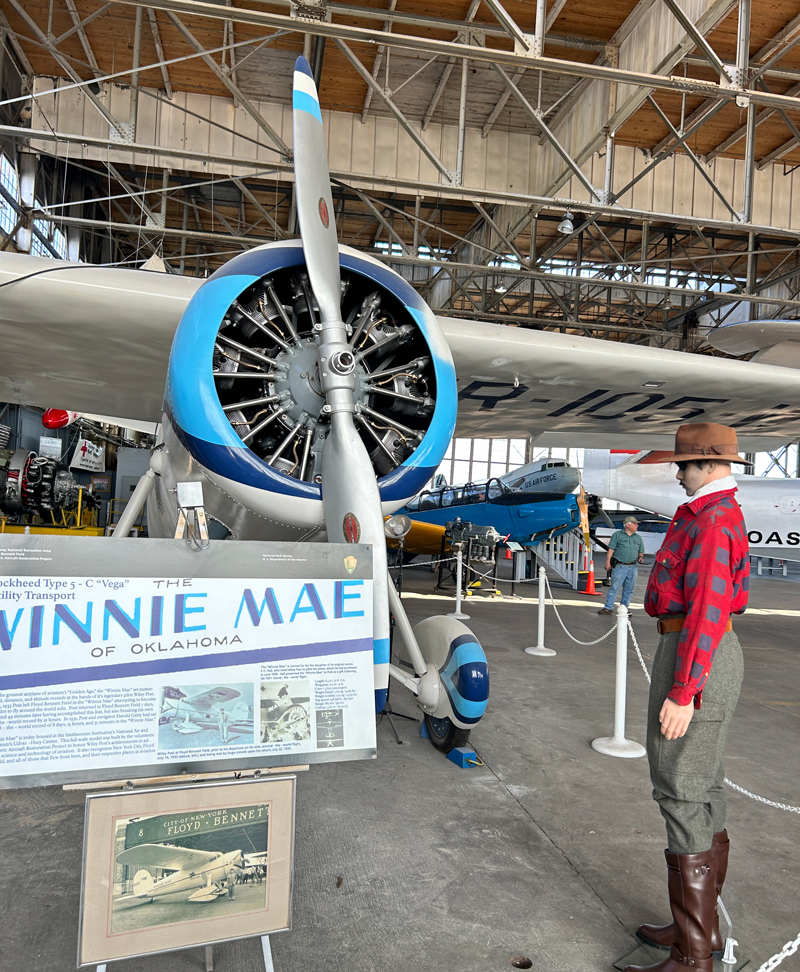
H.A.R.P. volunteer Peter Sorvino was one of the leads on the 10-person team of volunteers who constructed this incredible treasure from scratch. Peter spoke of how this 5-year project evolved, along with draftsman Hank Iken and Dante DiMille, who built the aircraft, along with Sorvino and the others on the team. “It is a 1:1 scale static model. I gutted the engine, which was donated to us. There is a steel frame on the inside, and the rest is made of aviation plywood. Fiberglass was used for the cowling, and some of the skirting, and the rest of it is plywood composite, and fiberglass covered styrofoam,” said Sorvino. “Everything was done here, including the paint and livery. If you put it side by side with the original on display at the National Air & Space Museum, you couldn’t tell the difference.” Although the plane is strictly a static aircraft, it was created so that the propeller can spin while timed to the sound of its engine starting.
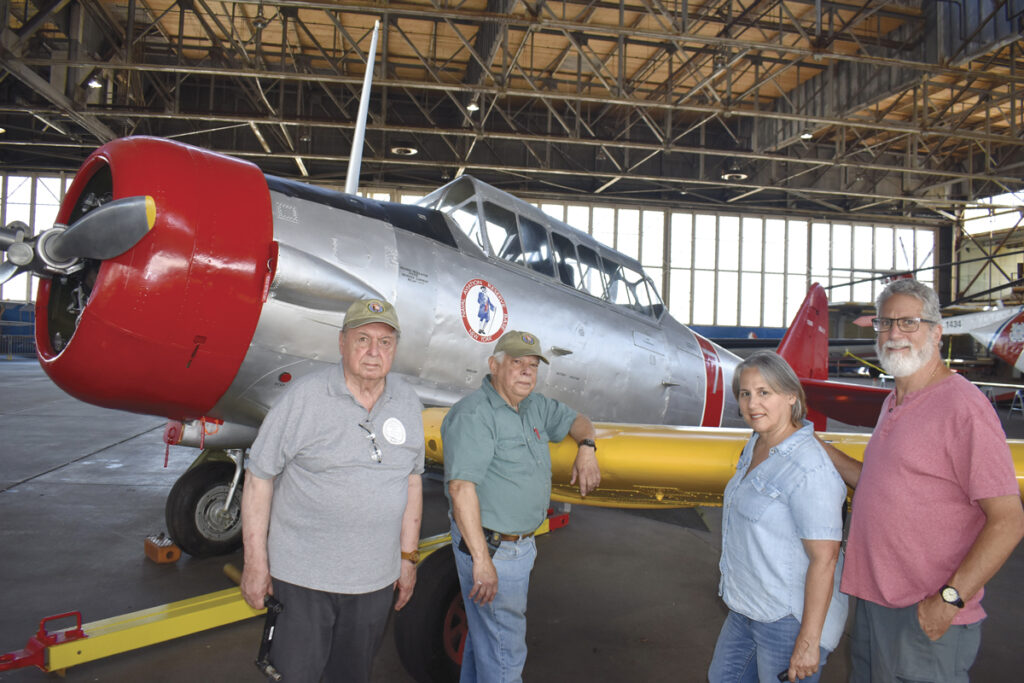
Volunteer Arthur stands beside a Navy SN-J (aka AT-6) and explains its significance at the Field: “This plane is here for two reasons; it was originally here in 1947, and I ran into it at Aviation High School in Queens; there was a 75th-year reunion that I went to. They took us around and outside the hangar apron, and I remembered starting up a particular yellow plane, which would’ve been an SN-J, or an AT-6. This one was way in the corner, painted black, missing parts, and painted with shark’s teeth. I went over to the assistant principal and asked, ‘What are you going to do with this plane?’ And he said, ‘Well, we took everything that we needed from it, so we’re going to scrap it.”
Arthur talked to the Parks Department and told them that similar planes were at Floyd Bennett, so he worked out a deal with the school, and they transported it over to Hangar B. H.A.R.P. volunteers began restoring the SN-J, when the Parks Service then had the available funding. Arthur went back in history while the plane was being readied to paint. He learned that Floyd Bennett had a squadron from 1938 to 1940 with the trainer’s livery in certain colors, of which the aircraft was restored. The SN-J now stands in its glory on the floor of Hangar B, with its silver metallic fuselage and its yellow wings, modified with a red tip on each. The large white and red-ringed circular emblem beneath the pilot’s cockpit represents The Naval Aviation Reserve Base-NY, with a Knickerbocker in its center, a symbol of New York State and representative of a ‘New Yorker.’ It is also reminiscent of the former brewery that produced the once-popular Knickerbocker Beer in New York City in the early to mid-20th Century.
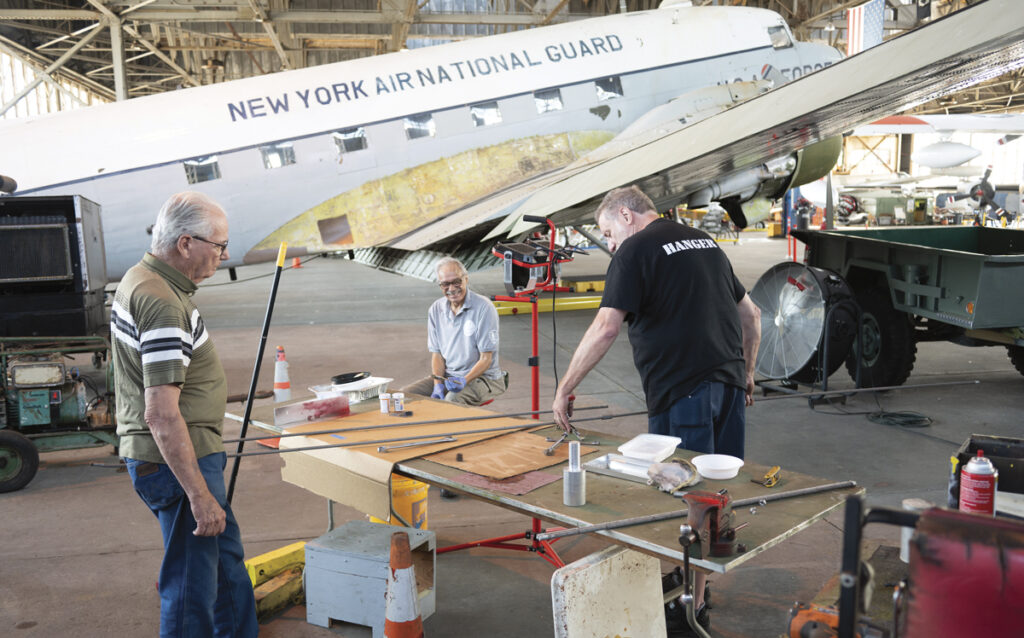
There is so much more to see at Floyd Bennett’s Hangar B, in addition to the aircraft meticulously restored and refurbished by H.A.R.P. volunteers: an Army Jeep, a medic vehicle, painted murals, and an operational 1950s telephone switchboard.
Another historic artifact significant to Floyd Bennett Field is displayed at Hangar B, a (disarmed) Nike Missile. During the height of the Cold War, from 1954 until 1974, Nike Missiles guarded the New York area. They could intercept long-range Soviet Bear Bombers and destroy them while still over the ocean. Nineteen Nike Missile sites surrounded New York City, and two of the missile sites and headquarters unit were located in what is now the Gateway National Recreation Area.
At the end of my tour of Hangar B, I asked Paul Garcia if there was a particular project that he worked on that he was most proud of. He thought momentarily and said, “I think it’s still coming. I’m really looking forward to working on the C-47, which if we continue to work the way we are now, the project will probably take a year or two, we used to have 30 guys, and now we are down to 10 or 11. It’s hard to find new people available to volunteer, especially on weekdays… but you gotta give back,” said Garcia, adding, “The three years I gave the Navy was not enough.
Floyd Bennett, the Aviator
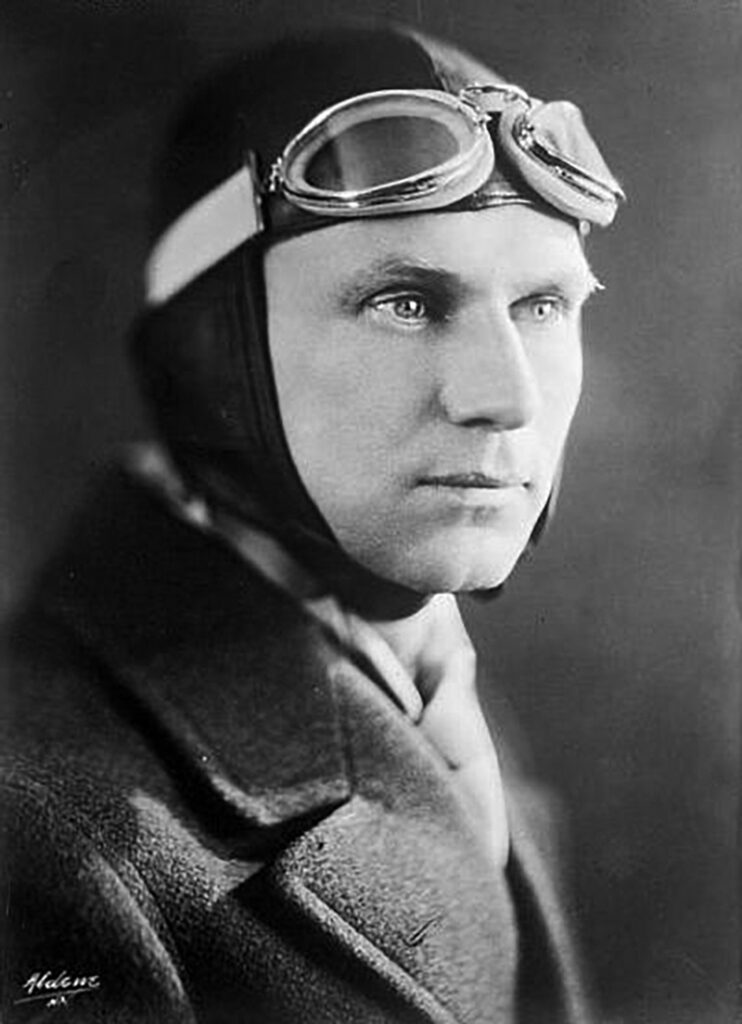
Floyd Bennett was born in Warrensburg, New York, in 1890. He worked in the automobile trade before enlisting in the U.S. Navy as an aviation mechanic in 1917 when the United States entered World War I.
By 1919, the Bureau of Navigation announced that a class of 25 enlisted men had been ordered to the Naval Air Station, Pensacola, Florida. As the first enlisted group to receive flight training, the graduates would be certified as a Naval Aviation Pilot (NAP). Floyd Bennett was one of the enlisted men and became NAP-#9 upon graduation in 1920.
At Pensacola, Floyd Bennett met Richard E. Byrd, and he later served with Byrd on an aviation survey of Greenland in 1925. Bennett’s ability caught Byrd’s attention, and the two men became close friends.
Together, they planned an expedition over the North Pole, flying a Fokker tri-motor, the ‘Josephine Ford’. The flight departed from Norway and headed to the North Pole and back on May 9, 1926. President Coolidge awarded both aviators the Medal of Honor for this flight, and Bennett was promoted to Warrant Mechanic by an Act of Congress.
In April 1928, Bennett took part in a rescue mission of the crew of the Bremen, who were stranded on Greenly Island, Canada, following a non-stop attempt across the Atlantic from Europe. During the mission, Bennett contracted pneumonia as he was weakened from injuries he sustained in an earlier crash in the Fokker America. Bennett died on April 25 in a Quebec hospital. He was mourned throughout the United States as a national hero and was buried in Arlington National Cemetery.
Cora Bennett, a recollection, 1932
“Someday, Cora, there will be an airport here.”
In a book written about her husband after his death, Floyd Bennett’s wife recalled that she and Floyd once toured Barren Island when he said to her, Someday, Cora, there will be an airport here.” (Bennett, Cora L. (1932) ‘Floyd Bennett,’ New York: W.F. Payson, p.163)
And so it came to be, as Floyd and Cora Bennett had lived in Brooklyn at the time of his death, and the City’s first municipal airport, built at the time of Bennett’s death, would be named in his honor.
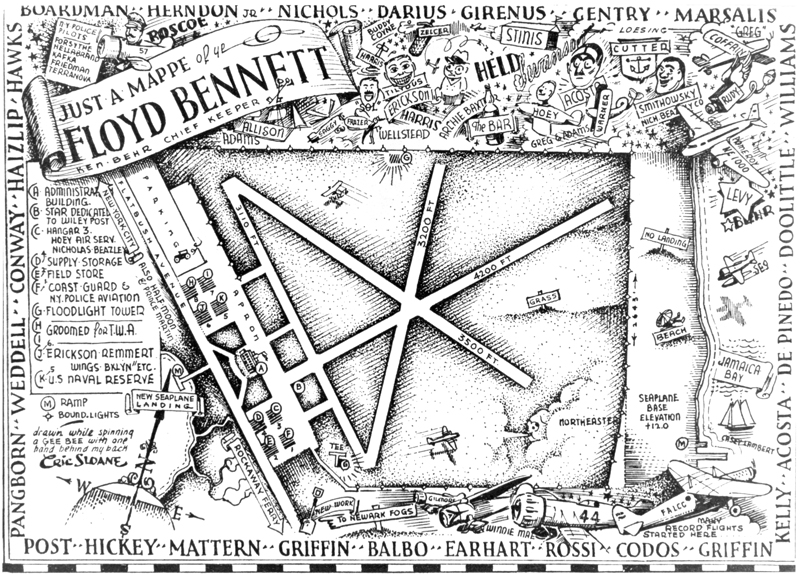
Floyd Bennett, the Field
In May 1927, Charles Lindbergh was the first man to fly a non-stop solo across the Atlantic, billed as the New York to Paris flight. As the flight actually originated outside the City’s limits from Roosevelt Field on Long Island, the City of New York wanted an airport within the city’s limits, so a panel was formed to locate a site, and it was led by aviator Clarence Chamberlin.
Chamberlin sought to find a place to build a modern airport within New York City and eventually settled on Barren Island, off the south shore of Brooklyn. The parcel lay in a small community that was an animal rendering facility, and it had a small flying field that provided fair conditions and plenty of room for expansion.
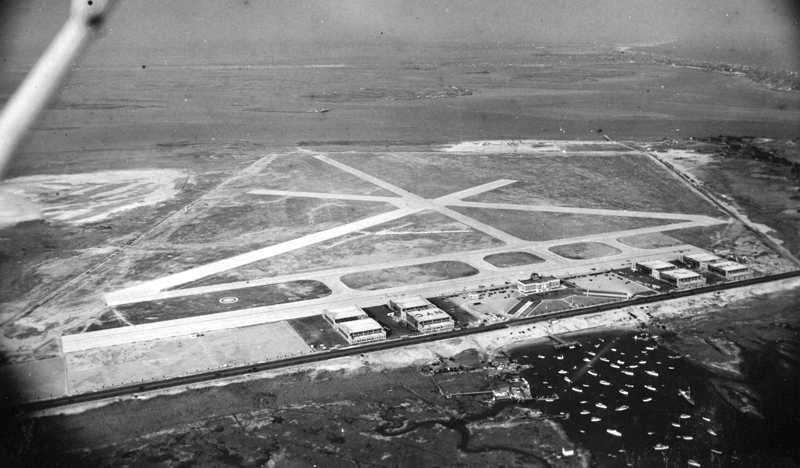
Using tons of sand dredged from the bottom of Jamaica Bay, the parcel was expanded to over 1,100 acres and connected by the landfill to Brooklyn. Flatbush Avenue was extended as well to provide access to the new airport.
Floyd Bennett Field was built to the most modern specifications of the time. While most airfields and runways were dirt or grass, Floyd Bennett Field’s runways were constructed with thick concrete, which could accommodate flights requiring heavy fuel loads. Its hangars housed and serviced the largest aircraft of the day, and facilities were also built for seaplanes. Additionally, the administration building housed the airport’s control tower and served as a modern passenger terminal.
The formal dedication of Floyd Bennett Field took place in May 1931 and was marked by a flyby of over 650 U.S. Army aircraft. New York Mayor Jimmy J. Walker presided over the opening, which drew nearly 25,000 spectators. U.S. Navy airplanes commanded by Lt. R.F. Whitehead were the first aircraft to arrive officially at the field. After its official opening, several of the airfield’s features contributed to its popularity amongst aviators; its location along the Atlantic coast made it the ideal site for cross-country, trans-Atlantic, and round-the-world flights and expeditions, and its modern facilities at the time were second to none. Throughout the 1930s, dozens upon dozens of notable and record-breaking flights took place at the Field. Though not a complete listing, many of them are noted by the National Parks Service at www.nps.gov.
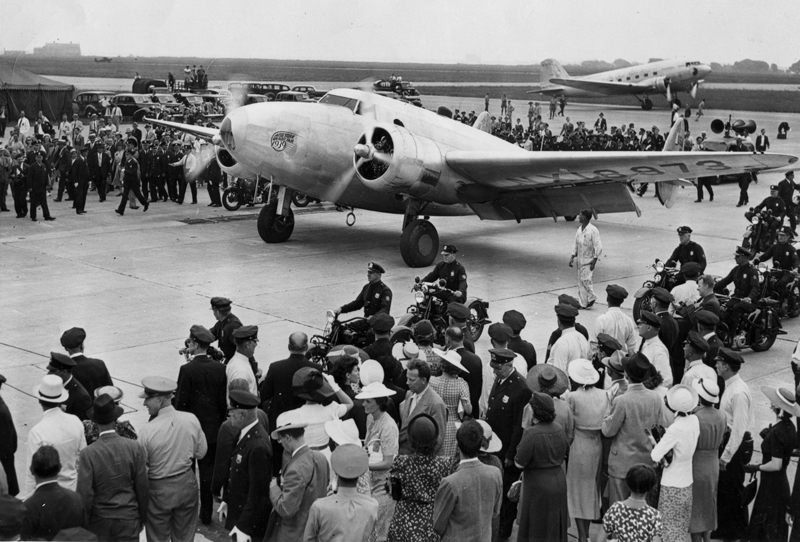
Though intended to serve as a modern gateway to New York City, Floyd Bennett Field never achieved the commercial success that it was intended for. There were various reasons for this, including the airports somewhat remote location away from Manhattan in far southeast Brooklyn and the U.S. Postal Service’s rejection of Floyd Bennett’s air terminal application (U.S. Air Mail) in 1936. As a result, commercial airlines, along with lucrative airmail operations, opted for Newark Airport in New Jersey.
Hence, The City of New York (largely prompted by Mayor Fiorello LaGuardia) found a more convenient location for a municipal airport within the City that was closer to transportation in Manhattan and more accessible to commuters.
This ultimately led to the opening of NY Municipal-LaGuardia Airport in 1939, which remained New York City’s primary airport until 1948, when New York International Airport (more commonly known as Idlewild Airport and today, John F. Kennedy International Airport) opened in southeast Queens.
From 1941 through 1971, Floyd Bennett Field became U.S. Naval Air Station-New York. During World War II, it served as a base for anti-submarine flying boats and a take-off point for aircraft and air cargo bound for Europe.
In 1972, the Field became part of Gateway National Recreation Area, one of the nation’s first urban national parks. Today, the area includes over 1,300 acres of grassland, tidal mudflats, salt marches, a marina, the former airfield, and the Ryan Visitor Center.
H.A.R.P. Tours & Hours of Operation
Hangar B at Floyd Bennett Field is open to visitors on Tuesdays, Thursdays, and Saturdays from 9:00 am to 4:00 pm. Tours for groups can be scheduled in advance by calling (718) 338-3799.
Volunteering
Volunteer opportunities include aircraft restoration, support vehicle maintenance, building maintenance, art and exhibits, education and interpretation, and clerical and administrative support.
For additional information about Floyd Bennett Field
and the National Park Service can be found at:
Gateway National Recreation Area
FBF Building 69, Brooklyn, NY 112234
www.nps.gov/gate



4 Comments
Wonderful, very interesting, and highly factual article of this airport.
Hangar B and its varied aircraft is a local must-see for all
aviation enthusiasts.
Thank you volunteers!
Amazing, thank all of you for your Great work
When I was a kid, Eddie Rickenbacker used to fly together with his friend Huntz Walden, my next door neighbor, at Floyd Bennett Field. I lived in Brooklyn at the time at 1260-81 st. Eddie Rickenbacker used to trail his biplane which they flew together when he visited and picked up Huntz. I’ve not seen any reference to these flights anywhere in the public records. However there may be old records of these flights in the Floyd Bennett Field archives. Please check. I am now 86 years old and still vividly remember Rickenbacker parking his plane in front of my home in Brooklyn. I believe that this would make a good human interest story for the aerial archives.
Mr. Monari, Thanks for your comments regarding Eddie Rickenbacker and Huntz Walden. The only reference I found about Rickenbacker at Floyd Bennett Field is on the National Park Service Historic Flight Page dated:
“September 20, 1935
Capt. Eddie Rickenbacker flying the first Lockheed Electra received by Eastern Airlines made a record flight from Kansas City, Mo. to FBF.”
Have you contacted the FBF National Park Service directly? Their contact information is at the bottom of this page.
https://www.nps.gov/gate/learn/historyculture/floyd-bennett-field-historic-flights.htm