




In 2018, I took a first-time trip to Paris. While in Paris, I arranged an independent tour outside the city that I had always wanted to do: a privately guided day tour to the beaches at Normandy, where the D-Day landings took place on June 6, 1944.
After a few days of taking in the city, I arranged a guided tour to Normandy with my husband Doug. On the morning of the tour, we met our guide near the Arc de Triomphe at dawn. After an informative 3-hour drive to the Normandy region, we stopped at Omaha Beach first, followed by Utah Beach. The beaches at Normandy are beautiful stretches of nature with the remnants of German bunkers that conjure somber images of the war’s toll on nearly 5,000 Americans and Allies who lost their lives on this region’s shores 74 years before that day.
Following this solemn experience, we went to the Normandy American Cemetery at Colleville-sur-Mer, situated on a cliff overlooking Omaha Beach. It is one of 14 permanent American World War II military cemeteries constructed on foreign soil by the American Battle Monuments Commission. The cemetery is the site of the graves of nearly 9,400 war dead, covering 170 acres, with white marbles crosses and Stars of David, marking each of the graves, in rows as far as the eye can see.

While pausing at one of the markers, I heard the sounds of Taps in the distance and noticed that flower arrangements had just been placed at some of the graves in that area. I walked over to the markers and read the inscribed names of three of the four American women buried there: PFC Mary Bankston, PFC Mary Barlow, and Sgt. Delores Browne. Serving in the Women’s Army Corps (WAC), these three young women were members of the 6888 Central Postal Directory Battalion. I learned later that the three women were involved in a fatal jeep accident on July 8, 1945, upon returning to their base in Rouen, France, after visiting an Army installation. Reading their names, I was again reminded of the unsung roles American women played overseas during World War II.
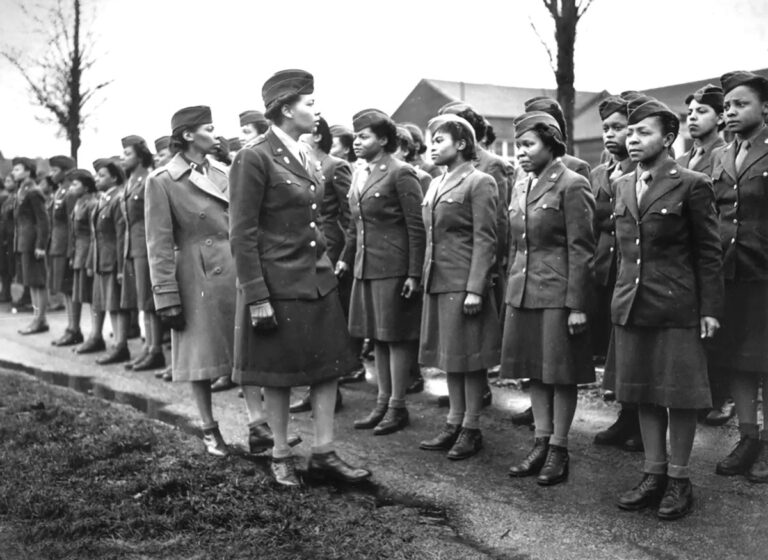
Of the 150,000 Women’s Army Corps (WAC) that served their country during the Second World War, 855 of these servicewomen were members of a largely unrecognized contingent of the WAC, designated as the 6888 Central Postal Directory Battalion, or the ‘Six Triple Eight.’
In November 1944, after the War Department approved sending members of the 6888 Central Postal Battalion to the European Theater of Operations (ETO), the unit became the only predominantly Black unit of the WAC deployed overseas during WWII. Under the command of Major Charity Adams, the 6888 played a substantial role in supporting and boosting American troop morale during the war.
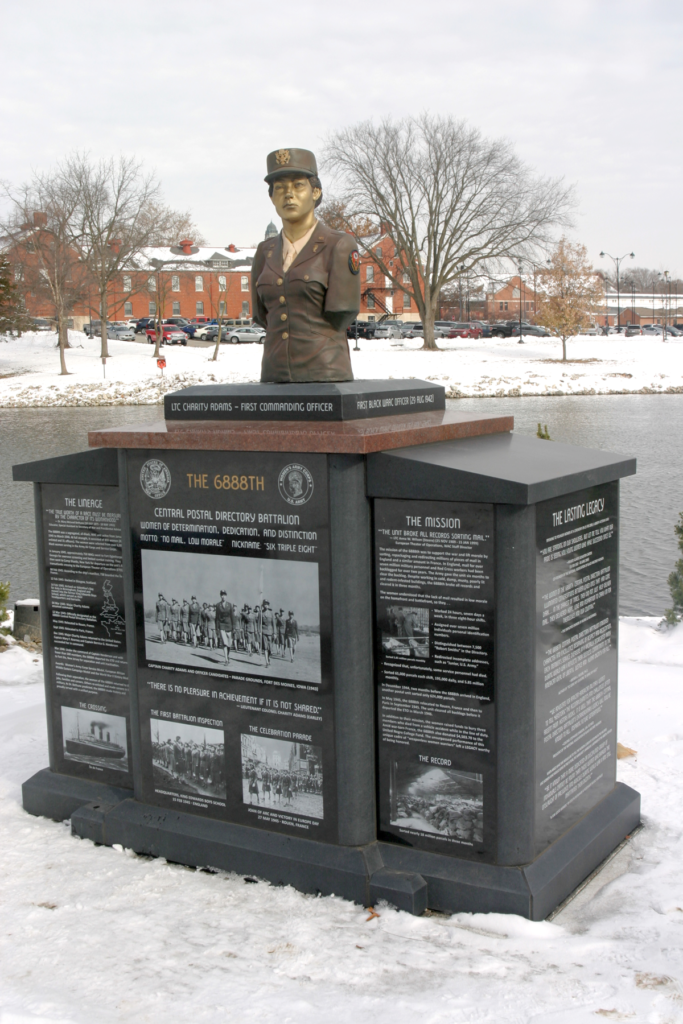
In the winter of 1945, as troops drove across Western Europe and into Germany, their ever-changing locations hampered the delivery of mail, resulting in a massive backlog of letters and packages numbering in the millions that had all but ceased to be delivered to the exhausted, battle-weary soldiers fighting on the front. For troops stationed in the ETO, mail was a lifeline connecting them to their loved ones back home and was a highly anticipated and deeply valued morale booster.
Many of the 7,000,000 civilians and military personnel from the United States who served in the ETO had identical names, such as the 7,500 individuals named Robert Smith. Army officials reported a shortage of qualified postal officers within the ETO, and the titanic backlog of undelivered mail exploded… seriously hurting troop morale, which grew to an all-time low. Hence, the 6888 Battalion was first tasked with clearing up the mammoth backlog in Birmingham, England, and they were given six months to do it. However, with the many barriers they faced as a segregated unit, they were not expected to succeed.
So, in February 1945, after a treacherous two-week sail across the Atlantic where they survived brushes with German U-boats, the 6888th arrived in Birmingham. Upon their arrival, they found warehouses filled with millions of pieces of mail intended for members of the Armed Forces, United States Government personnel, and Red Cross workers serving in the ETO.
The 6888th immediately got to work and created effective processes and filing systems to track individual servicemembers, organized “undeliverable” mail, determined the intended recipient for insufficiently addressed mail, and handled mail addressed to servicemembers who had died. Adhering to their motto of “No mail, low morale,” the women processed an average of 65,000 pieces of mail per shift and cleared the 6-month backlog of mail within three months. After Birmingham, the Six Triple Eight traveled to Rouen, France, in May 1945, and later Paris, and worked through a separate backlog of undelivered mail dating back as far as two to three years.
The unit returned to the United States at the completion of its duty, and the 6888 was disbanded on March 9, 1946. Upon their arrival home, there was no fanfare or celebration of their accomplishments, and like other groups of American women who served their country so well, their story remained largely unrecognized and their sacrifices untold – until more recently.
In early December of 2024, my knowledge of the 6888 Central Postal Battalion widened after Queens, NY resident Afi Phoebe (aka Theresa Roach), the daughter of one of the 6888th Battalion’s service members, contacted me after reading a story that I wrote for Metropolitan Airport News about accredited women war correspondents of WWII.
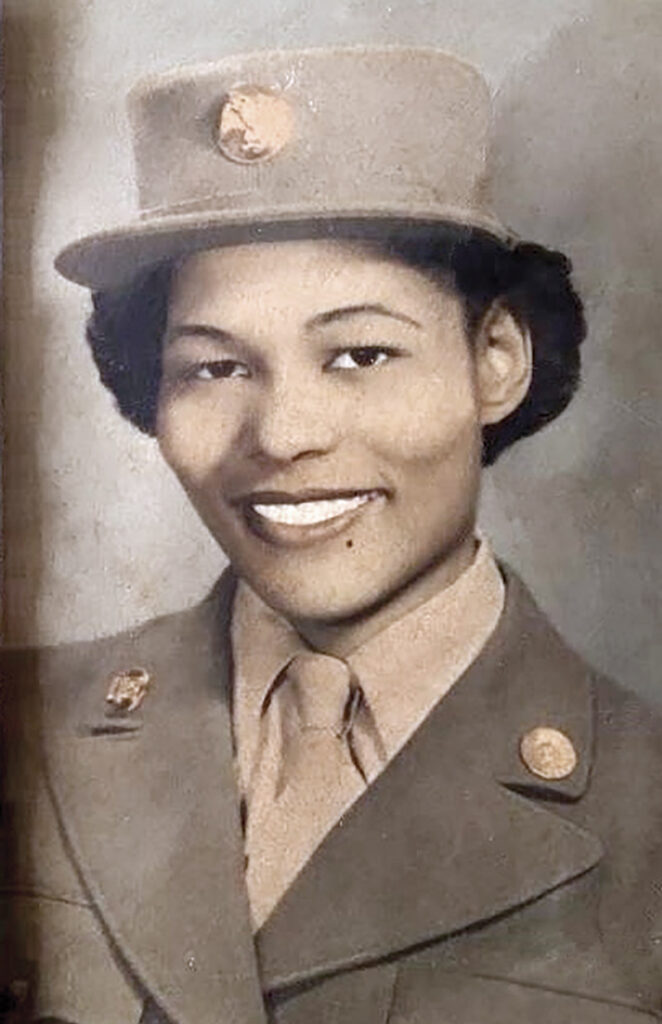
Afi wrote, ‘I read your Editor’s Notebook in the October 2024 issue and told my sister about it. We thought that we could share with you even more, broadening your periscope on our mother’s contributions. Our late mother, a local lifetime Queens resident, was part of the 6888 and the December 20 (film) on NETFLIX, The Six Triple Eight, produced by Tyler Perry, starring Kerry Washington’.
In a later conversation, after I saw the Netflix film, Afi spoke to me of her mother, Madeleine A. Coleman (Roach), who was recruited as a stenographer with the 6888th. “So much was actual, as my mother once told us kids. I found my mother’s name on the credit scroll at the end. Our mother’s picture is on display, and other memorabilia, too, in a museum for perpetuity in Miami dedicated to women in WWII. I am still reading the letters she [Corporal] and my dad [Master Sgt. John Roach] wrote almost daily to each other. They both knew each other here first and served in the European Theatre and married in France.”
A family narrative written by Afi and her sister Catherine was graciously sent to me with the text: ‘Madeleine followed her heart entering the WAAC (later WAC) and was stationed in Camp Sibert, AL, and John was in Camp Wolters, TX. Much about their experiences is documented in artifacts covering the good, the bad and the ugly. The good was their inseparable bond. The bad was the devastation of war and keeping them apart despite their enduring commitment. The ugly was the face of ruthless and bitter racism on their own home front whose flag they held precious.’
The bad and the ugly is a narrative whose surface was barely scratched in this brief notebook entry. But along with that part of the narrative, the good is the story of the 6888 Central Postal Directory Battalion’s success and service to country and is one that should not only be celebrated in a film, but always remembered in our history books. Visit www.womenofthe6888th.org to learn more.

2 Comments
Enjoyed the article but seems incomplete without mention of area historian and air cargo publisher (Air Cargo News/Flying Typers), Geoffrey Arend, who started advocating for the preservation and restoration of that terminal as early as 1976 and then doggedly pursued its historical landmark status. Geoffrey is still around and still publishing from his home near JFK.
Thanks for your comment highlighting Geoffrey Arend’s role in advocating for the preservation and historical landmark status of the Marine Air Terminal. Mention of his important contributions were added to this month’s Editor’s Notebook.